
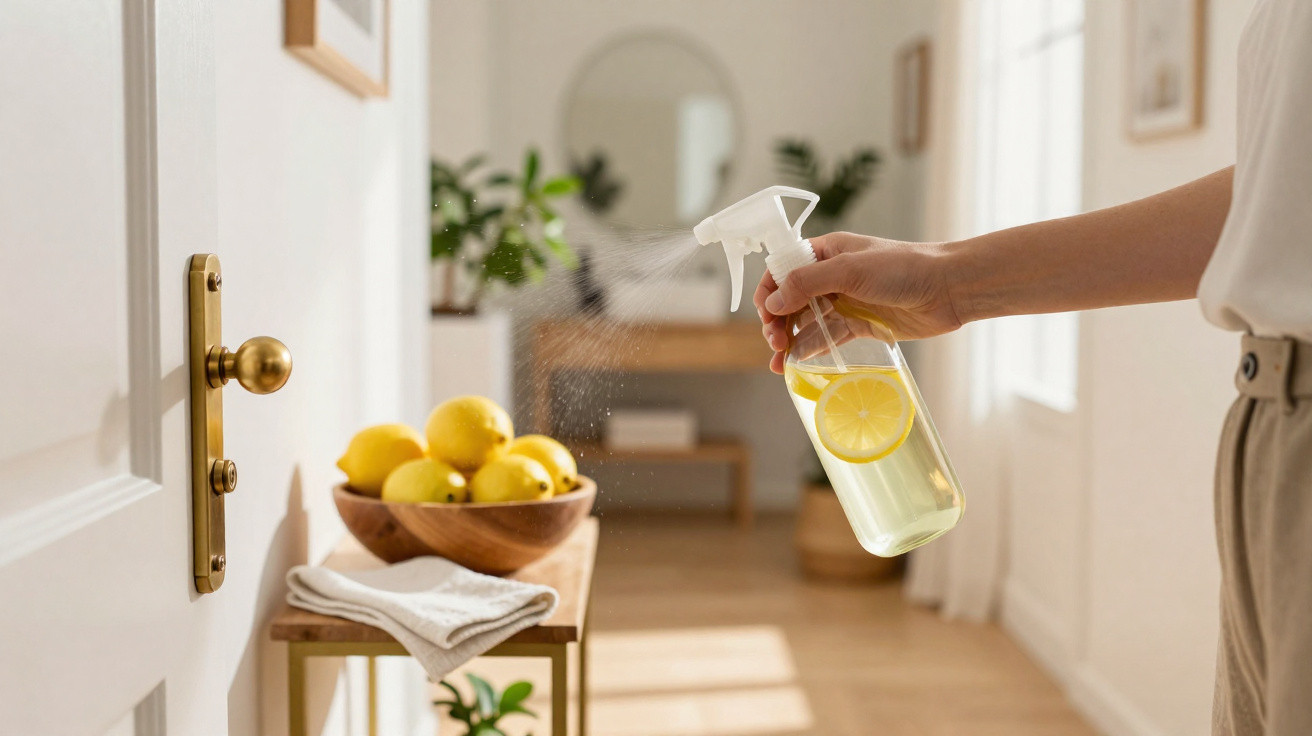
Spraying lemon water onto door handles once a week has become part of many household routines because it is an easy, inexpensive practice associated with keeping frequently touched surfaces clean. It can help lift light dirt while reminding everyone at home to clean areas that are often overlooked.
Why spray lemon water on door handles every week?
Door handles collect microorganisms transferred from hands after touching objects, mobile phones, public transport and outdoor surfaces. A water and lemon mixture supports mechanical cleaning by removing grease, perspiration and fine grime that builds up through repeated daily use.
Lemon contains acids that can make degreasing easier while helping to reduce odours and fingerprint marks. However, this solution is not a replacement for dedicated disinfectants when someone in the home is ill or more thorough disinfection is required.
Watch a video on the Vida Prática YouTube channel about the benefits of using lemon as a natural disinfectant and air freshener on frequently touched areas around the home:
https://www.youtube.com/watch?v=K3w_7Xp9jF4
How to prepare and apply the lemon water solution safely
A useful ratio is 1 part lemon juice to 4 parts water, which makes the scent milder and reduces the risk of staining. For a 250 ml spray bottle, use approximately 50 ml of strained lemon juice with 200 ml of filtered water at room temperature.
To ensure the method is both effective and safe across different materials, follow this straightforward preparation and application sequence as part of your cleaning routine:
- Squeeze fresh lemons, strain the juice and combine it with water in the stated ratio.
- Pour the mixture into a clean spray bottle reserved solely for this purpose.
- Shake gently, mist the door handle lightly and leave it for a few seconds.
- Wipe with a soft cloth, preferably microfibre, then dry the surface thoroughly.
Which materials are best suited to lemon water, and when should it be avoided?
The water and lemon solution generally works best on durable metal door handles, such as stainless steel, and on less porous plastics. On these surfaces, it can remove fingerprints and light grease, helping them look cleaner and more pleasant in everyday use.
On gold-coloured metals, very thin chrome finishes or untreated wood, frequent use may dull the shine or leave stains. For exterior doors exposed to strong sunlight or salt air, the combination of acidity, moisture and harsh conditions may speed up corrosion, so products designed specifically for metal are a better option.
What is the ideal frequency, and which other household areas benefit?
Using it once a week is suitable for routine upkeep, particularly in homes with moderate activity. In busy households or those with children or older people, cleaning may be increased on days of heavier use, bearing in mind that complete drying helps prevent damage to sensitive materials.
Other frequently touched areas, including cupboard pulls, refrigerator doors, microwaves and light switches, can also benefit from this mixture. For light switches, spray it onto the cloth rather than directly onto the switch. This helps the home look better cared for and keeps constantly handled surfaces in better condition.

Comments
No comments yet. Be the first to comment!
Leave a Comment