
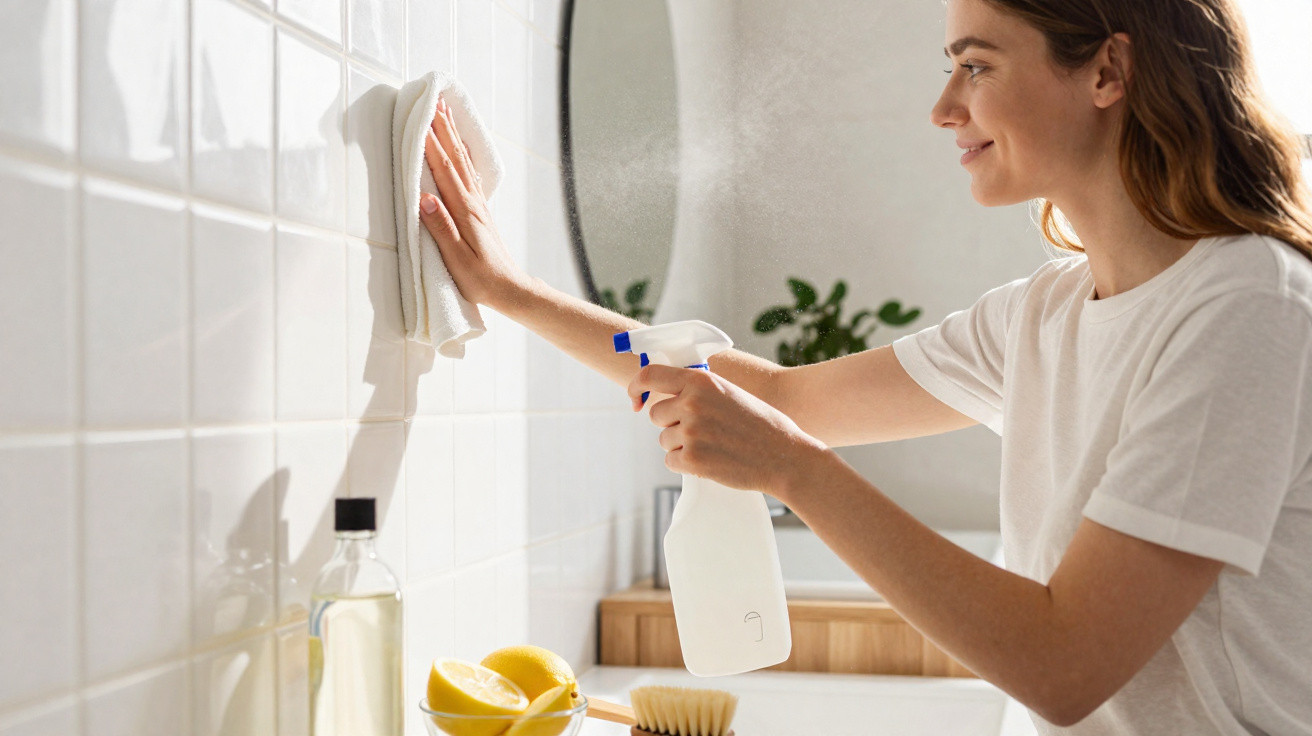
In many homes, the bathroom cleaning routine is changing through the addition of one simple ingredient to the water used to wash the room. Rather than relying solely on manufactured products, some households are mixing white vinegar into their cleaning solution to keep the bathroom smelling fresh for longer and make tiles look noticeably brighter, combining value for money, convenience and a useful household tip for everyday life.
What does vinegar in bathroom cleaning do to tiles?
When added to water, white vinegar works as an agent that helps dissolve built-up dirt, particularly on surfaces such as tiles and grout. The mild acidity of this liquid helps loosen soap residue, body oils and mineral deposits, making them easier to remove with a cloth, sponge or floor squeegee.
On tiles, diluted vinegar removes the dull film that develops over time, leaving the surface with more shine. In areas with “hard” water, regular use may lessen the whitish appearance on walls and floors, while also helping to neutralise odours that become embedded through frequent bathroom use.
Watch a video on the YouTube channel O Pulo do Gato na Construção about professional solutions adapted for the home that remove dullness from tiles and leave the bathroom gleaming:
https://www.youtube.com/watch?v=qMiwKIn0N7w
How can you prepare a vinegar solution to clean the bathroom safely?
For vinegar to work effectively when cleaning the bathroom, the balance between water and product needs to be right. The usual choice is white spirit vinegar with an acidity level between 4% and 6%, diluted in a bucket or spray bottle according to the area being cleaned.
When preparing the mixture, it is important to adapt the concentration to each task and avoid hazardous combinations with other products. The list below sets out practical measurements for everyday use:
- Floors and walls: add between 1/2 and 1 cup (100 to 200 ml) of white vinegar to a bucket containing around 5 litres of water.
- Tiles with a spray bottle: fill a 500 ml bottle with equal parts water and vinegar (250 ml of each).
- Toilet: apply undiluted vinegar around the inside rim, leave it to work for a few minutes, then brush it, following up with disinfectant.
- Freshening the room: add drops of essential oil or an infusion of lemon and orange peel to soften the acidic smell.
How should vinegar be applied to each part of the bathroom?
Using the vinegar solution correctly has a direct effect on tile shine and on maintaining a pleasant scent. For walls, spray on the mixture, allow it to sit for 5 to 10 minutes, then scrub with a soft sponge and rinse afterwards with clean water or a thoroughly wrung-out cloth.
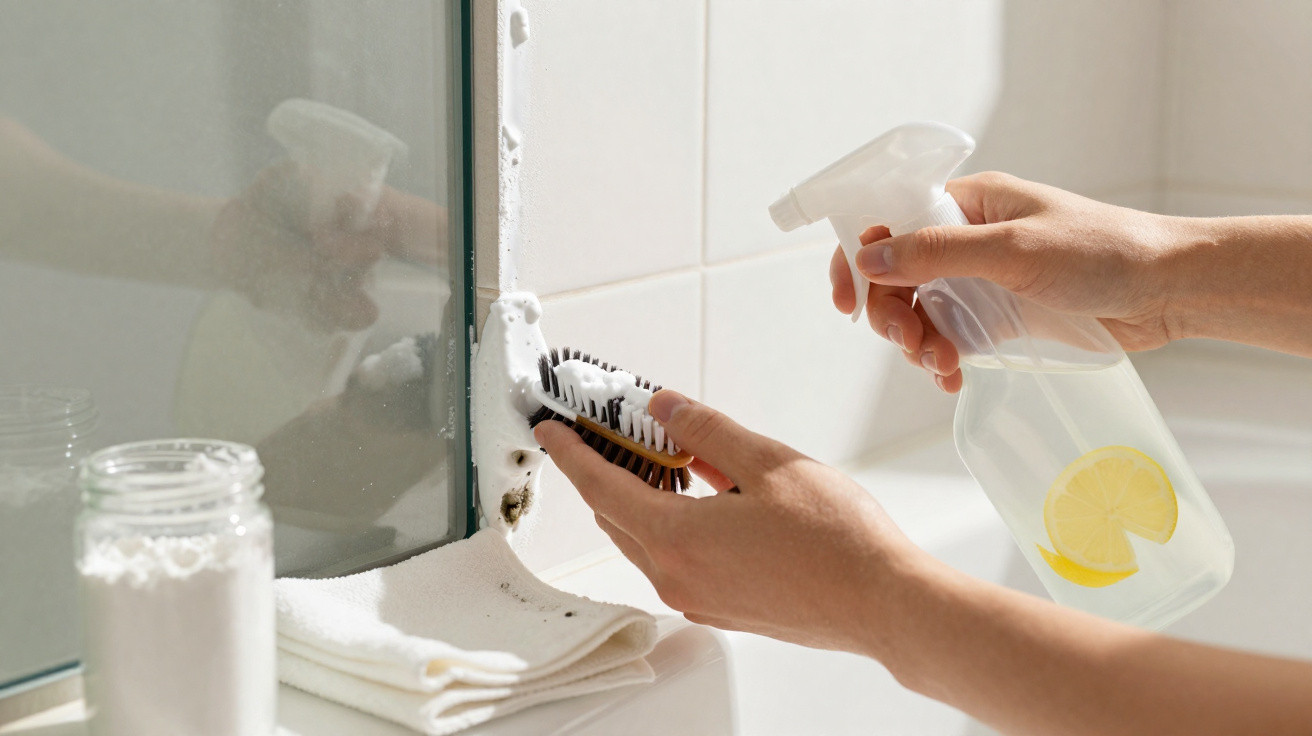
On the floor, the vinegar water can be applied using a floor squeegee and cloth, paying extra attention to corners and areas near the drain. For darker grout, use a stronger solution with a firm-bristled brush. On shower-screen glass and metal fittings, diluted vinegar can help reduce water-spot marks; apply it, leave it briefly, then dry with a soft cloth, always without mixing it with chlorine-based products.
How often should vinegar be used to keep the bathroom fresh and bright?
How often vinegar is used for bathroom cleaning depends on the number of people in the household and how intensively the room is used. In bathrooms used every day, applying the solution to floors and tiles one to three times a week is generally enough to prevent dirt from building up and retain their shine.
Some households also carry out quick cleaning on alternate days using a spray containing water, vinegar and an aromatic ingredient, simply to maintain freshness. Combined with good ventilation, frequent rubbish removal and the additional use of disinfectants, vinegar helps keep the bathroom clean, looking consistently well cared for and smelling more pleasant without relying only on ready-made fragranced products.

Comments
No comments yet. Be the first to comment!
Leave a Comment