
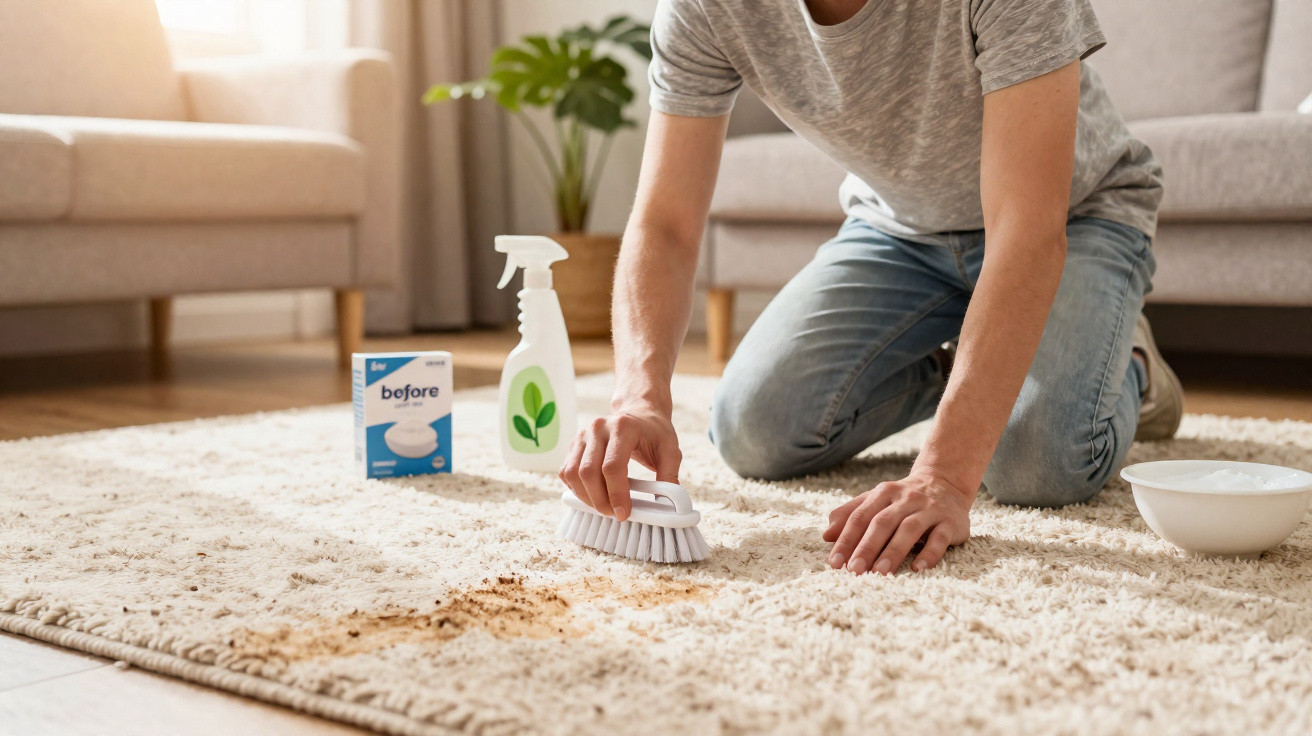
Carpet cleaning at home often raises questions, particularly when there is no dedicated carpet-cleaning machine or dry-cleaning option available. Even so, you can keep a carpet in good condition by following a clear process and respecting the material’s limits, as the way water, detergent and drying are handled directly affects fibre durability and the finished appearance.
How do carpets collect dirt and affect the home environment?
Carpets act as a large air filter indoors, trapping dust, pet hair and particles carried in from outside. If this dirt is not removed properly, the textile flooring can lose its appearance, start to hold odours and aggravate respiratory allergies in sensitive people.
A straightforward care routine, tailored for those without professional equipment, can extend the life of the covering and prevent stubborn stains. This routine is even more important in homes with pets or heavy footfall, helping to reduce dust mites and hair caught in the fibres.
How to clean carpets at home without a washing machine?
Anyone without a carpet-cleaning machine, or who does not want to use dry cleaning, can follow a manual method arranged into clear stages. Cleaning in planned phases-dry removal, product application, controlled rinsing and quick drying-lowers the risk of turning dust into mud or leaving sticky residue within the fibres.
Before using any liquid product, vacuum thoroughly in parallel lines, moving slowly. In high-traffic areas or homes with pets, it may help to repeat the process from different angles to remove hair, solid particles and small bits of debris lodged deep in the carpet.
A practical step-by-step guide to manual carpet cleaning
Once loose dirt has been removed, you can move on to the damp-cleaning stage, taking care not to soak the flooring. Rather than pouring soap straight into a bucket of water, dilute a small amount of mild detergent or a suitable carpet product in a spray bottle, following the label instructions to avoid damaging the fabric.
This pre-spray allows the cleaning agent to work only where needed and makes subsequent removal easier with warm water and a well-wrung cloth. To keep the task organised, follow this basic sequence:
- 1. Compatibility test: Apply the product to an inconspicuous spot and check for colour changes or loose fibres.
- 2. Light spraying: Mist the detergent lightly over the surface without soaking it, holding the bottle some distance from the carpet.
- 3. Contact time: Leave it for a few minutes so the liquid can loosen embedded dirt.
- 4. Gentle agitation: Use a soft-bristled brush or microfibre cloth, working gently in the direction of the fibres.
Which everyday habits extend a carpet’s lifespan?
Drying is a crucial part of effective carpet cleaning: the longer the material stays damp, the greater the likelihood of odours and distortion. Opening windows, switching on fans and directing airflow towards the floor speeds up evaporation, especially in enclosed rooms or where the carpet lies over wooden flooring.
Maintaining a simple routine reduces the need for deep cleaning: vacuuming at least once or twice a week, dealing with stains immediately and placing doormats at entrances all make a difference. To finish, many people use a “carpet rake” or long brush to realign the fibres while the carpet is still slightly damp, restoring loft, evening out its appearance and preventing permanent marks from heavy furniture.

Comments
No comments yet. Be the first to comment!
Leave a Comment