
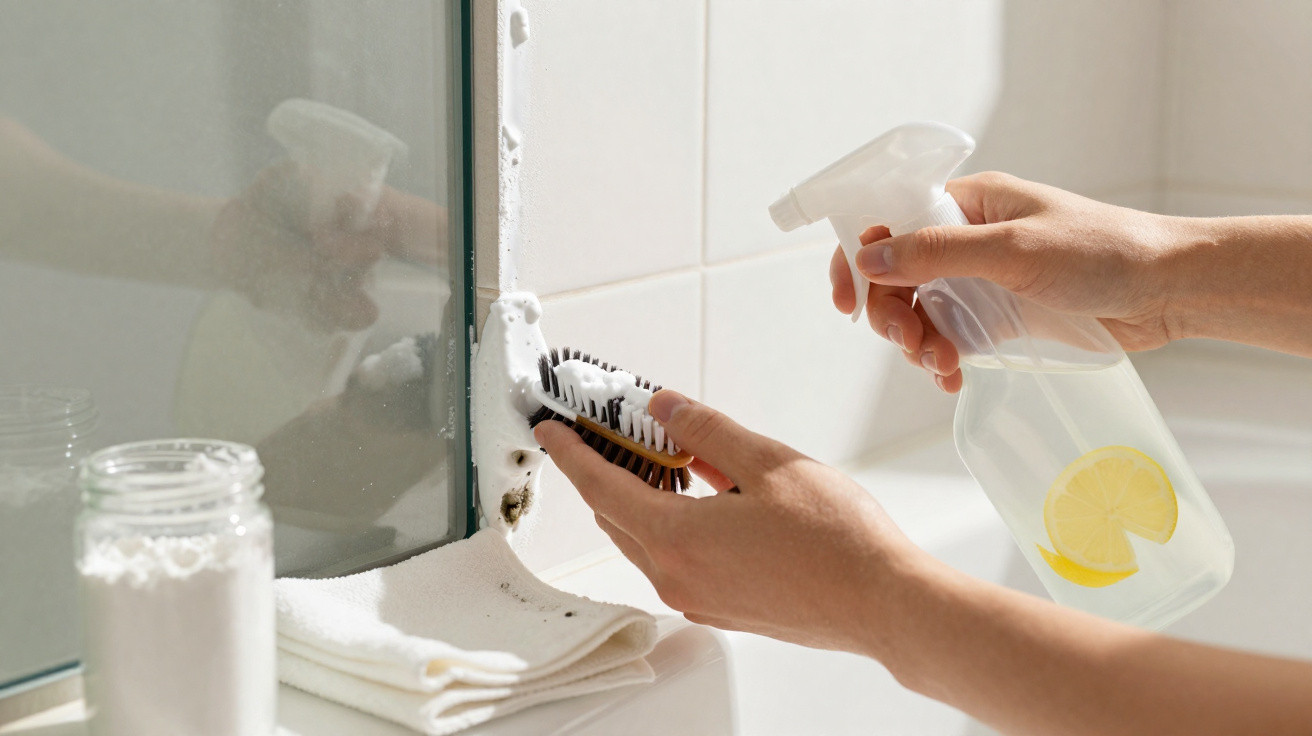
Mould on silicone sealant is a common problem in shower enclosures, around baths and along damp bathroom joints. This household method involves spraying white vinegar onto the darkened area, as its acidity can loosen residue, lessen surface staining and tackle the musty smell.
Why does silicone sealant develop mould so quickly?
Silicone sealant is often found in places where water runs off and takes time to dry, including shower corners, bath edges and the joins between walls and floors. With steam, soap, shampoo and limited ventilation, these surfaces become ideal for dark marks to form.
Mould clings more firmly once the silicone has become porous, cracked or old. In these situations, cleaning can improve its appearance but may not completely lift the stain, as some of the dirt may have penetrated the material.
How does white vinegar work on dark stains?
White vinegar is acidic enough to help break down soap deposits and organic dirt that feeds mould. Once sprayed on and left to work, it reaches small gaps in the silicone sealant, making it easier to scrub after the waiting period.
- Put undiluted white vinegar into a clean spray bottle.
- Thoroughly wet the entire darkened strip of silicone.
- Leave it to work for several hours or overnight.
- Scrub using a small brush or an old toothbrush.
- Rinse with warm water, then dry with a clean cloth.
How to clean mould from a shower enclosure step by step
Before using white vinegar, remove any excess water, hair and soap residue from the area. The silicone sealant should only be dampened by the product, rather than soaked from a recent shower, so that the vinegar remains in contact with the mould for longer.
- Open the window or switch on the bathroom extractor fan.
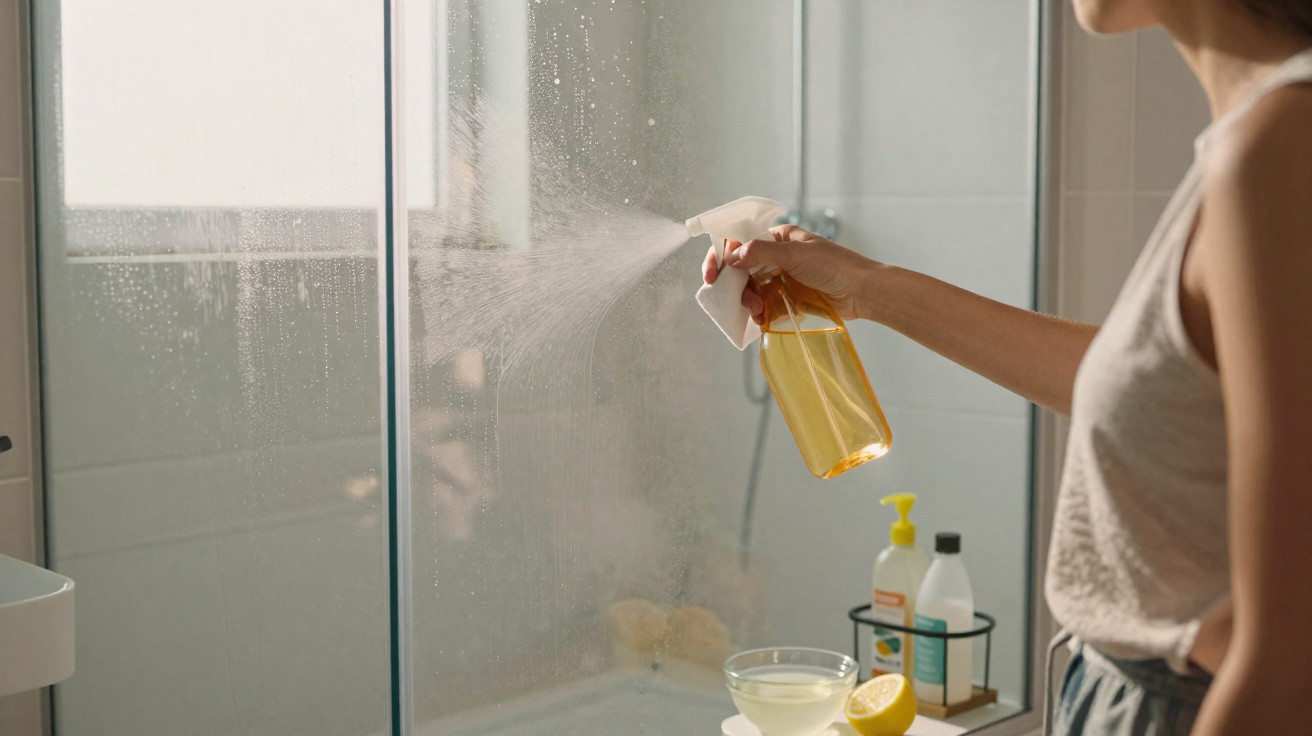
- Spray the vinegar directly over the stained sections.
- Cover stubborn marks with kitchen roll soaked in the product.
- Allow the product to work before scrubbing.
- Finish by thoroughly drying the shower enclosure corners.
When can bicarbonate of soda be used for cleaning?
If the mark is still visible, a bicarbonate of soda paste with a small amount of vinegar can help during the scrubbing stage. The mixture fizzes, loosens residue stuck to the surface and provides more friction for cleaning silicone sealant without using a metal scourer.
The main precaution is never to mix vinegar with bleach, chlorine or strong cleaning products. This combination may release irritating gases, particularly in an enclosed bathroom, where steam and poor ventilation can worsen respiratory discomfort.
How can you stop mould returning to silicone sealant?
After cleaning, the most important step is to keep the shower enclosure dry. Using a squeegee on the walls, leaving the door open and drying the joints with a cloth all reduce moisture held in the silicone sealant, especially in bathrooms without a large window.
When the silicone is torn, coming away from the wall or has deep stains that will not lighten, replacing the sealant may be more effective than cleaning repeatedly. White vinegar is useful for maintenance, but deteriorated flexible grout will continue to trap water and dirt around the shower enclosure edges.




Comments
No comments yet. Be the first to comment!
Leave a Comment