
Ink stains on clothes are an everyday nuisance, particularly in homes with children, for people who work with school supplies, or in construction and office settings. What you do in the first few minutes can make a major difference to the cleaning result, whether the fabric is lightweight or heavier. Knowing the type of ink and fabric will help you select the right product and prevent damage.
What should you do in the first few minutes after an ink stain?
When ink lands on clothing, act promptly before the liquid soaks fully into the fibres. First, lift away any excess using kitchen roll or a clean cloth, dabbing gently from the outside towards the centre of the stain to avoid spreading it further.
It is also best not to pour a large amount of water over the garment straight away, as this may disperse the pigment. If the ink type allows it, dampen only the affected area. Test any cleaning product on a concealed part of the fabric first to check for fading or marks.
How to remove ink stains from clothes with household products?
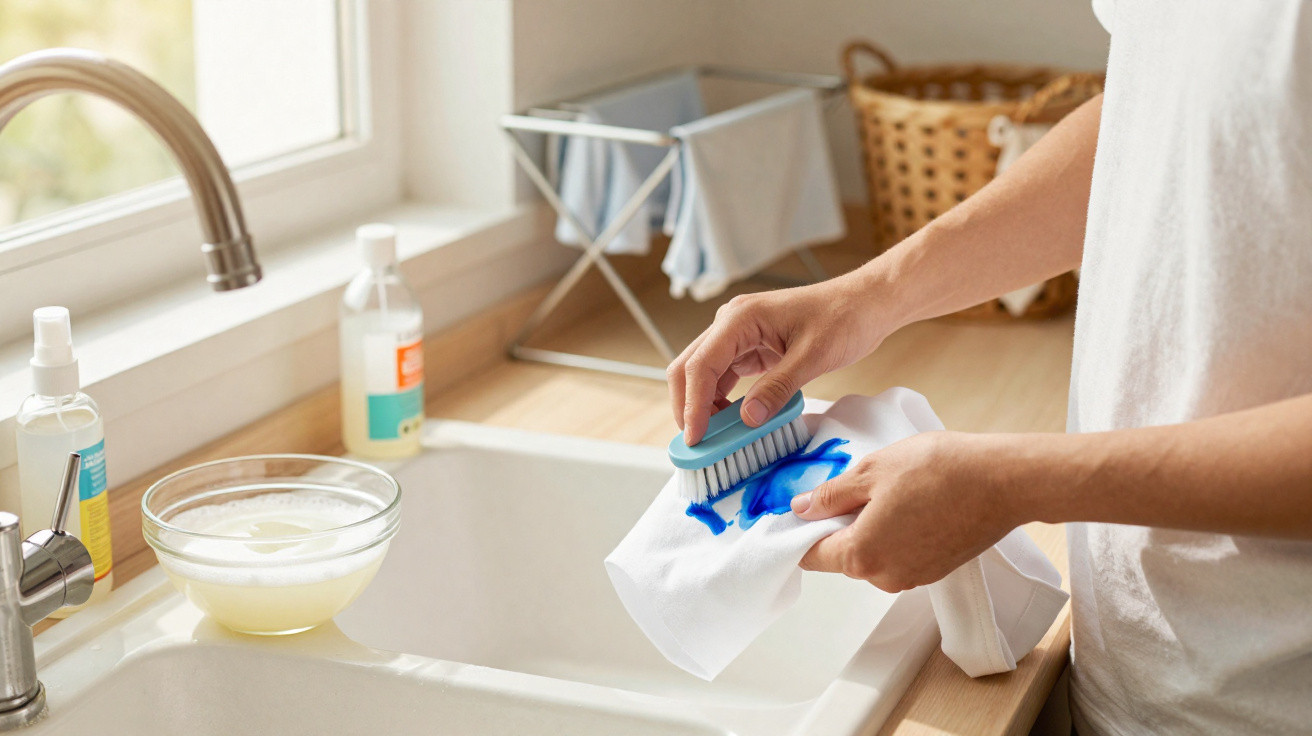
Ink stains on clothing can be removed with common household items, provided they are used carefully and patiently. Water-based inks, including many school paints and some felt-tip pens, will often come out with cold water and mild soap. Gently work the area with your fingers or a soft brush.
More stubborn inks, such as ballpoint pen, permanent marker or certain printing inks, generally respond better to products containing alcohol. To make the options clearer, here are some types of ink and what usually works for each one:
- Water-based inks: cold water and mild soap;
- Ballpoint pen ink: 70% alcohol or an alcohol-based remover;
- Permanent marker ink: isopropyl alcohol, hairspray or a specialist remover, always after testing first;
- Art paints (gouache and school acrylic): cold water, mild washing-up liquid and repeated rinsing.
How should you treat dried and older ink stains?
Once ink has dried into the fabric, home treatment generally takes longer and may need repeating, especially for older stains. With denim and heavy cotton, it can help to soak only the stained section in cold water with mild detergent or washing powder, then rub it gently afterwards.
For dried pen stains, applying alcohol with cotton wool or a white cloth remains a popular method. Replace the cotton wool whenever it becomes coloured, so that ink is not transferred back to the fabric. Use a soft brush only with light movements, checking how the garment reacts at every stage.
What precautions prevent damage to clothes, and when should you seek professional help?
Anyone trying to remove ink from clothes without damaging the fabric should be particularly cautious with harsh products, such as concentrated bleach and workshop solvents. These can cause fading, weaken fibres and even tear delicate garments. For silk, lace, fine viscose or very dark clothing, gentler methods are safer, and testing in an inconspicuous area is always advisable.
In addition, ironing while the stain is still visible can set the pigment because heat “seals” the dirt into the fibres. For valuable or highly delicate items, consider using a specialist dry cleaner. Tell them what type of ink caused the stain and what has already been used at home, improving the likelihood of suitable treatment and preserving the fabric.



Comments
No comments yet. Be the first to comment!
Leave a Comment