
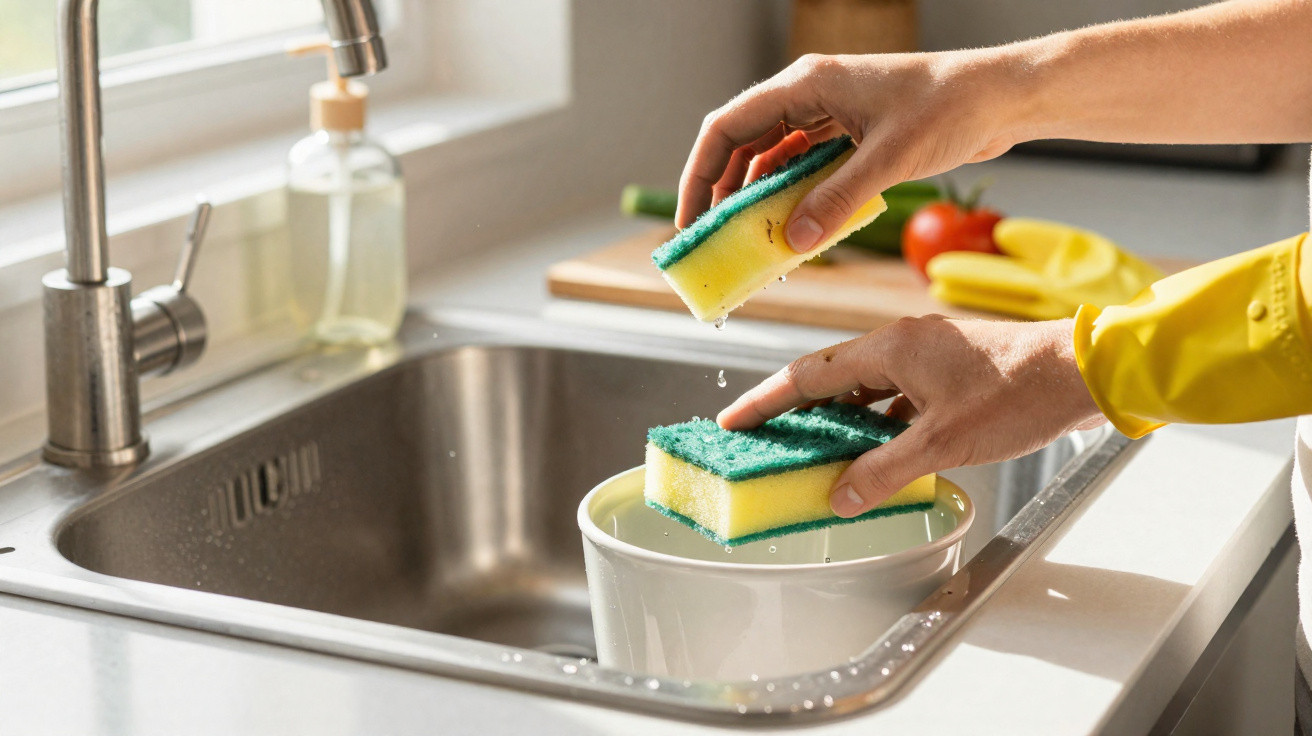
Keeping the home clean means paying close attention to the small details of everyday life. Many people overlook the fact that a dish sponge quickly accumulates millions of harmful germs, so it needs replacing regularly to prevent serious infections.
What is the real danger of using an old sponge?
Constant moisture, together with food debris, turns this household item into an ideal breeding ground for unwanted microorganisms. Using the same sponge for weeks greatly raises the risk of contaminating dishes, spreading dangerous bacteria throughout your kitchen.
Many households follow the harmful habit of waiting until visible wear appears before disposing of it properly. This quiet neglect encourages the growth of pathogens that cause intestinal problems, directly affecting the health of those who eat their meals each day.
What is the danger of leaving a damp sponge on the sink?
Many people make the mistake of leaving a wet sponge beside the tap, but this seemingly simple habit conceals a… Read more
What is the ideal time to replace a sponge?
Experts advise disposing of it strictly every seven days when it is in continuous use at home. Replacing it weekly stops invisible colonies of microbes from reaching alarming levels, ensuring your dishes are cleaned with complete safety.
Waiting two months, or until the material has deteriorated, exposes household members to an unnecessary daily risk of infections. Setting a fixed replacement schedule shields the home from invisible threats and makes washing dishes much more healthy.
Below is a video from the Leda Nagle YouTube channel that explores the points discussed in this topic in greater depth:
How does cross-contamination happen at the sink?
Cross-contamination takes place when microorganisms from a dirty object are transferred directly to clean surfaces or food. An old sponge contains pathogens that spread to cutlery, increasing the likelihood of swallowing harmful particles that affect the body in a silent way.
Even when the item is washed with ordinary washing-up liquid, deeply embedded bacterial colonies are not fully removed because of the high internal moisture. For this reason, surface cleaning only disguises the real danger, making scheduled replacement the only effective barrier for keeping your family consistently protected.
Hygiene Guide
Essential practices
Follow these three key recommendations for everyday life in your kitchen:
- Replace the sponge every week to prevent bacteria;
- Never store the item while it is damp or covered in soap;
- Allow it to dry in a well-ventilated place away from the sink.
What are the signs that a sponge should be thrown away?
Recognising physical changes in the item helps show when contamination has already gone beyond an acceptable level in the home. Changes in texture and the emergence of unpleasant odours are clear warnings that microbial growth has reached its critical safety limit.
However, even if the sponge appears clean and undamaged, weekly disposal remains absolutely essential for everyone. Pathogenic microorganisms are entirely invisible to the naked eye, building up quickly within the fibres and threatening the health of the whole home.
Look carefully for these three main signs that the time to throw the item away has finally arrived:
- A persistent bad smell, even after washing with washing-up liquid;
- Dark marks or visible mould appearing on the surface;
- A marked loss of thickness and visible wear in the washing foam.
How can you extend a sponge’s hygienic lifespan?
Following the right daily habits helps keep the accessory free from extreme contamination before the necessary weekly disposal. Fully removing food residue after every wash reduces the supply of nutrients that feed bacteria in your sink.
Squeezing the item thoroughly and keeping it in a dry place, away from direct contact with standing water, prevents germs from multiplying rapidly. These small everyday actions protect your dishes from invisible risks, ensuring that the task of cleaning plates is always safe.

Comments
No comments yet. Be the first to comment!
Leave a Comment