
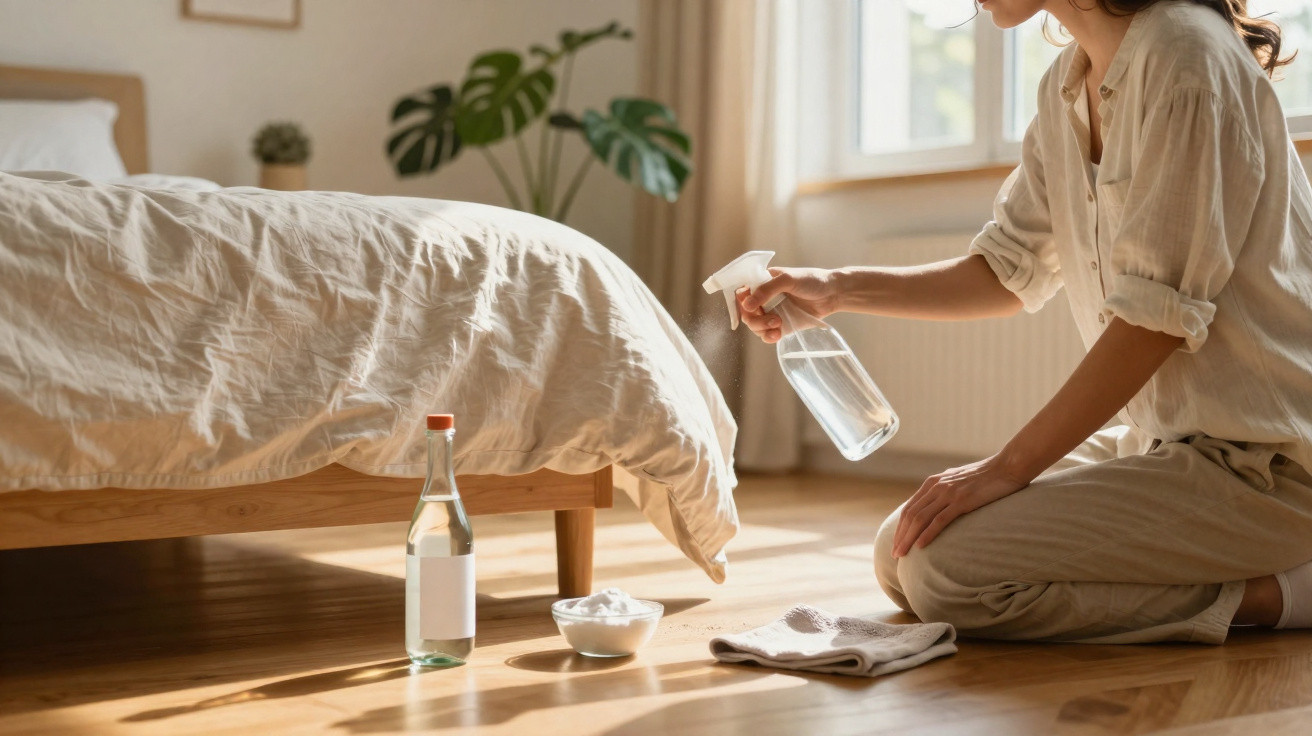
Spraying vinegar beneath the bed can neutralise odours, lessen a musty smell and help clean an area that gathers dust, dampness and debris largely out of sight. White vinegar is mildly acidic and, when diluted, can be used on flooring provided the bedroom is aired after use. Beyond its practical cleaning role, many people link this routine with a symbolic feeling of refreshing their sleeping space.
Why clean beneath the bed with vinegar?
The area under a bed commonly collects dust, hair, fabric fibres, pet fur and moisture. Because it is dark and receives little airflow, a stale odour may develop even if the rest of the bedroom looks clean.
Vinegar can help by working on odours trapped in the floor and corners. Rather than scenting the room like an air freshener, it reduces some unpleasant smells by removing residue that has built up beneath the bed frame.
How should you prepare the solution?
White vinegar is best mixed with water, rather than being used neat in large amounts. For light cleaning, use equal parts water and white vinegar in a clean spray bottle.
Before using it, follow these basic steps:
- Remove any boxes, shoes and other items stored under the bed.
- Vacuum or sweep the built-up dust from the floor thoroughly.
- Spray the solution into corners and over areas with a stale smell.
- Wipe with a damp cloth if dirt is stuck to the surface.
- Leave the windows open for at least 30 minutes so the area can dry.
Which floors should not be cleaned with vinegar?
Vinegar is not suitable for every surface. As it is acidic, it may damage natural stone, marble, sensitive granite, unprotected wood, delicate laminate and waxed floors.
On porcelain tiles, ceramic tiles and durable hard flooring, diluted vinegar is generally safer to use. Even so, test it first in an inconspicuous spot before spraying the whole area, particularly where the floor has a glossy finish or old grout.
Does vinegar help with mould and dust mites?
Vinegar may help reduce a mouldy odour and sanitise surfaces, but it cannot solve a damp problem on its own. Where there are dark marks, damp walls, a strongly smelling mattress or recurring mould, the cause must be addressed: a leak, insufficient ventilation or too many stored items restricting air circulation.
To keep the bedroom less stuffy, combine spraying vinegar beneath the bed with these simple measures:
- Vacuum under the bed at least once a week.
- Avoid storing too many boxes or bags beneath the bed.
- Open the windows in the morning to refresh the air.
- Wash bedding regularly.
- Keep the mattress away from damp walls.
What does this habit mean at home?
In practical terms, spraying vinegar under the bed means giving attention to a neglected part of bedroom cleaning. It cuts down accumulated dust, stale odours and surface moisture, especially in homes with limited ventilation.
Symbolically, some people regard vinegar as a tool for energetic cleansing and renewing the sleeping area. Even for those who do not share that view, the household logic remains straightforward: a bedroom with a clean floor, circulating air and fewer trapped smells supports a more comfortable sleep routine and a visibly better-kept environment.


Comments
No comments yet. Be the first to comment!
Leave a Comment