
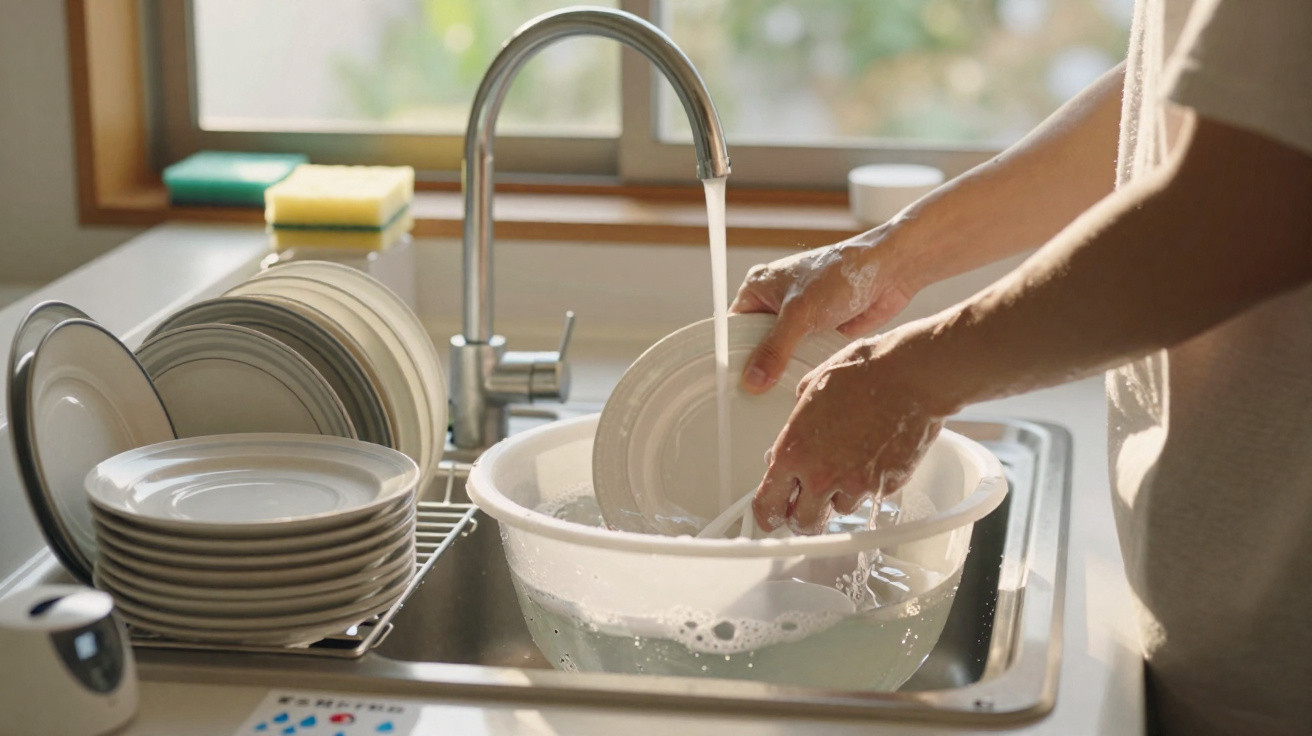
Washing up with a Japanese step-by-step technique has become an option for people who want an organised sink, less wasted water and more effective cleaning. The principle is to sort items, soap them in batches and rinse them in order, maintaining organisation and savings.
Why does washing up in stages save water?
This method prevents the tap from being left running while every item is scrubbed individually. By grouping glasses, plates and cutlery according to how dirty they are, washing up becomes quicker, more orderly and involves less waste of water.
The kitchen sink is used to wash utensils, drain water and support the cleaning routine. Organising this area before starting makes the process more predictable, leaving the sink clear and improving the flow.
The technique works particularly well for these reasons:
- Less time with the tap running: water is mainly used during the final rinse.
- Order: lighter items do not pick up grease from pans.
- Bowl: soapy water keeps the soaping stage contained without waste.
- ⏱ Sequence: everything is ready to be rinsed in one go.
- Clean sink: less clutter makes it easier to keep the kitchen looking presentable.
What is the correct order for Japanese washing up?
Start with the least soiled items, such as glasses, cups and snack plates. Next come plates with sauce, cutlery and moderately dirty utensils, while greasy pans, baking trays and frying pans are left until the end of the washing up.
This separation stops heavy grease from contaminating nearly clean items and making the soapy water dirty too soon. As a result, the bowl lasts longer, the sponge works more effectively and rinsing becomes quicker and more efficient.
How can you use a bowl of soapy water without making it complicated?
Before turning on the tap, remove food scraps from the plates and stack them by category. Then prepare a bowl with water and washing-up liquid, dip the sponge in it or dampen it, and soap each group with control and method.
Clean dishes in sequence
Organisation starts before the water does
Sort the washing up by how dirty it is, soap it in batches and rinse everything in sequence.
The tap stays on for less time and the sink is less messy when you finish.
While soaping the items, keep the tap off and place those already washed in a separate area. Only then turn on the water to rinse everything in one continuous flow, avoiding interruptions and unnecessary spending.
The steps can be followed like this:
- Scrape off food scraps before you begin.
- Sort glasses, plates, cutlery and pans according to how dirty they are.
- Prepare a bowl with water and washing-up liquid.
- Soap lighter items first and leave pans until last.
- Rinse everything in sequence, rather than turning the tap on and off repeatedly.
What is the impact on household water savings?
The saving comes from no longer using the tap as a constant aid, but instead using it at defined points. In homes with lots of washing up every day, this change reduces litres wasted and improves awareness of consumption.
As well as saving water, the method helps reduce washing-up liquid use because the bowl concentrates the suds and avoids applying product again to every item. The sink also becomes less chaotic, reducing repeated work and speeding up the routine after meals.
To save even more, consider the following:
- Use only a small amount of water in the bowl, just enough for soaping.
- Replace the water if it becomes very greasy.
- Leave pans to soak for a few minutes before scrubbing them.
- Fit an aerator to the tap to reduce the rinse flow rate.
How can you keep the sink organised after washing up?
As with the Japanese gohan method that saves time, the secret lies in the order of the process. Separating the stages prevents improvisation, cuts waste and gives the kitchen a cleaner appearance.
After rinsing, allow the washing up to drain properly, wash the bowl, remove residue from the drain and dry the worktop. With this straightforward finishing step, the sink does not become a storage area and the habit becomes more practical for the following day.
Comments
No comments yet. Be the first to comment!
Leave a Comment