
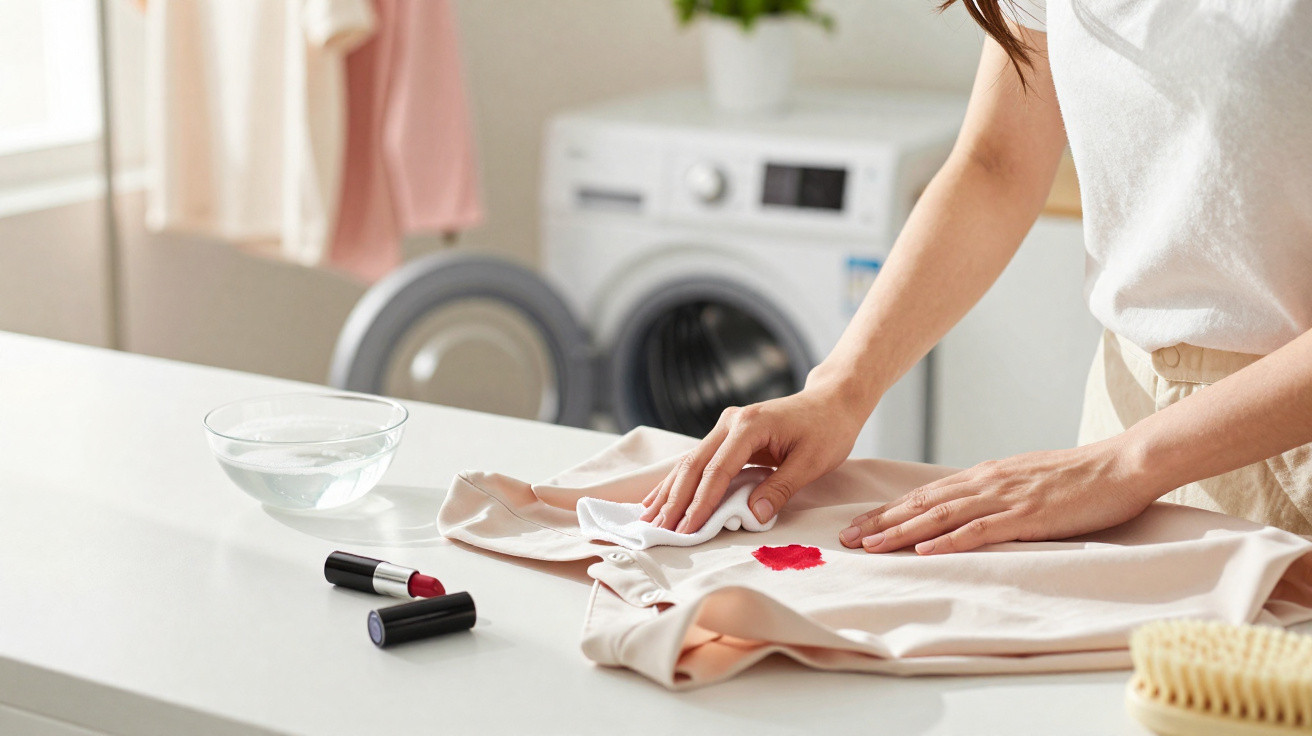
A lipstick stain on clothing often appears at the most inconvenient moment. In many cases, the immediate instinct is to rub the fabric with water or soap, but this can spread the pigment and make it harder to remove. Knowing what to do in the first few minutes can help protect the garment, use products that lift grease and colourant, and prevent permanent marks.
What should you do in the first few minutes to remove a lipstick stain?
Lipstick stains contain oils, waxes and colourants, so they need targeted care. Rather than putting the garment straight into the washing machine, prepare the affected area first before proceeding with a normal wash.
Carefully lift away any excess product, working from the outer edge towards the centre without rubbing. Next, pre-treat the mark with ingredients that dissolve the oily part of the cosmetic and stop the pigment from spreading through the fabric.
Which household methods help remove lipstick stains from clothing?
Some household products work well as degreasers or mild solvents, helping to loosen lipstick without harming the fabric. Before applying any of them, test the product on an inconspicuous part of the garment to check for fading or changes to its feel.
Commonly used options for this kind of stain include:
- Concentrated neutral washing-up liquid: apply it directly to the slightly dampened stain;
- 70% alcohol or regular alcohol: use a small amount on a clean cloth or cotton wool, pressing gently only;
- Two-phase make-up remover: formulated to dissolve long-lasting cosmetics, including long-wear lipsticks;
- Neutral or coconut bar soap: rub it lightly over the stained area only, then rinse immediately afterwards.
How can you protect the fabric while removing a lipstick stain?
When cleaning the garment, it is essential to avoid damaging the fibres, particularly on fine fabrics, intensely coloured items or delicate prints. Using unsuitable products or applying too much friction may lead to fading, distortion and even tears.
A few basic precautions will help preserve the clothing: check the care label before trying any method, use cold water, avoid chlorine bleach on coloured garments, and do not use stiff brushes on delicate fabrics. If the stain remains on silk, lace, fine linen or occasionwear, the safest option is to stop trying home treatments and take it to a professional dry cleaner, explaining the type of lipstick involved and what has already been applied.
Which types of clothing respond best to this method?
Household methods usually work best on durable materials such as cotton, denim, polyester and certain synthetic blends, as these are better able to withstand washing-up liquid, a small amount of alcohol and moderate friction. T-shirts, trousers, uniforms and towels generally offer a greater chance of successful stain removal.
With premium or very fine fabrics, including silk, lightweight viscose, chiffon and delicate knitwear, it is important to use as little product and friction as possible while monitoring how the material reacts. The sooner the stain is treated and the more suitable the chosen degreasing agent is, the more likely the fabric will return to its original appearance, without visible marks or damage to the garment.

Comments
No comments yet. Be the first to comment!
Leave a Comment