
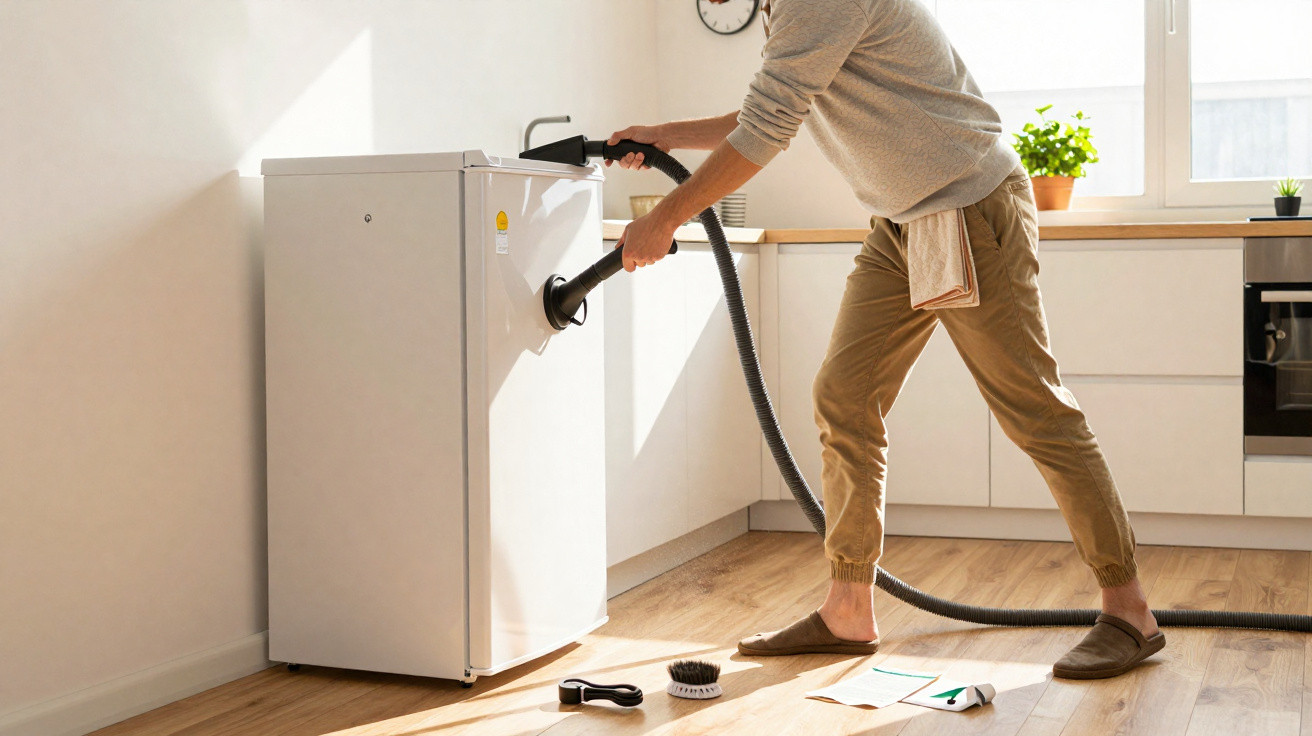
Cleaning the back of the fridge is often one of the most postponed household jobs, even though it directly affects the appliance’s performance and energy use. Dust, grease and lint building up in this area can disrupt heat transfer, make the motor work harder and even shorten the appliance’s lifespan.
Why does cleaning the back of the fridge make such a difference?
The condenser, compressor and pipes that release heat removed from the inside of the fridge are located at the rear, or at the base on some newer models. When this area is coated with dirt, heat cannot dissipate properly, meaning the motor has to run for longer.
This additional strain raises energy consumption, speeds up wear on components and, in extreme cases, may cause overheating and cooling faults. Heavy dust accumulation near hot parts can also lead to unpleasant smells and may create a risk of excessive heating in the appliance.
How often should you clean the back of the fridge?
The best cleaning interval depends on the environment where the fridge is installed. In homes with pets, high footfall or constant dust, the rear should ideally be cleaned every three or four months to keep performance on track.
In more stable settings, with no excess dirt in the air and away from carpets or curtains, cleaning every six months is generally enough. Excessive heat at the back, louder-than-usual noises or a sudden increase in electricity bills are signs that this maintenance should be brought forward.
How can you safely clean the back of the fridge at home?
The process is straightforward, but basic precautions are needed to prevent electric shocks and damage to the appliance. Always unplug the fridge before starting, move it carefully to avoid scratching the floor, and never apply excessive water directly to the motor or coils.
Following an organised sequence makes the task easier and lowers the chance of mistakes, particularly if this is your first time carrying out this type of cleaning at home:
- Unplug it: disconnect the power supply before beginning the cleaning.
- Move the fridge away from the wall: leave enough room to work without straining cables or hoses.
- Remove built-up dust: use a paintbrush, soft brush or a vacuum cleaner with a narrow nozzle on the coils and in the corners.
- Wipe away grease residue: use a cloth lightly dampened with water or a mild cleaning solution, without soaking the area.
- Allow it to dry: wait until everything is completely dry before plugging the appliance back in and returning it to position.
What extra care helps keep the fridge efficient for longer?
As well as cleaning the back of the fridge regularly, a few simple habits can help protect its overall performance. Leaving adequate ventilation around the appliance, rather than placing it directly against the wall or fitting it into a very enclosed recess, supports heat dissipation and prevents the motor from being overloaded.
Checking the door seals, arranging the interior without blocking cold-air vents, avoiding opening the door constantly and not overloading shelves with excessive weight are all part of an essential care routine. By adopting these small measures, rear cleaning stops being a forgotten chore and becomes part of preventative maintenance that extends the fridge’s lifespan while keeping energy consumption under control.





Comments
No comments yet. Be the first to comment!
Leave a Comment