
You mop, you polish, the scent of “ocean breeze” lingers in the room, yet the streaks remain. The answer is not more vigorous scrubbing. It is removing the substances that leave behind both marks and fragrance.
I found the woman with the solution on a Tuesday evening, at that point in the day when offices seem to breathe out and hallways become echoey. She pushed a compact trolley carrying no vast collection of plastic bottles: only a kettle, a squeegee and two carefully folded cloths. Steam drifted from a worn flask like a miniature train. Moving in calm zigzags, she worked across the floor; it did not merely dry, it shone, without the faintest smell. No lemon. No pine. Only clean. Seeing me watch, she smiled and said, “It’s the water.” Then she explained the method. It was remarkably straightforward.
Why streaks happen and how professionals avoid them
Tiles become streaky because residue remains, even if it is barely visible. Minerals in tap water dry into imperceptible patches. Fragranced cleaning products deposit surfactants that reflect the light. The haze visible in bright midday light is not dirt reappearing. It is residue from the previous clean. The answer is not in a bottle; it is in the water.
I saw her make a single pass through a city lobby that normally carried the mixed smell of coffee and air freshener. She applied a light mist, swept a microfibre cloth over the tiles, then used a taut dry cloth and a small window squeegee to finish. Nothing theatrical. No perfume. The security guard looked down and genuinely moved back from the floor. It appeared wet, although it was not. It simply looked as tiles ought to look.
Mineral residue bends light, making glossy tiles appear worn and matt tiles seem dusty. Scent and soap deposits create a fine coating that catches every shoe mark. Hot distilled water contains no minerals and loosens grease quickly, allowing it to lift, suspend and evaporate without residue. The squeegee clears away the suspended dirt before it can dry. Dry polishing removes the microscopic remnants before they become visible. That is the entire approach: remove the dirt, then remove the remainder.
The hot distilled water, two-cloth and squeegee method
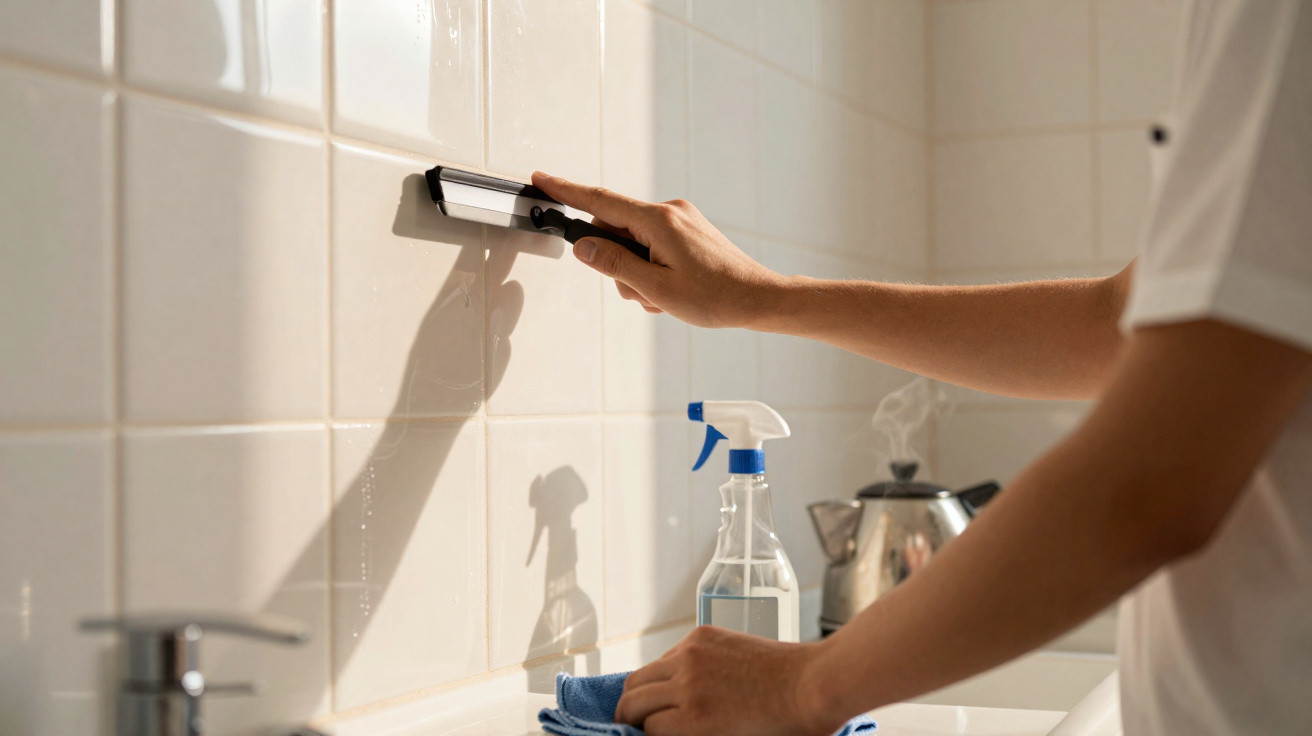
Put hot distilled water in a spray bottle-roughly 600 ml will cover a typical kitchen. Mist the tiles lightly, then move a damp microfibre cloth in overlapping “S” movements. Immediately repeat the pattern using a dry glass cloth, or, for tiled walls, draw a small squeegee in straight top-to-bottom strokes. For kitchen grease or shoe polish, add a very small pinch of soda crystals to your bucket before rinsing with clean hot distilled water. No fragrance. No film.
Everyone knows the moment: the bathroom appears spotless until sunlight on the mirror proves otherwise. This is exactly why the second cloth is essential. Avoid soaking the floor; a fine mist works best. If you are mopping, use two buckets: one with hot distilled water for cleaning and another with hot distilled water to rinse the mop head. Realistically, few people will do that daily. Weekly is sufficient for most households, with a speedy two-minute polish of busy areas in between.
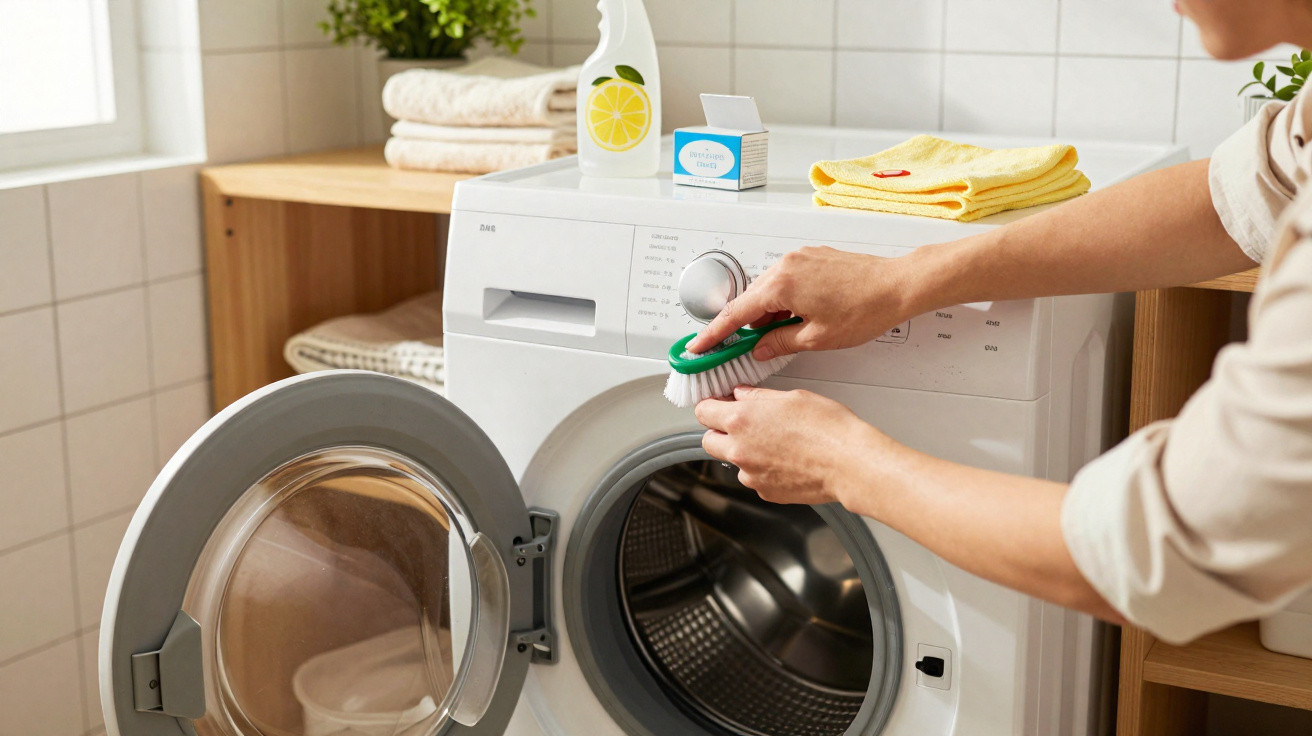
If streaks will not disappear, the issue is nearly always the cloth rather than the tile. Aged towels release lint. Microfibres washed with too much detergent retain fabric-softener residue. Clean cloths on a hot wash using only a spoonful of soda crystals, and do not use fabric softener at all. Drying is essential if you want completely streak-free tiles. Use the squeegee on walls and broad shiny floors to reduce drying time, then finish the corners with the glass cloth. Here is what the cleaner told me, alongside the brief reminders I put on a sticky note in our broom cupboard.
“Hot, clean water in. Dirty water out. Wipe, then dry. If you can smell it, you’ve left something behind.”
- Use distilled water for spraying and rinsing. It eliminates streaks.
- Stick to a microfibre and glass cloth. Do not use cotton or paper towels.
- Add a tiny pinch of soda crystals for greasy kitchens, then rinse.
- Clean in sections that can be dried before they air-dry.
- Squeegee walls, polish floors and leave corners until last.
What is happening beneath the shine
Streaks are about optics, not effort. Tap-water minerals form microscopic ridges, while surfactants in fragranced products leave a coating that refracts light unevenly. Heat helps to loosen grime, but water purity is more important. Distilled water evaporates without residue, leaving only the surface you wanted to see. It was like observing a magic trick without any showmanship.
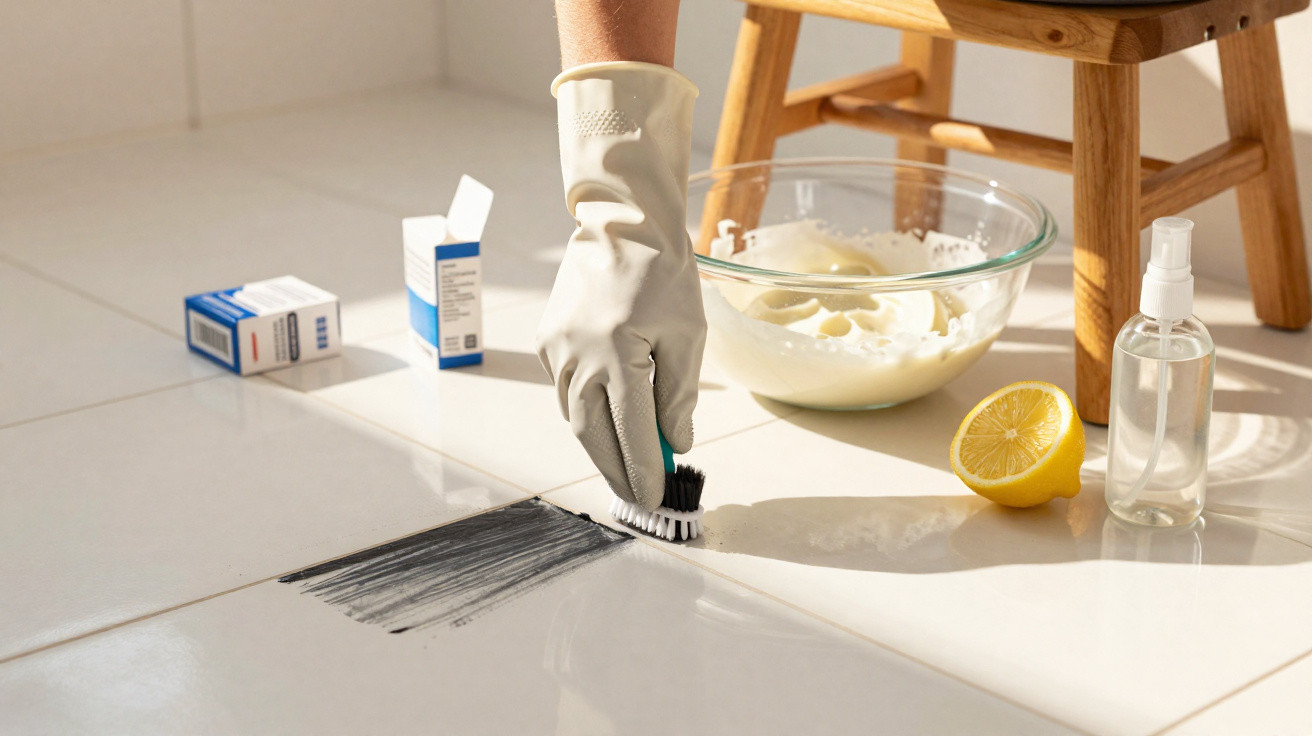
Glazed ceramic, porcelain and polished stone all respond well to this method; grout is the main consideration. Grout readily holds soap scum, so lightly scrub it using a paste of baking soda and a splash of hot distilled water, then rinse so that the baking soda does not dry inside the joints. Polish the tile surfaces immediately. With matt tiles, use less mist and rely more heavily on the dry cloth. With glossy tiles, use the squeegee as you would on a window and enjoy the finish.
There is also the overlooked issue of scent. Freshness is not a perfume; it is the lack of one. Fragrances settle into porous grout and linger in poorly ventilated rooms, persuading the brain that scented means clean. Distilled water is the unsung hero of flawless tiles. There is no fragrance, no persistent bouquet and no next-morning headache. Just your footsteps and a surface that gives nothing away.
Build a routine you will actually maintain
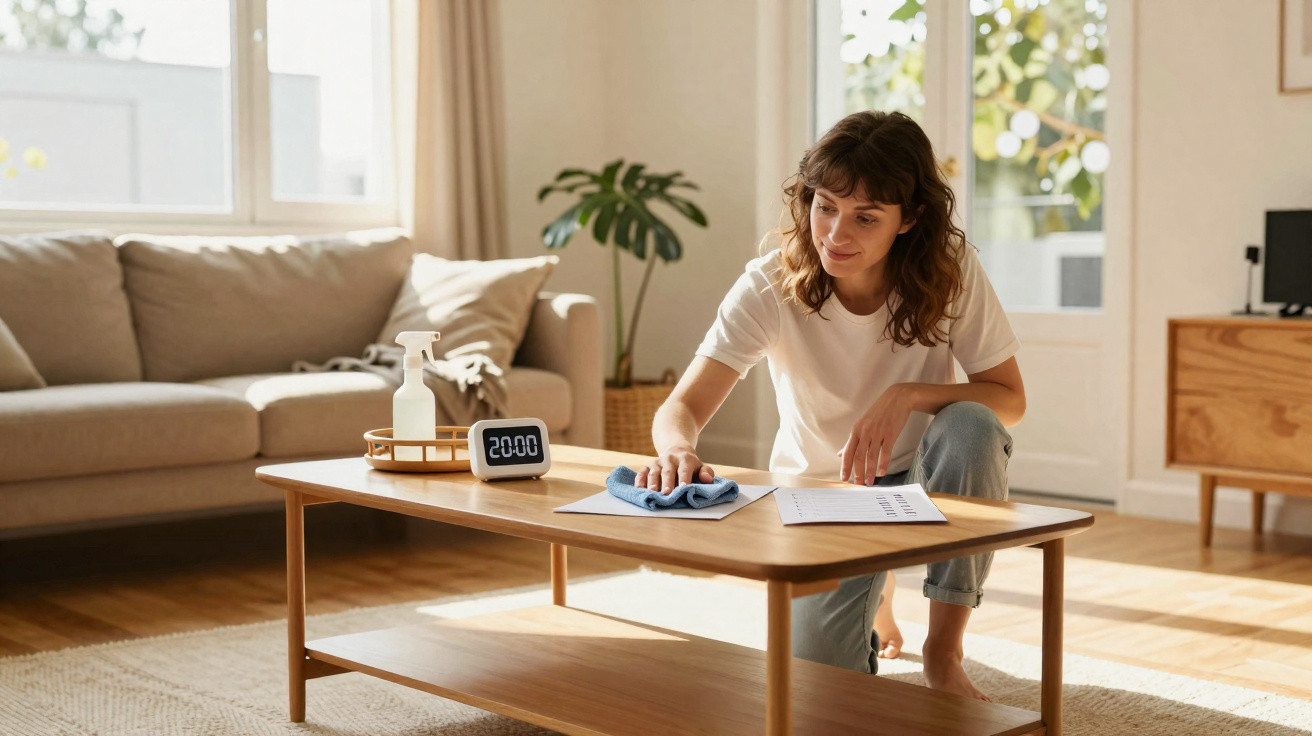
Forget all-day cleaning sessions. Instead, work in short cycles. After dinner, spend two minutes in the kitchen misting, wiping and polishing around the hob and sink. After showering, quickly squeegee the bathroom tiles while the steam is still useful, then spend 30 seconds polishing the splash area. When something is spilt, use hot distilled water and a cloth straight away; oil and jam require lifting and drying, not perfume. Consistent small jobs outperform any bottle making promises. There is nothing mystical about the cleaner’s method. Its brilliance lies in the relief of a home that does not smell of anything at all.
| Key point | Detail | Benefit for the reader |
|---|---|---|
| Hot distilled water | Contains no minerals, softens grease quickly and evaporates cleanly | Zero streaks without a chemical smell |
| Two-cloth + squeegee | Damp microfibre lifts dirt, dry glass cloth polishes, squeegee is for walls | A professional finish within minutes |
| Residue control | No fabric softener on cloths, use a light mist and rinse greasy areas | Prevents haze from returning the following day |
FAQ:
- Can I use tap water if I heat it? Heating helps to break down grease, but tap-water minerals will still dry as streaks. Choose distilled or deionised water for spraying and the final pass.
- Will this work on matt porcelain tiles? Yes. Apply a lighter mist and avoid heavy pressure. Matt surfaces benefit from an immediate dry polish with a tightly woven glass cloth after the damp wipe.
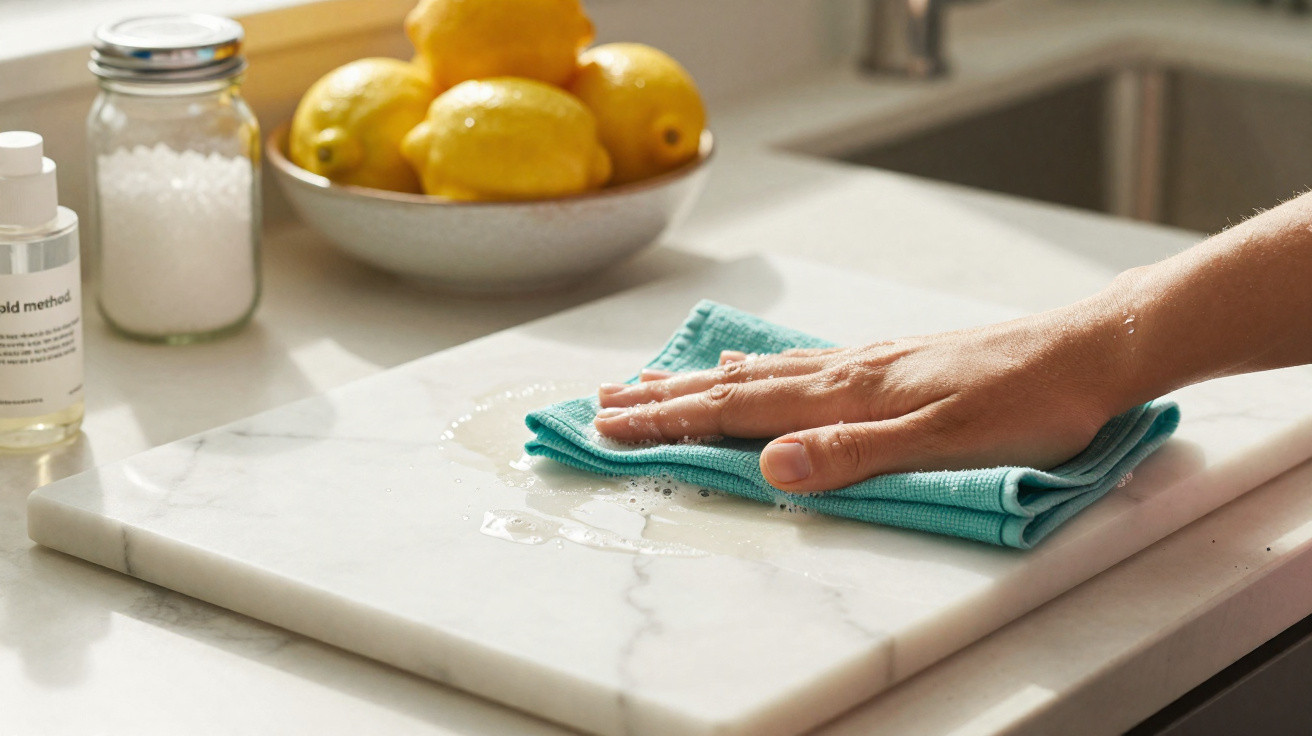
- What about natural stone like marble? Use only hot distilled water and microfibre. No vinegar and no acids. For greasy areas, use a little soda crystals in the bucket, then rinse with fresh distilled water and dry.
- How do I handle dirty grout without smells? Quickly make a paste from baking soda and hot distilled water, scrub the grout lines, rinse the area and then polish the tiles. Do this monthly rather than daily.
- Do I need special cloths? Choose a good-quality microfibre for the damp stage and a smooth glass cloth for drying. Wash both hot with soda crystals and no softener, so they lift dirt rather than smear it.
Comments
No comments yet. Be the first to comment!
Leave a Comment