
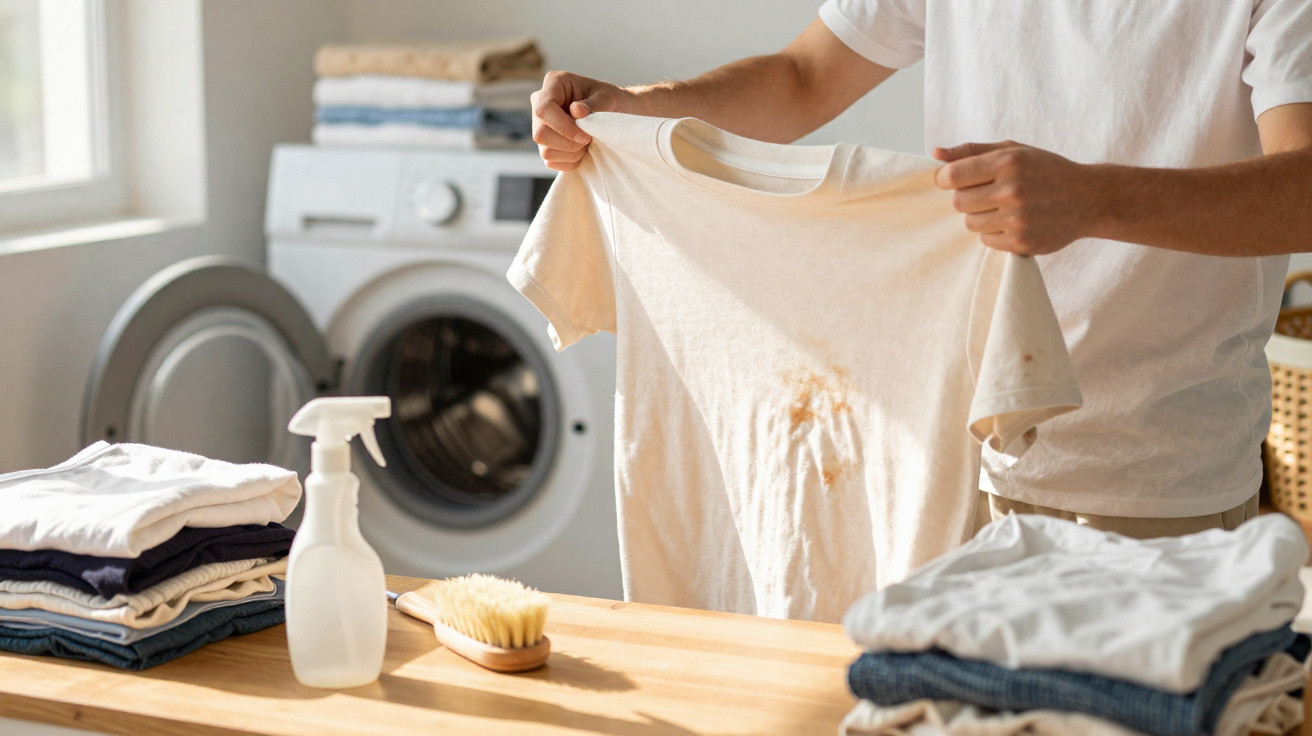
Many people automatically turn T-shirts, jeans and jumpers inside out before washing them. It sounds like a professional trick, protects prints and colours – yet it can often leave stains stubbornly in place or even embed them more deeply in the fabric. What matters is not the routine itself, but where the dirt and stains are actually located.
Why so many people turn clothes inside out before washing
This habit usually comes from family life: sort the laundry, fasten buttons, turn everything inside out – that is the standard routine in many households. There is a sensible reason behind it at first.
“Washing clothes inside out protects the visible outer surface from friction inside the drum.”
The benefits are obvious:
- Prints, flock finishes and embroidery rub less against the metal drum.
- Dark fabrics wear more slowly and look less faded.
- The inner side is exposed, allowing detergent to reach sweat, deodorant and cream residue more effectively.
This genuinely helps with jeans, black hoodies and T-shirts featuring large prints: they retain their “like-new condition” for longer, while common sources of odour around the underarms and back can be cleaned more directly.
However, this is also where the trap lies: applying the technique automatically to every item can mean neglecting the area that should really be the focus – the outer side with visible stains.
When washing inside out undermines cleaning results
As soon as the outside of a garment has obvious marks, the benefit turns into the opposite. Turning it inside out then restricts the cleaning effect.
“Stains need to be directly exposed to the flow of water, the detergent solution and mechanical movement – otherwise they remain.”
When a dirty garment is turned inside out, this happens:
- The stain is effectively wrapped inside the fabric and has less direct contact with water.
- Friction occurs mainly on completely clean areas rather than where it is needed.
- Dirt spreads through the fabric instead of being fully released.
The deceptive part is that everything smells fresh after washing, with the fragrance creating an illusion of cleanliness. Only once the item dries do tide marks reappear, or a faint shadow remains. At that point, the wash may have pleased your nose, but it has not cleaned the fibres sufficiently.
This is particularly troublesome with:
- Grease stains from oil, butter or salad dressing
- Tomato or curry sauce
- Soil and grass stains on knees or trouser legs
- Make-up and foundation marks on collars and cuffs
All of these stains adhere strongly and are sensitive to heat. If they are “hidden” on the inside, they can become more deeply embedded or fade only slightly – until you inspect them again in good light.
The golden rule: when to wash inside out and when the right way round
“A simple rule to remember: dirty outside – wash the right way round. No visible stains – wash inside out for protection.”
This gives clothing both protection and effective cleaning. In practical terms:
- Jeans without stains: Turn them inside out to protect the colour and fabric.
- A black hoodie without visible marks: Wash it inside out so it stays deep black for longer.
- A T-shirt with a large print but no stains: Turn it inside out as well, to protect the printed area.
- Trousers with grass stains on the knee: Pre-treat them, then wash them the right way round so the stain is exposed.
- A blouse with make-up on the collar: Treat the collar first, then wash it the right way round.
There are exceptions: very delicate prints or raised flock designs may be better kept inside out despite a stain. In that case, the affected area needs especially thorough pre-treatment and the wash programme should be slightly more intensive.
How to get stains genuinely clean: pre-treat rather than hope
Simply throwing garments with visible stains into the washing machine wastes potential. Effective stain removal works in three stages.
Step 1: Spot the stain before it disappears into the laundry pile
A quick check while getting changed is enough: inspect the front, collar, sleeves and knee seams – these are where most stains appear. The sooner you notice them, the more easily they can be removed.
Step 2: Dampen the stain and treat it appropriately
Different types of dirt need different treatment:
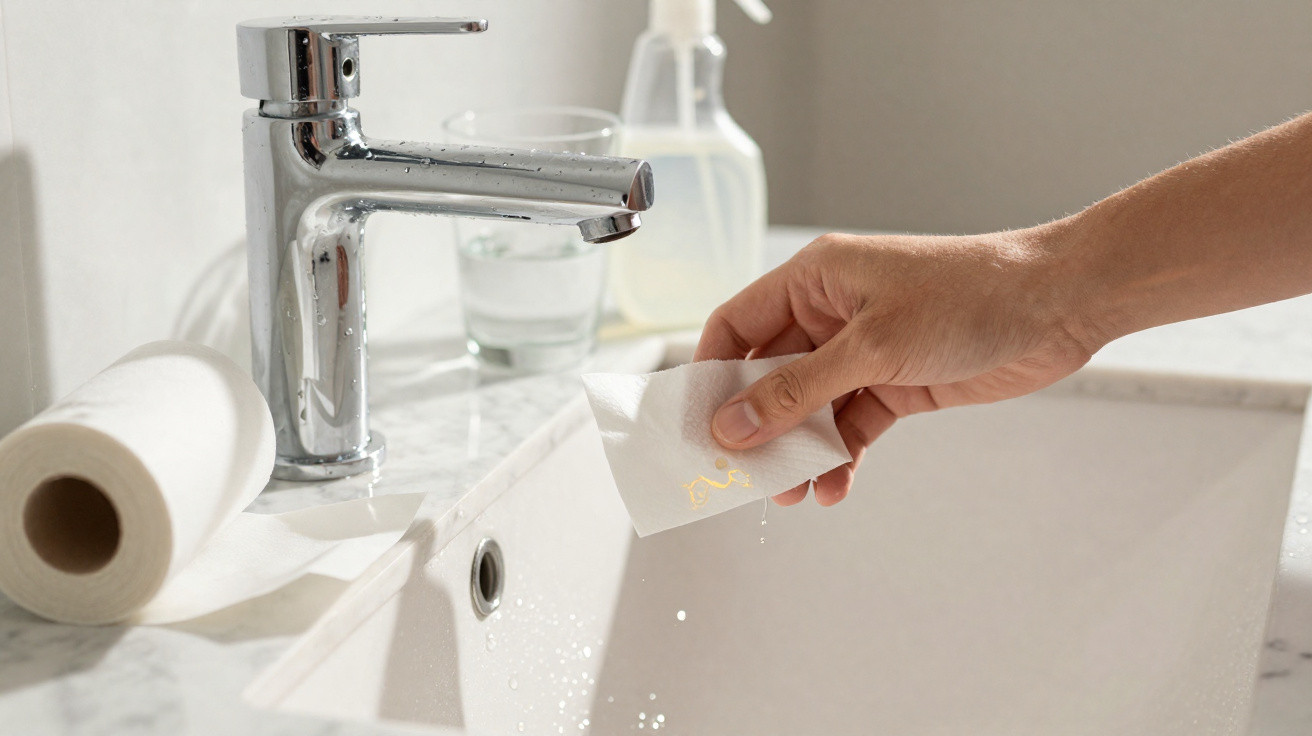
- Grease stains: Lightly dampen the fabric, apply a drop of washing-up liquid and gently work it in.
- Protein-based stains (heavy sweat, blood): Rinse with cold water, then use a stain remover – do not apply heat at the start.
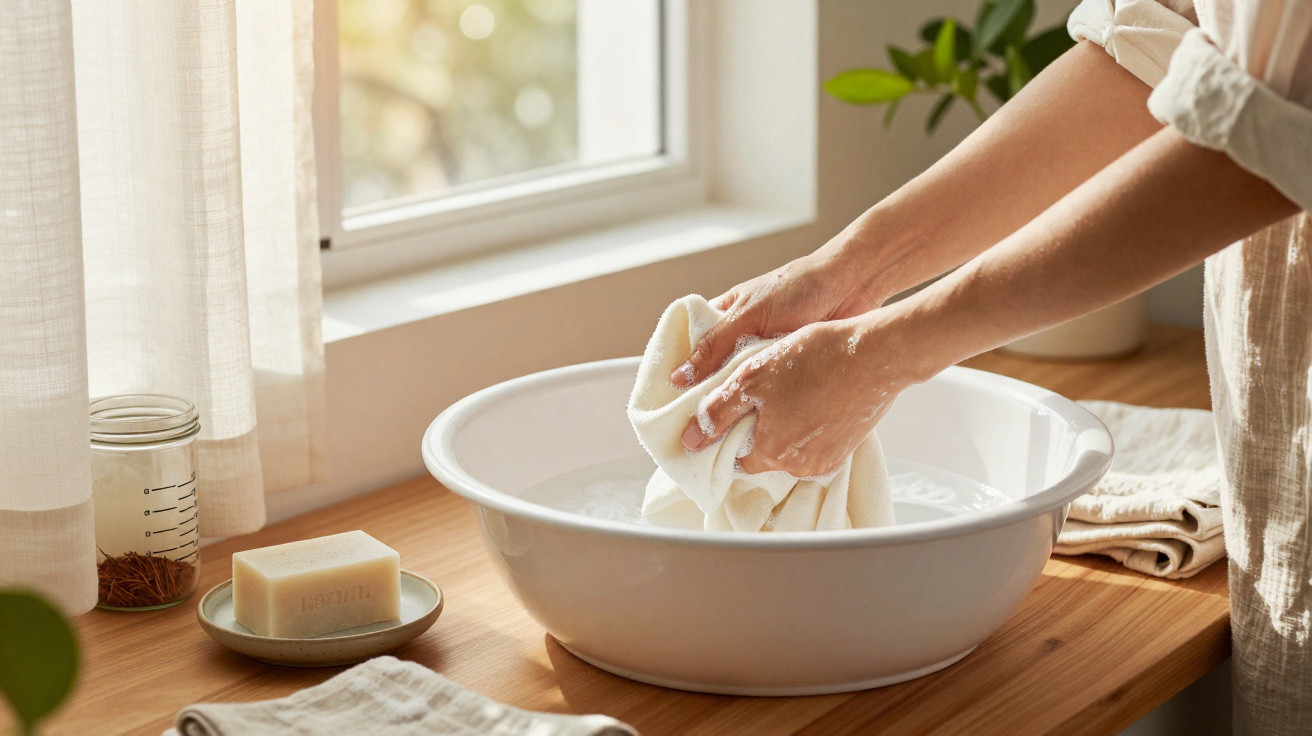
- Coloured sauces (tomato, curry): Apply an enzyme-based stain remover or stain soap and leave it to work briefly.
- Mud and soil: Allow it to dry completely first, brush it off, then pre-treat any remaining marks.
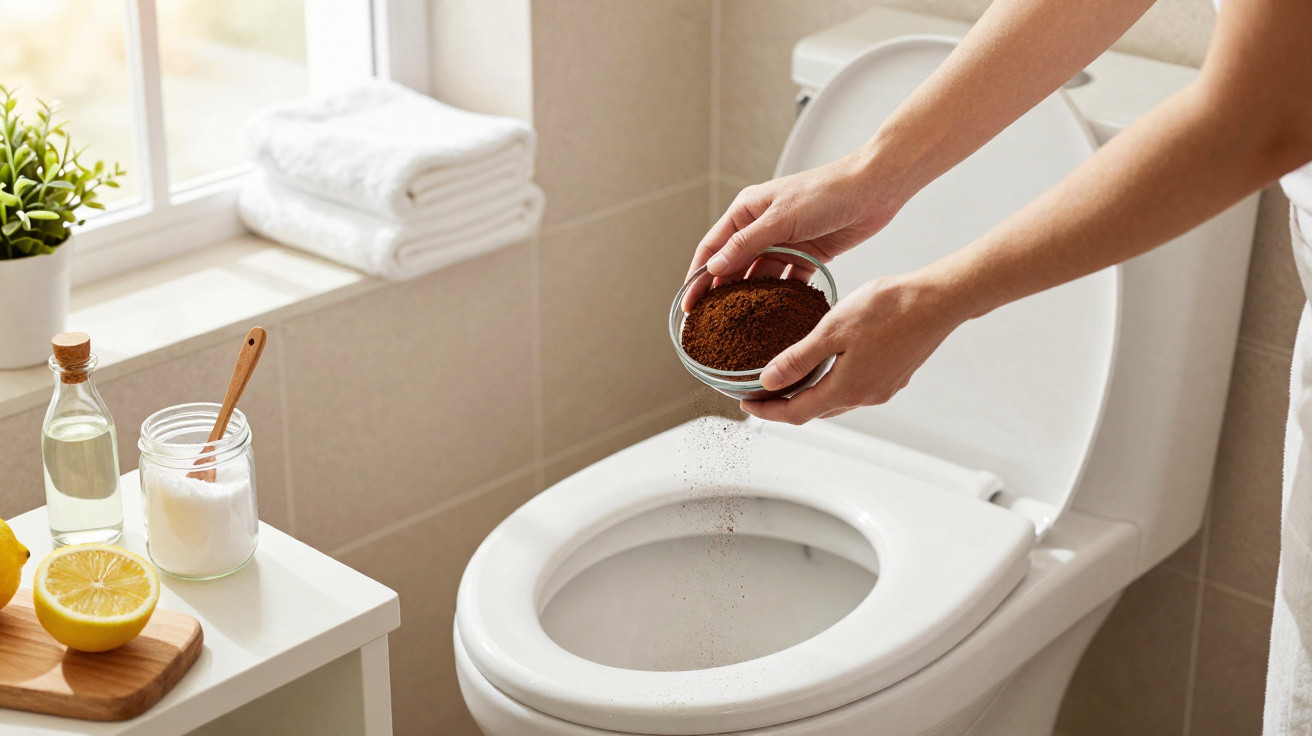
- Persistent odours: Put a little bicarbonate of soda on the affected area, leave it to work, then wash as normal.
Contact time matters more than force. Gentle rubbing with your fingers or a soft cloth is sufficient. Too much pressure roughens the fibres and makes laundry look old more quickly.
Step 3: Wash the right way round so the stain is “in the firing line”
If the outer side is affected, it should face outwards in the machine. The water flow can then reach the stain directly, the detergent works where the dirt is, and the movement of the drum helps release it.
“Pre-treating first and then washing the right way round often saves an entire second wash cycle.”
Wait before using the tumble dryer until the stain has genuinely disappeared. Heat otherwise “bakes” any residue into the fabric, making it very difficult to remove afterwards.
The overlooked controls: temperature, load size and spin speed
Even the best pre-treatment loses its effect if the washing machine is set incorrectly. Several factors make a major difference:
- Temperature: 30 to 40 degrees is usually enough – higher temperatures can harm delicate colours, while lower ones may not remove grease effectively.
- Load size: An overloaded drum prevents the movement needed to loosen stains.
- Spin speed: Delicate garments need a gentler spin programme; otherwise, the outer surface suffers unnecessarily.
- Detergent quantity: Too much leaves a grey film on fabrics, while too little does not wash thoroughly enough.
- Zips and hook-and-loop fastenings: Close them beforehand to prevent abrasion and tiny scratches on neighbouring textiles.
Good washing routines start when sorting laundry
Sorting laundry by stain type as well as colour and temperature saves time and frustration. A brief look at each item is all it takes.
“A single check before putting something in the laundry basket often determines whether clothes look truly clean after one wash – or end up back in the machine.”
Useful habits when sorting include:
- Set aside visibly heavily soiled items instead of mixing them into the normal wash.
- Check friction-prone areas such as collars, underarms and waistbands particularly carefully.
- Put small items with hooks, such as bras, or hard embellishments into laundry bags.
Building this short check into everyday life noticeably extends the lifespan of your favourite clothes – and means you need to discard fewer pieces simply because they no longer look “properly clean”.
Why smell and appearance often tell different stories
Many people judge washing results mainly by smell: if the laundry smells fresh, they consider it clean. In reality, fragrances and fabric conditioner do not remove stains; they merely mask them.
Visibly clean clothing means:
- no visible tide marks or shadows after drying,
- no sticky or slightly rough areas remaining,
- even colour with no dark or light patches of staining.
Problems on light-coloured fabrics often only become apparent in daylight. Anyone who regularly washes items inside out despite dirt on the outer side will notice this more often – and may quickly assume that their detergent is “weak”. In truth, the problem was the reflex to turn the garment inside out.
Ultimately, not every old habit should be set in stone. Turning clothes inside out remains useful – but only when used selectively. If you check for stains first and decide between “inside out or the right way round” afterwards, you will get far more from every wash load while protecting colours, fibres and your patience at the same time.


Comments
No comments yet. Be the first to comment!
Leave a Comment