
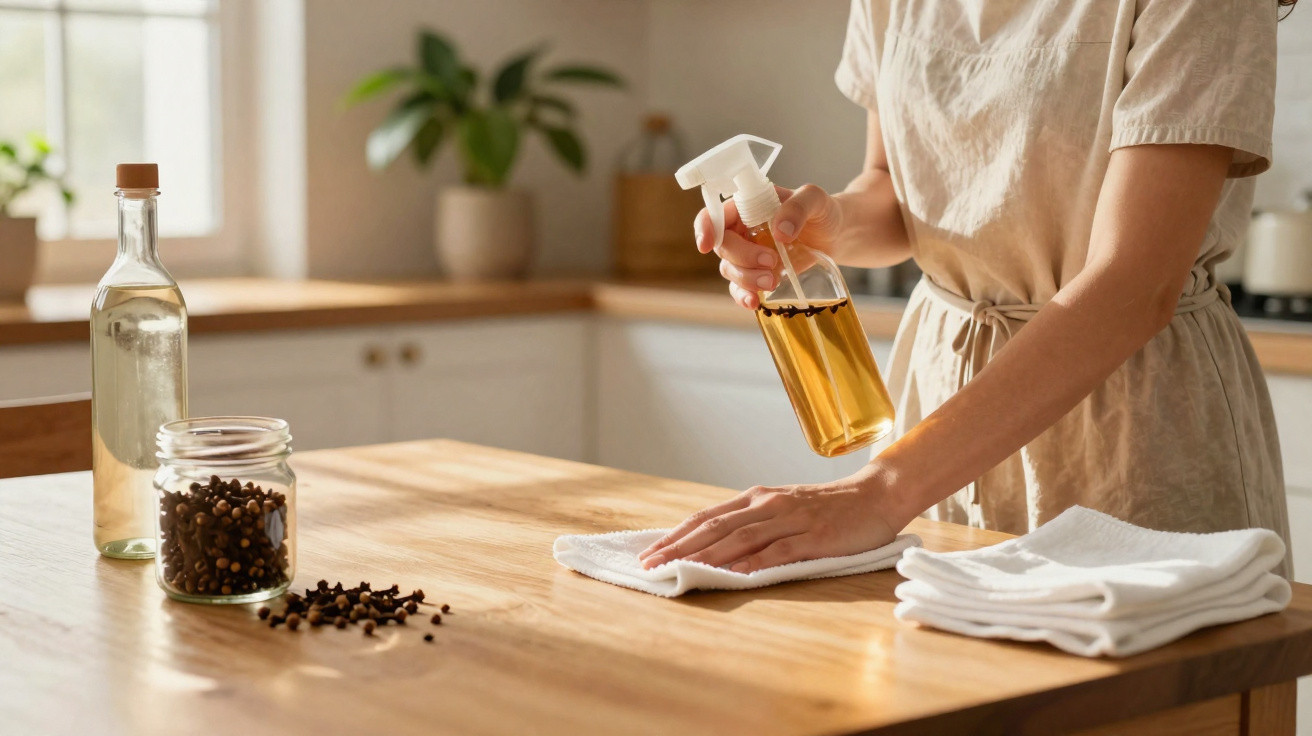
The mixture of cloves and white vinegar may help to lift stuck-on dust, light marks and odours from certain washable surfaces. Vinegar works as an acidic cleaner, while cloves provide a distinctive scent; however, this homemade product must be diluted, patch-tested and used with care on furniture finishes.
Why blend the two ingredients?
Blending cloves with vinegar releases aromatic compounds and colour from the spice into the liquid. The vinegar’s acidity can loosen mineral deposits and some superficial marks, particularly on materials that can withstand acidic products.
Cloves contain aromatic compounds, including eugenol, but this does not automatically make the recipe a proven disinfectant. Where disinfection is genuinely required, use registered products in accordance with the label instructions.
How should the cleaning mixture be prepared?
The preparation must be thoroughly strained, as clove particles may scratch delicate surfaces. Diluting the mixture helps to reduce the chance of staining and acid-related wear.
- Blend two tablespoons of cloves with 500 ml of white vinegar.
- Strain through a fine cloth or coffee filter until every fragment has been removed.
- Combine one part of the solution with two parts water.
- Transfer it to a labelled spray bottle and keep it out of the reach of children and pets.
- Spray the cloth first rather than applying the product directly to furniture.
Which furniture can the mixture of cloves and white vinegar be used on?
The mixture of cloves and white vinegar can be patch-tested on laminated surfaces, glass and washable areas that tolerate mildly acidic products. The cloth should be only damp, then followed with a dry cloth to prevent liquid from collecting in joints and corners.
Varnished wood, lacquer and coated MDF may lose their sheen, stain or swell if exposed to too much moisture. Do not allow the solution to reach open edges, cracks or unprotected wood, as these areas absorb liquid readily.
What precautions prevent damage during use?
Before cleaning the whole surface, apply a small amount to a concealed area and check the result once it has dried. Vinegar must also be kept away from acid-sensitive materials and should never be mixed with other chemical products.
- Do not use it on marble, travertine or other calcareous stones, which may become dull or corroded.
- Avoid screens, electronic devices, leather and waxed surfaces.
- Do not leave the mixture on a finish for extended periods.
- Keep the room well ventilated while applying it.
- Never mix vinegar with bleach, as the combination may release dangerous fumes.
A useful cleaning aid when used carefully
This homemade solution is most effective as an aid for removing light dirt and scenting compatible surfaces. It will not restore damaged wood, eliminate damp penetration or prevent mould from returning when the space remains humid and poorly ventilated.
For furniture, the outcome depends less on the amount used than on controlling moisture. Applying the mixture of cloves and vinegar with a well-wrung cloth, testing the finish and drying it straight afterwards makes it possible to use this tip without causing stains, swollen edges or dull surfaces.


Comments
No comments yet. Be the first to comment!
Leave a Comment