
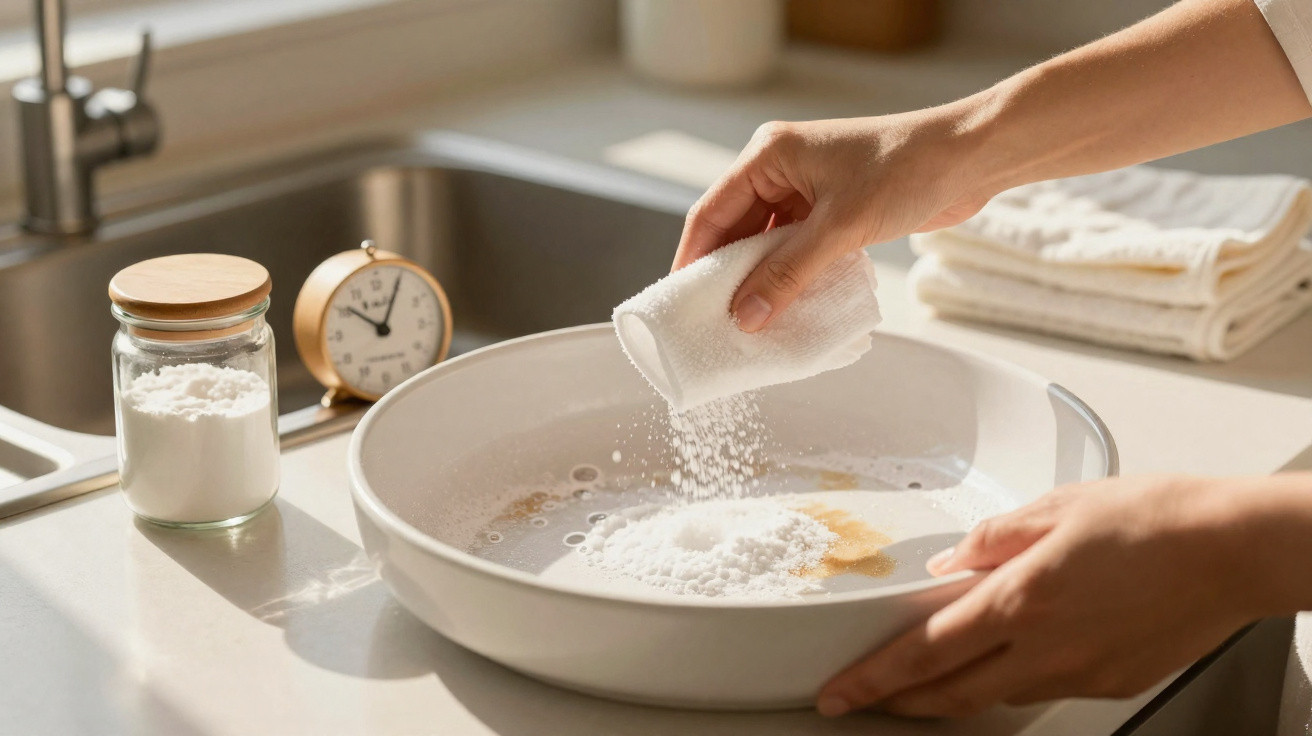
A spoon, a stain and a small rebellion against elbow grease: this viral cleaning tip suggests you need not scrub like a Victorian housemaid. The answer is not more pressure. It is a little chemistry that dissolves grime while you drink your coffee. One spoonful, no blisters and a bathroom that could pass for newly tiled.
My neighbour was standing in her bathroom without scrubbing or breaking a sweat, simply watching a pale cloud spread through the toilet bowl where a stubborn ring had been. In her hand were a spoon and a packet resembling baking powder. Within five minutes, the mark floated away as though it owed her money. There was no aggressive scouring and no overpowering odour-only a cloth and one easy wipe. When I asked what kind of wizardry she had used, she laughed. “It’s not magic,” she said, tapping the spoon. “It’s timing.” The ring did not stand a chance.
Why oxygen bleach beats elbow grease
Cleaning professionals often speak of elbow grease as though it were a religion, but the science in your cupboard offers another doctrine. Pressure is noisy and gratifying; chemistry is silent and merciless. When dirt clings to a surface-soap scum on tiles, tannins in mugs or mildew shadows in grout-you are not simply battling grime: you are battling bonds. Once those bonds are broken, the mess releases its hold. That is why one spoonful can achieve more than an hour of scrubbing. Leave it to sit and work, then remove it with a cloth making barely any effort. It feels like cheating.
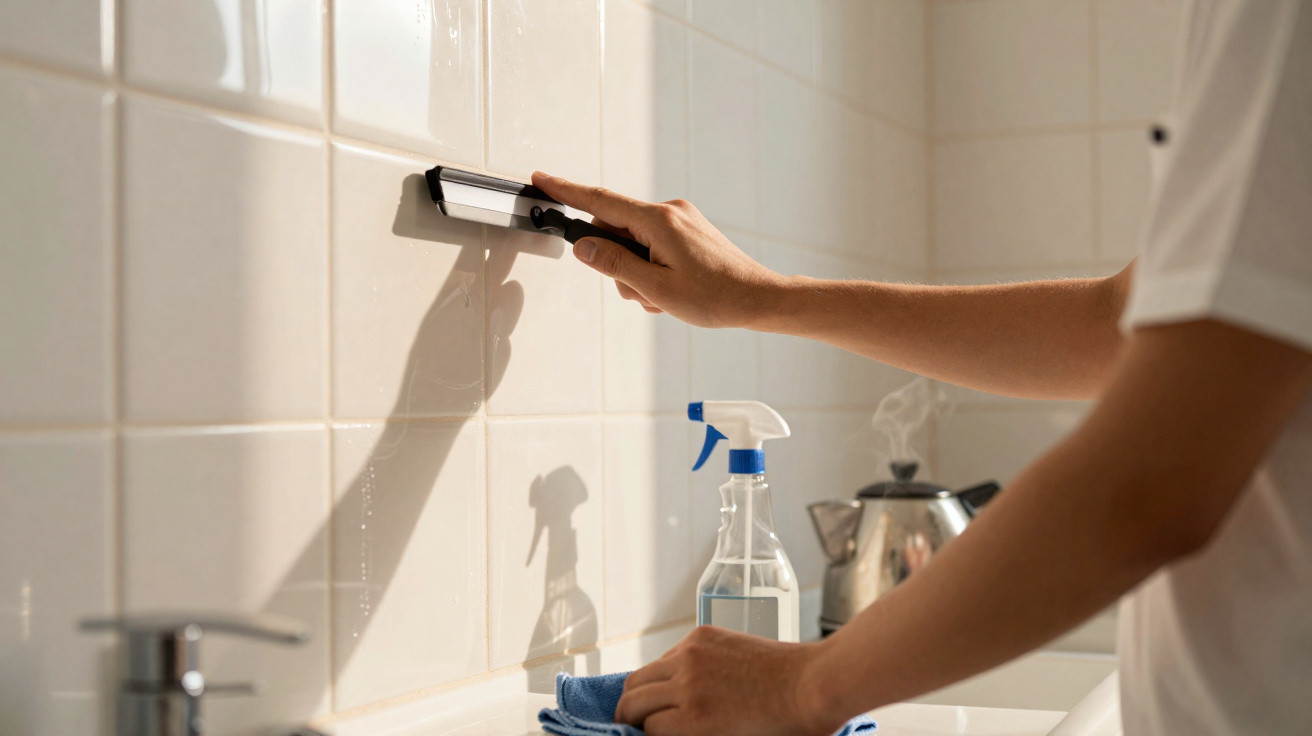
Imagine moving-out day, with a landlord who spots every detail. Alice, 31, says a tablespoon of oxygen bleach-the laundry-booster powder rather than chlorine bleach-saved her deposit. She mixed it into warm water, ran it along the grout lines and set an eight-minute timer. The grey film that had mocked her since winter turned milky, then soft, then disappeared. With the same bowl, she revived tea-stained mugs and a beet-marked chopping board. There was no scrubbing, only a light wipe and rinse. Alice left the property cleaner than she found it. Her sponge did too.
The reasoning is the part that rarely gets viral attention. Oxygen bleach, or sodium percarbonate, releases oxygen when combined with water, separating stains much like opening a zip. That oxygen targets the coloured elements of organic grime, while its alkaline partner helps lift oils. Together, they undo the adhesive force keeping dirt attached to surfaces. Rather than using friction to force the mess away, you cause it to release itself. This is why dwell time outperforms brute force. Give it several minutes and it does the work you assumed your wrists were destined to do. Scrubbing is a habit; chemistry is a strategy.
The one-spoon oxygen bleach method
To keep things simple, dissolve one level tablespoon of powdered oxygen bleach in one litre of warm water. For grout, pour or spray on the mixture, leave it for 5–10 minutes, then wipe with a microfibre cloth. For toilets, scatter one spoonful into the bowl, swish it once, wait 10 minutes and flush. For mugs, chopping boards, sinks and white plastics, soak them in the solution for roughly the length of a song, then rinse. If a stain is older than your last holiday, repeat the treatment instead of scrubbing as if you were auditioning for a fitness video.
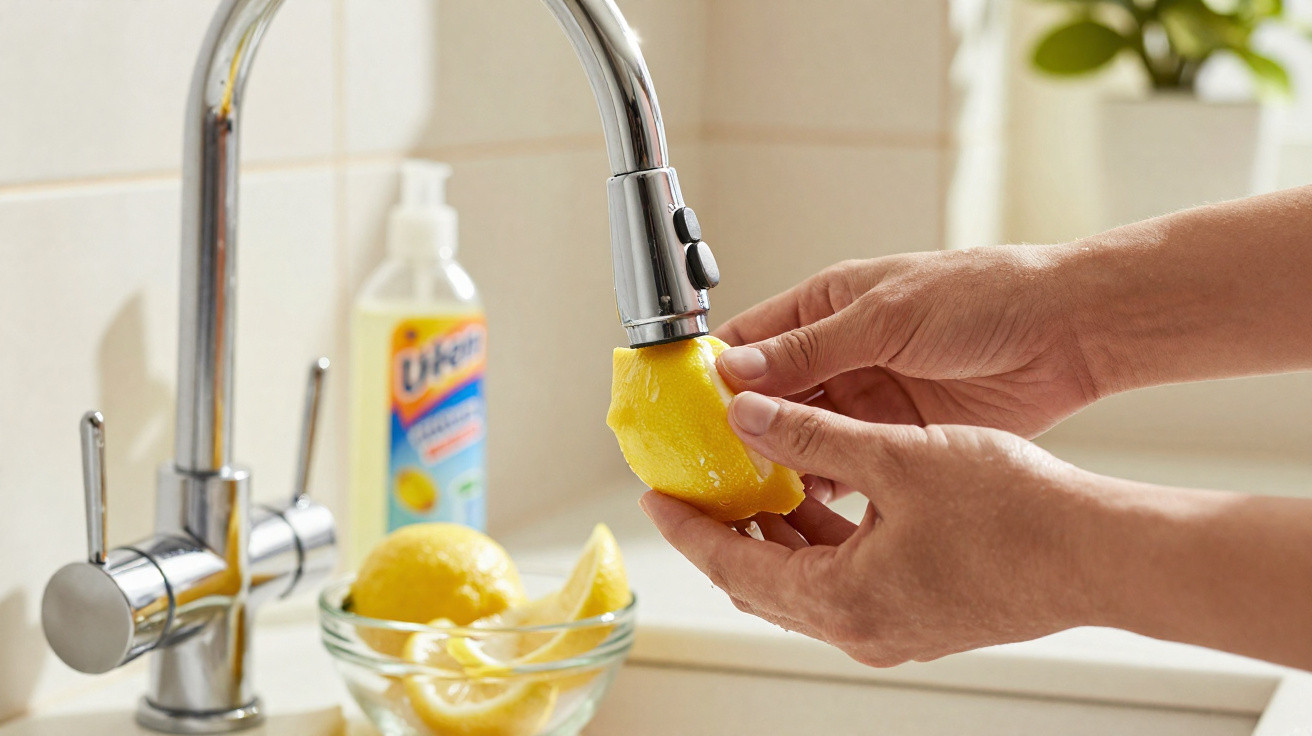
A few common mistakes are easily avoided. Choose warm rather than boiling water, so you do not reduce the action or steam yourself into a sweat. Do not tip in half the tub: extra powder brings residue, not extra cleaning power. Avoid natural stone, wool and silk, as they follow different rules. Limescale-the chalky deposit-responds to acid rather than oxygen, so use citric acid or lemon juice for kettles and taps. Everyone has experienced the moment when guests message to say they are “10 minutes away” and the sink appears haunted. Take a breath. Let the spoon do the heavy work while you light a candle and conceal the pile of post. Honestly, nobody does that every day.
There is a reason this method wins over sceptics. It is kinder to your time and your wrists. It is accurate without becoming fussy, and it returns a little control in homes that can sometimes seem to be taking over.
“Scrubbing is what we do when we don’t trust dwell time,” a veteran housekeeper told me. “Once you see bonds break on their own, you never forget it.”
- Bathroom grout: mix a spoonful into warm water, leave for 8 minutes, then wipe once.
- Toilet ring: dry the bowl if possible, sprinkle in the powder, swish, wait and flush.
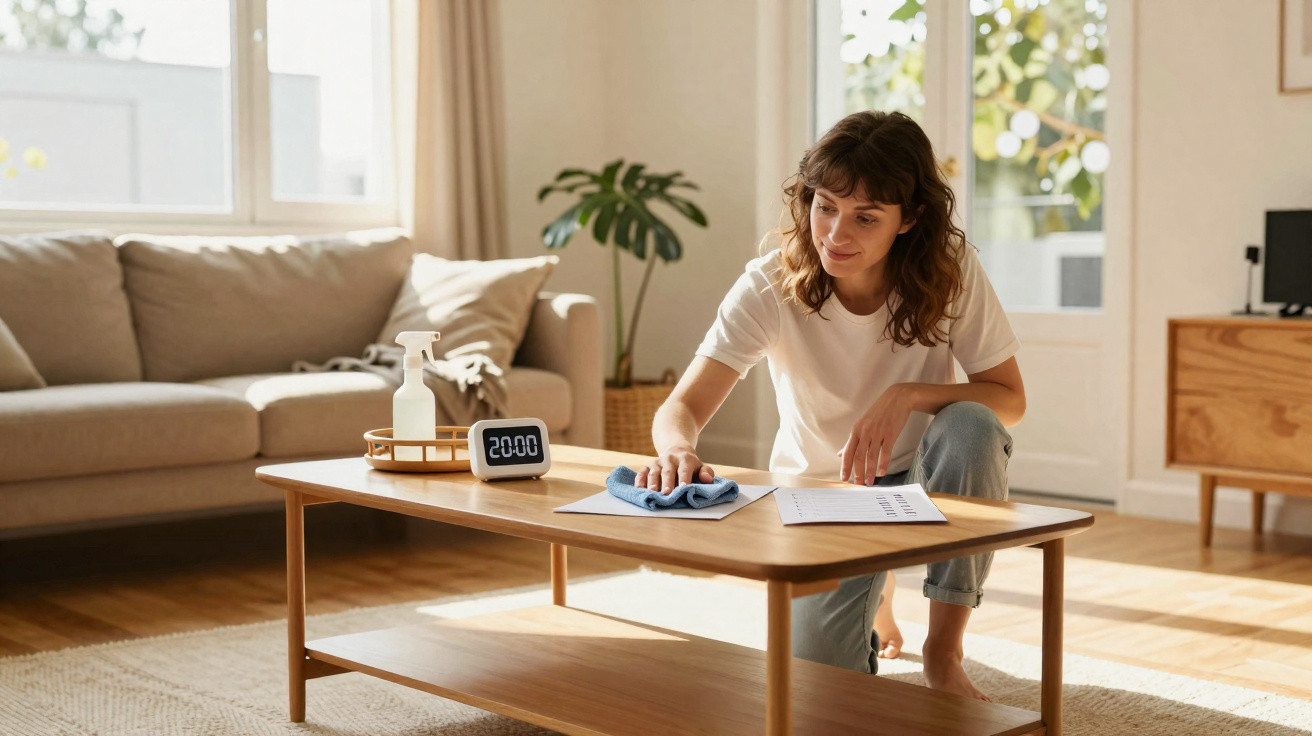
- Stained mugs and chopping boards: soak for 5–10 minutes, rinse and air-dry.
- Bins and fridge drawers: fill with the solution, leave it to sit, swish and drain.
Matching the chemistry to the stain
There is a subtle satisfaction in realising that using less is not merely sufficient-it is more sensible. One spoonful of the appropriate product teaches a different way to deal with mess: head up, timer running, no martyrdom. Homes are relentless, yet most dirt is not personal; it is chemical. Treat it accordingly and the balance shifts in your favour. You are not scrubbing to prove a point. You are waiting for a reaction to complete its work. Share the spoon with a flatmate who loathes cleaning, or a parent convinced that scouring builds character. Watch their expression the first time a stain slips away on its own. That expression is the point.
| Key point | Detail | Benefit for the reader |
|---|---|---|
| Dwell time beats scrubbing | Leave oxygen bleach for 5–10 minutes to break bonds | Quicker results with less effort and strain |
| One spoon, many surfaces | Grout, toilets, mugs, chopping boards, bins and white plastics | One approach addresses several household problem areas |
| Use the right chemistry | Oxygen bleach for organic stains; citric acid for limescale | Cleaner results, fewer wasted products and no guesswork |
FAQ
- What exactly is “oxygen bleach”? It is sodium percarbonate, a powder that releases oxygen in water. It removes organic stains without the fumes or colour-bleaching force of chlorine.
- Can I use it on coloured fabrics? Test a small area first. Many colours cope well, but certain dyes are delicate. Begin with a diluted solution and a short soak, then rinse and inspect before using more.
- Is it safe for natural stone such as marble? No. Stone needs pH-neutral care. Choose a stone-safe cleaner and a soft cloth, rather than this solution.
- Why should I not mix it with vinegar or chlorine bleach? Vinegar weakens its cleaning effect, while combining it with chlorine bleach is dangerous. Keep it straightforward: powder and warm water, with nothing else.
- What if I have no oxygen bleach? Use a spoonful of washing-up liquid in warm water, soak stains for a good while, then wipe. For greasy build-up, a pinch of bicarbonate of soda helps with lifting it.
Comments
No comments yet. Be the first to comment!
Leave a Comment