
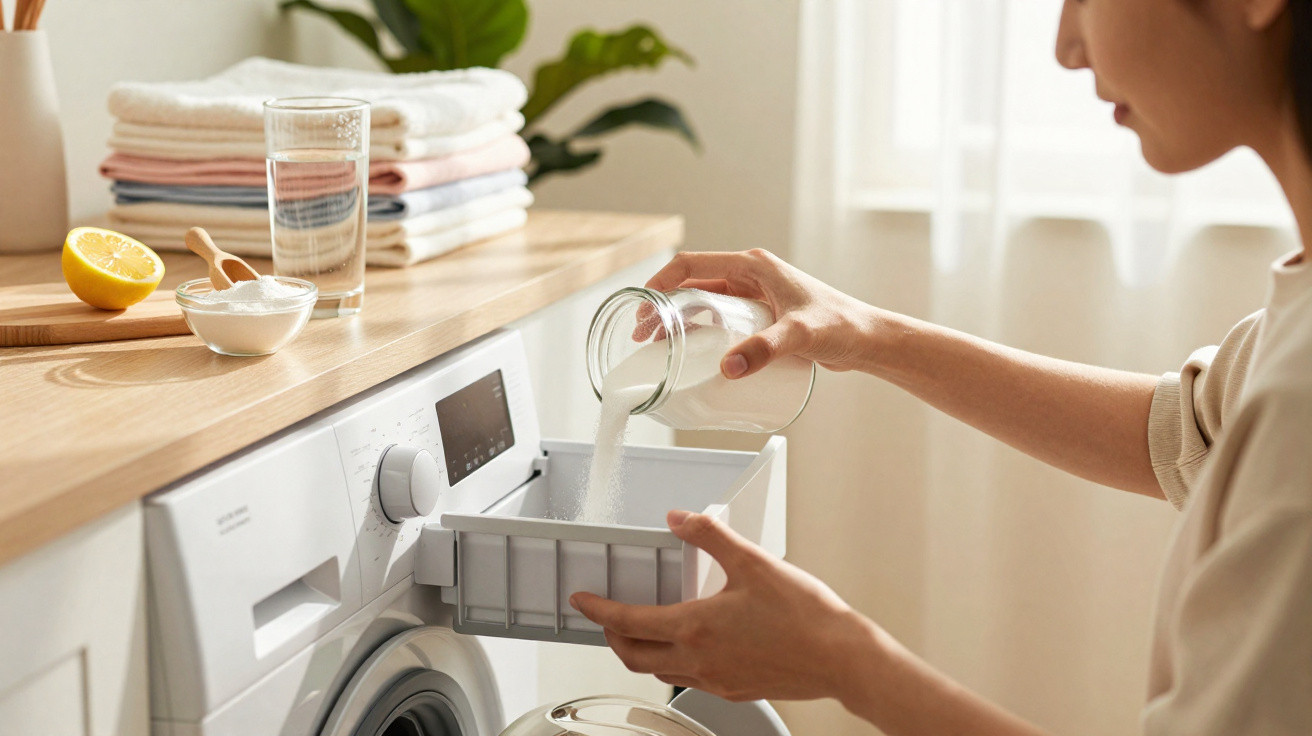
In areas with hard water, an excess of minerals can make clothes feel rougher, encourage residue to build up in the washing machine and reduce the effectiveness of detergent. Citric acid, an ingredient widely used for household cleaning, is increasingly regarded as an option for helping to limit these effects when used properly. As well as helping to tackle limescale deposits, it may support washing machine maintenance and improve washing efficiency.
How does citric acid help to soften hard water?
Hard water has higher levels of calcium and magnesium, minerals that can settle on fabric fibres as well as within the washing machine's internal parts. Citric acid reacts with these minerals, helping to limit scale formation and allowing detergent to work more effectively during a wash.
Although it is not a replacement for a water-treatment system, this ingredient can be used from time to time to reduce limescale build-up in the washing machine, particularly in areas with very hard water.
How should citric acid be used in a washing machine?
Citric acid can be used both to clean the washing machine and as a support in certain washes, provided the appliance manufacturer's guidance is followed and excessive amounts are avoided.
For washing machine maintenance, it is generally dissolved in water and used in an empty wash cycle, allowing the solution to circulate through the drum and internal components.
- Use citric acid intended for household use.
- Dissolve the product according to the instructions on the packaging.
- Run a cleaning cycle with the machine empty.
- Do not use more than the recommended amount.
- Check your washing machine manual before applying it.
- Repeat the cleaning only when needed.
What benefits can this habit offer?
Regular maintenance may help to reduce mineral residue, supporting the machine's operation and contributing to more efficient washing. In hard-water areas, it may also reduce marks on clothes caused by limescale deposits.
However, experts point out that citric acid does not replace products specifically made for washing clothes, nor does it solve every issue associated with hard water. It should be viewed as an additional part of washing machine maintenance.
- Helps reduce limescale build-up.
- Supports the action of detergent.
- May help to make clothes softer.
- Assists with cleaning the machine drum.
- Reduces internal mineral residue.
- Complements preventative washing machine maintenance.
What precautions matter before trying this method?
Before putting any product in the washing machine, it is worth checking the manufacturer's manual for specific advice on cleaning and descaling. Some models already have dedicated maintenance programmes.
It is also important never to mix citric acid with bleach or other incompatible chemical products, as this can cause unwanted reactions. Use only the recommended quantity and store the product in a dry place.
Carry out simple maintenance to extend the washing machine's lifespan
If the water in your area contains a high level of minerals, periodic cleaning with citric acid may help reduce limescale accumulation and support the machine's performance over time.
By combining this step with regular cleaning of the filter, detergent drawer and sealing rubbers, you can help keep the washing machine in good condition and maintain the quality of your washes.





Comments
No comments yet. Be the first to comment!
Leave a Comment