
With one simple professional trick, that can change instantly.
Anyone stepping into a hotel shower after an overnight stay is often struck by the glass panels: no limescale streaks, no soap residue, and everything looks as though it has just been installed. At home, however, people battle cloudy film, stubborn water marks and bathroom cleaners that seem to achieve nothing. The difference is not down to “secret super-cleaners”, but to a remarkably straightforward method used by hotel cleaners every day – and one that is easy to replicate in any home.
Why shower glass at home turns cloudy so quickly
Limescale: the hidden cause of white marks
Depending on the area, tap water can contain a high level of limescale. When water evaporates from the shower screen after use, minerals remain behind. Every shower adds another layer of calcium and magnesium compounds to the glass. At first this is barely noticeable, but after a few weeks the panel can look dull, rough and stained. Standard bathroom cleaners often struggle to tackle these hardened deposits.
Soap and shower gel: limescale’s sticky companion
At the same time, traces of soap, shower gel and natural skin oils settle on the surface. Combined with limescale, they create a stubborn coating known as “soap scum”. It clings particularly firmly and provides an ideal foundation for further layers. Using vinegar alone may loosen limescale, but it does not remove the greasy film. A degreasing cleaner deals with the soap but leaves limescale crystals behind. As a result, some residue always remains on the glass and the cloudiness never disappears completely.
The cloudy film on a shower screen is a combination of limescale build-up and greasy residue – a double problem that needs targeted treatment.
Why so many bathroom cleaners disappoint
Countless sprays claim to offer “anti-limescale in seconds”. In reality, they often require lengthy contact times and vigorous scrubbing, while still using up half a bottle. Over time, harsh chemicals can also damage grout, silicone sealant and fittings. This is precisely what professional cleaning companies aim to avoid: they rely on a simple yet highly effective mechanical method rather than a chemical bomb.
The hotel trick: an unassuming “magic sponge”
What is behind the so-called “magic sponge”
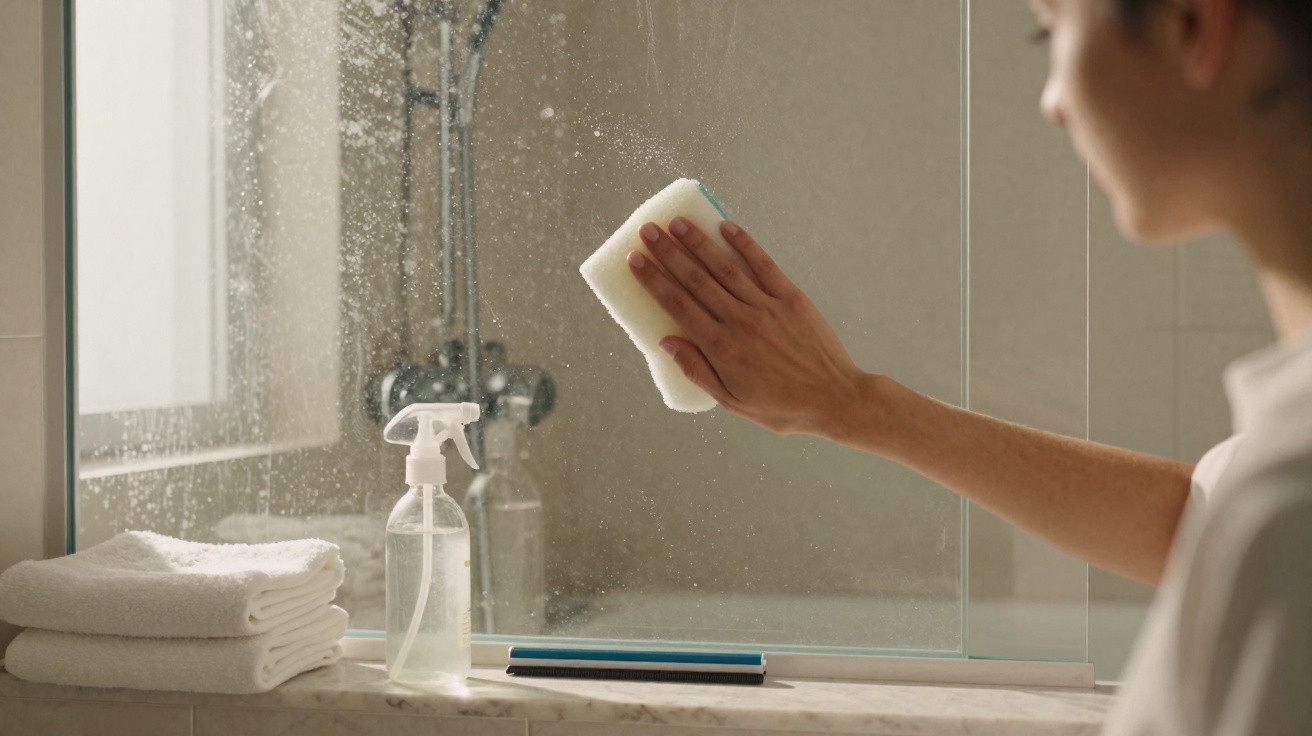
The real hero in many hotel bathrooms is not an expensive device but a small white sponge: one made from melamine resin, commonly sold as a “magic sponge” or “magic eraser”. It feels slightly rubbery, looks completely harmless – and is surprisingly powerful.
Under a microscope, melamine foam resembles a dense network of hard, ultra-fine fibres. Its structure works in a similar way to extremely fine sandpaper. This is known as micro-abrasion: the surface is very gently “polished” without leaving visible scratches. That is exactly why the sponge is so effective at removing dull shower-screen film.
How the sponge works: physical effort, not chemicals
The key point is that the sponge does not dissolve dirt chemically; it removes it mechanically. Once dampened with water, its fine pores become firm. As it is wiped across the surface, the tiny fibres scrape away limescale and soap residue from the glass layer by layer. It works even in places where conventional cleaners have long since failed.
- Limescale layer: gently rubbed away
- Soap film: loosened through mechanical pressure
- Residue: easily rinsed off afterwards
For hotels, this is ideal: a tool that works quickly, produces no strong odours and is gentle on surfaces.
How professionals use the hotel trick correctly
Preparation: water instead of cleaning products
A sponge should never be used dry on a glass shower screen. Hotels do it like this:
- Thoroughly soak the sponge under clean running water.
- Gently squeeze it by hand until water is no longer dripping from it.
- Do not add any extra cleaner to the sponge.
Water allows the sponge to glide smoothly across the glass and activates its microstructure without making it crumble too quickly.
Wipe properly: light pressure and steady passes
Many people are tempted to scrub with force. Here, that is unnecessary and can even be counterproductive. Professionals take a different approach:
- Apply light, even pressure to the glass surface.
- Use slow, overlapping movements, ideally in strips or circles.
- Go over particularly dirty areas several times, but gently.
This makes the best use of the fine abrasive effect without destroying the sponge within minutes. The grey-white layer that appears during cleaning consists of removed dirt and tiny sponge particles – this is entirely normal.
A hotel-style finish: rinse, squeegee and polish
After wiping, comes the step that delivers the hotel look:
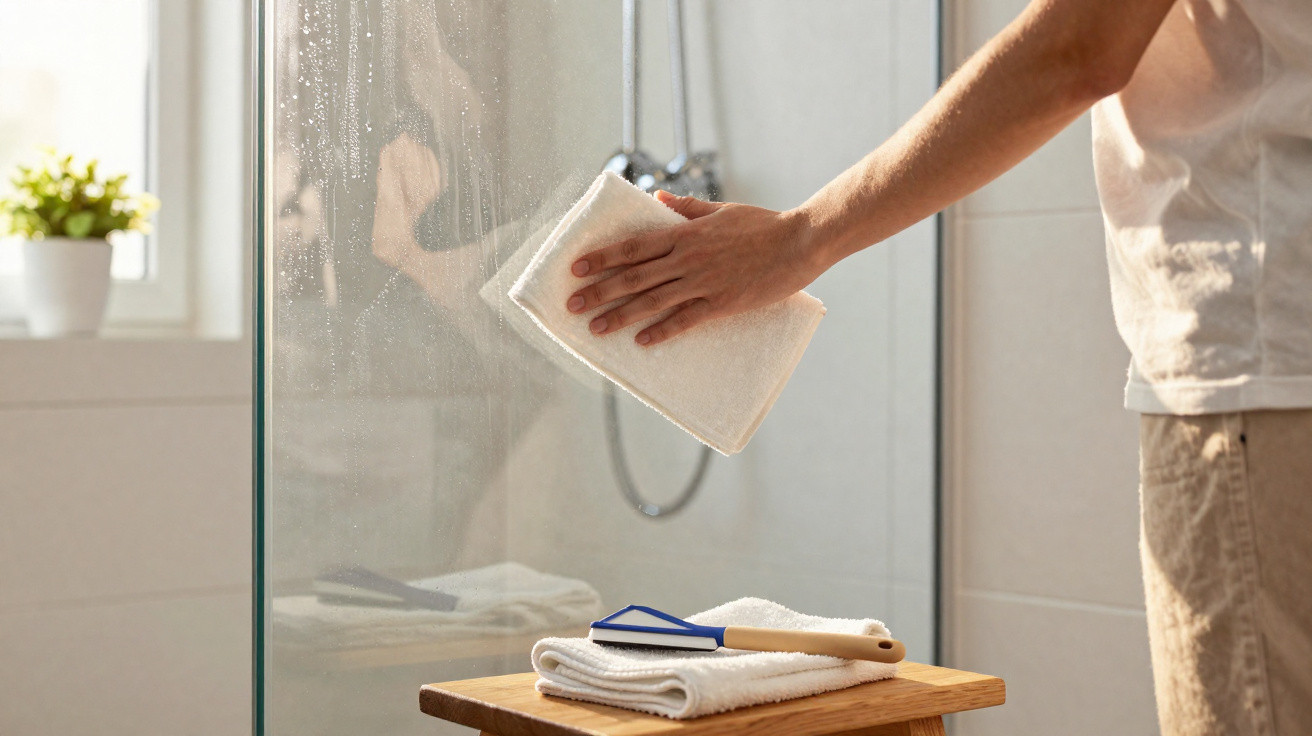
- Rinse the shower screen thoroughly with clean water until no streaks are visible.
- Draw a rubber squeegee from top to bottom across the glass.
- Dry the edges and corners with a microfibre cloth.
The glass will then look noticeably clearer and, in many cases, almost new. For very heavily scaled screens, it is worth repeating the process.
How to build the trick into everyday life
Where to buy these sponges
Melamine sponges are no longer a professional-only insider tip. They are available:
- in the cleaning aisle of supermarkets
- in chemists and DIY shops
- online, usually in larger multipacks
They often cost only a few pence each, especially when bought in multipacks. For one shower, a small block will normally last for several cleans.
A routine rather than a cleaning marathon
Anyone who tackles the shower screen only every few months has to fight the build-up each time. Hotels therefore follow a clear principle: clean frequently, but briefly. At home, that means:
- giving it a quick once-over with a melamine sponge once a week
- removing small marks immediately while they are still fresh
This prevents a thick, stubborn crust from developing in the first place. Cleaning effort drops significantly, while the shower screen stays transparent for longer.
How to make the effect last
The 30-second habit after every shower
All professionals agree: the most effective protection against limescale is a simple rubber squeegee. Straight after showering, quickly pull it over every glass surface from top to bottom – nothing more is needed. This removes most of the water before it can dry. Less water means less limescale, fewer soap streaks and much longer intervals between deep cleans.
Gentle support from vinegar water
Those who wish can keep a spray bottle containing a 1:1 mixture of water and household vinegar in the shower. After using the squeegee, lightly mist the glass surfaces, leave it to work, then simply rinse it off during the next shower. This helps dissolve remaining minerals before they harden.
Air circulation: more important than many people realise
Still, humid air extends drying time and encourages not only limescale but also mould in grout lines. After showering:
- open the window, where there is one
- or run the extractor fan for at least 15 minutes
- leave the door slightly open to allow air to circulate
This reduces humidity more quickly, lets the final drops dry faster and keeps the entire shower looking cared for longer.
What to consider with delicate surfaces
Not every surface can withstand micro-abrasion
Useful as the melamine sponge is, it does have an abrasive effect. It is well suited to glass shower screens, but it may be problematic on very soft or glossy surfaces, especially:
- delicate plastic panels
- high-quality coatings with an “Easy-Clean” seal
- high-gloss furniture or decorative surfaces
Always test it first in an inconspicuous area. If dull patches appear, avoid the sponge and choose gentler methods instead.
Lifespan and disposal
The sponge gets smaller with every use until it eventually becomes thin and crumbly. This is normal, as it effectively wears away as it works. At that point, it should go into general waste. Because considerably fewer chemical cleaners are needed at the same time, the overall impact on both the environment and household budget can often be noticeably reduced.
Less chemistry, more mechanics: the hotel trick shows how much an unassuming sponge and a few everyday habits can change.
Anyone who uses a squeegee regularly, turns to a melamine sponge from time to time and ventilates the bathroom well can get very close to the appearance of a freshly cleaned hotel bathroom – without a cleaning spectacle or an arsenal of specialist products.




Comments
No comments yet. Be the first to comment!
Leave a Comment