
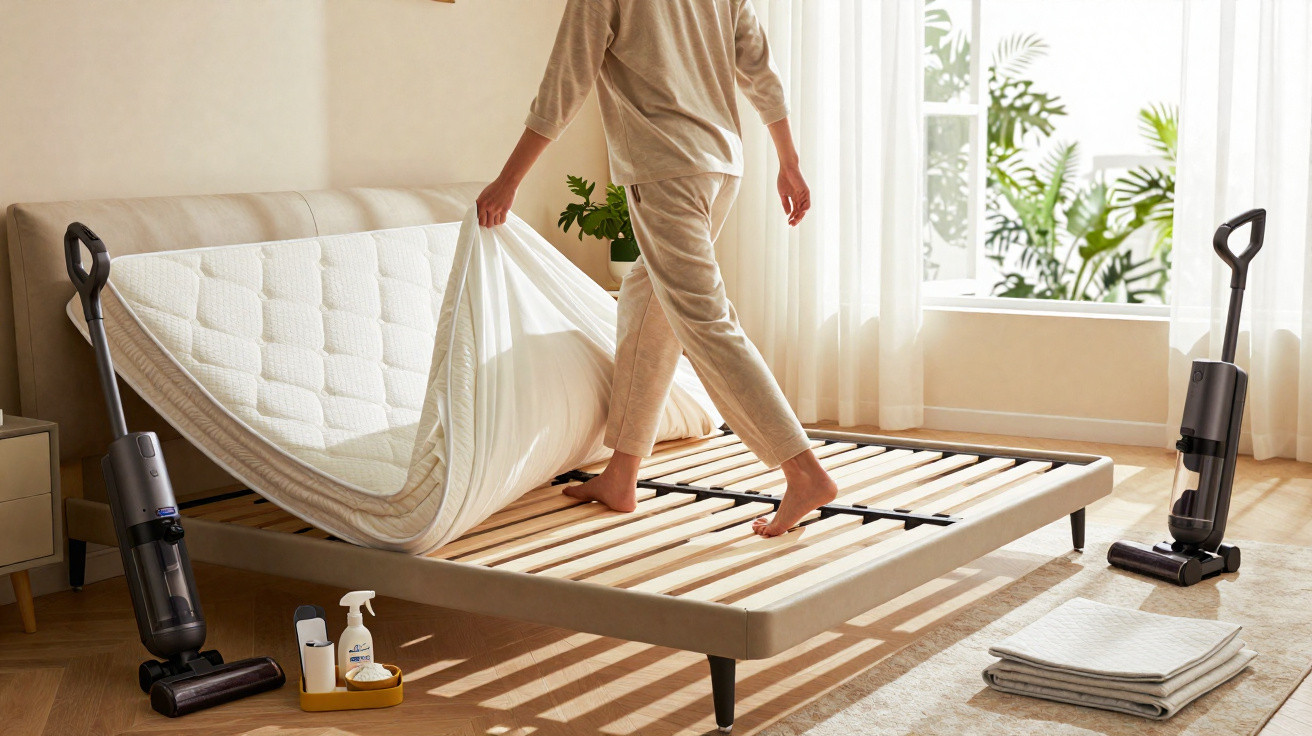
This is where we spend several hours every night: sweating, shedding skin cells and hair, and sometimes even spilling a coffee in bed. It is hardly surprising that searches for “mattress cleaning” are currently soaring. The good news is that you need neither expensive specialist services nor professional equipment – a clear routine and a few household essentials can give any mattress a fresh update.
Why looking after your mattress is genuinely worthwhile
A clean mattress delivers more than improved sleep: it also means fewer allergens and greater long-term comfort. Dust, mites, perspiration and moisture build up without being noticed. Eventually, the bed develops a slightly musty smell, the surface begins to feel uneven, and your back complains more loudly in the morning than your alarm clock.
“Anyone who maintains their mattress regularly will get considerably more years of use and significantly more sleeping comfort from it.”
Experts advise buying a new mattress every six to eight years. Paying attention to rotating, airing and cleaning it can often extend this period somewhat – and, above all, noticeably improve the quality of your nights.
Step 1: Rotate and turn your mattress correctly
Over time, shallow dips form where you usually lie. You may first notice this as a “hole” around the pelvis, or as a slight hollow in the centre when two people share the bed.
How often should you rotate your mattress?
- During the first year: rotate it by 180 degrees once a month
- From the second year onwards: rotate it roughly every three months
- For double-sided mattresses: turn it over as well, swapping the top and bottom sides
Rotating means changing the head end to the foot end. If your mattress can be used on both sides, you can turn it over too. This spreads body weight more evenly, puts less one-sided strain on the materials and springs, and makes the dreaded gap between two mattresses less noticeable.
Step 2: Let your mattress breathe
Many people make the bed in a rush each morning: pull up the duvet and done. That is not a good arrangement for the mattress. After a night’s sleep, plenty of moisture remains in the cover and core.
How to air your mattress properly
- Remove the duvet completely and put the pillows aside too
- Open the window wide and leave the mattress uncovered for two to four hours
- Ventilate the room thoroughly; a through-draught is welcome here
However, hours of strong, direct sunlight are not ideal, as materials may fade or become brittle. A bright, well-ventilated room is entirely sufficient. If you use a bed with a closed base, it may be worth considering a slatted bed base over time, so air can circulate beneath the mattress. This considerably reduces the risk of mould and mildew marks.
Step 3: Tackle sagging and dips
If your bed suddenly feels like a hammock, this does not automatically mean the mattress needs replacing immediately. Often, several minor factors combine to reduce comfort.
“When sagging first appears, it is worth taking a closer look: is it really the mattress – or the base underneath?”
What you can do about a yielding mattress
- Check the slatted base: Are any slats broken, loose or bowed? The bed base is often the actual weak point.
- Rotate the mattress more frequently: When the first dips appear, temporarily shorten the rotation routine to around every four weeks.
- Use a topper: A firm, high-quality topper can soften unevenness and make the sleeping surface more stable.
If you wake with back pain, try sleeping in a different area of the mattress or in another bed. If you feel better, the cause is probably the mattress or its base after all. Care will then only help to a limited extent, and replacement becomes more likely.
Step 4: Vacuum thoroughly and remove stains
Before reaching for home remedies or stain removers, begin with one simple task: vacuuming thoroughly. Many people do not take this seriously enough, even though most visible and invisible particles collect here.
How to vacuum correctly
- Remove the cover, if there is one, and wash it separately (follow the care label)
- Vacuum the whole surface with an upholstery attachment or handheld vacuum cleaner
- Clean edges, seams and borders carefully too – dust and mites like to lodge there
When it comes to stains, never simply start scrubbing. Always identify the stain first – coffee, red wine, urine, blood and ordinary water marks all react differently.
| Type of stain | First step | Important caution |
|---|---|---|
| Fresh liquid | Blot it up with kitchen paper; dab only, do not rub | Do not soak the mattress, or mould may develop |
| Light soiling | Apply a mild soap solution to the affected spot using a cloth | Use only a small amount of moisture, then allow it to dry thoroughly |
| Odour problems | Sprinkle on baking powder or bicarbonate of soda, then leave for several hours | Vacuum thoroughly afterwards |
Strong chemicals and steam cleaners are not a good idea for many mattresses. Steam penetrates deeply, dries slowly and can create exactly what nobody wants inside: ideal conditions for mould spores.
Step 5: A good mattress protector as a “bodyguard”
If you want to make mattress cleaning as easy as possible, choose a mattress protector or cover. Ideally, it should be water-repellent, breathable and washable.
“It is better to put the protector in the washing machine than to have to deal with the mattress at great effort.”
What to consider when buying one
- Breathability: The mattress should be protected while still being able to “breathe”.
- Water repellency: Spilt coffee or a glass of water should stay on the surface rather than soaking in.
- Easy care: It should be washable at at least 40 degrees, preferably 60 degrees, to reduce mites.
- A good fit: Choose elasticated edges or straps to prevent it from slipping.
Anyone who sweats heavily or has small children in the bed should change the protector more often – for example, every four to six weeks. Otherwise, it is enough to air it regularly whenever you change the bed linen and wash it every few months.
How often should you maintain your mattress overall?
A rough schedule makes it easier to stay on top of things:
- Weekly: Change the bed linen and leave the mattress uncovered briefly
- Monthly: Vacuum the mattress, inspect the protector and wash it if needed
- Quarterly: Rotate or turn the mattress and air it thoroughly
- Yearly: Check the slatted base and look for dips and odours
If you have allergies, you can shorten these intervals. House dust mites respond directly to the moisture and skin cells that end up in bed. A cooler bedroom, regular airing and lower humidity provide extra help.
Risks, mistakes and what is best avoided
A few methods cause more harm than good. Aggressive bleach can damage the cover and leave fibres brittle. Too much water in the mattress core leads to mildew marks that are very difficult to remove. Fragrance sprays that merely cover up smells do not solve the hygiene issue; they simply disguise it.
If you continue to notice back pain, night sweats or a musty smell despite all your care, do not keep experimenting forever. That is the point at which to consider a new mattress – and establish a sound protection and cleaning routine from the beginning.
How a well-maintained mattress really changes sleep
After their first thorough mattress cleaning session, many people notice a clear difference: the bed smells more neutral, feels drier and has a firmer-looking surface. Some also report fewer sneezing fits in the morning or more restful sleep, because the body is no longer working against dust and mites.
If you are already planning a spring clean, simply include the mattress in the routine: remove the duvet, air it, vacuum it, treat stains, rotate it and wash the protector – and by evening, the bed feels like a little hotel room at home. This exact routine turns an everyday item back into a place where you genuinely enjoy winding down.





Comments
No comments yet. Be the first to comment!
Leave a Comment