
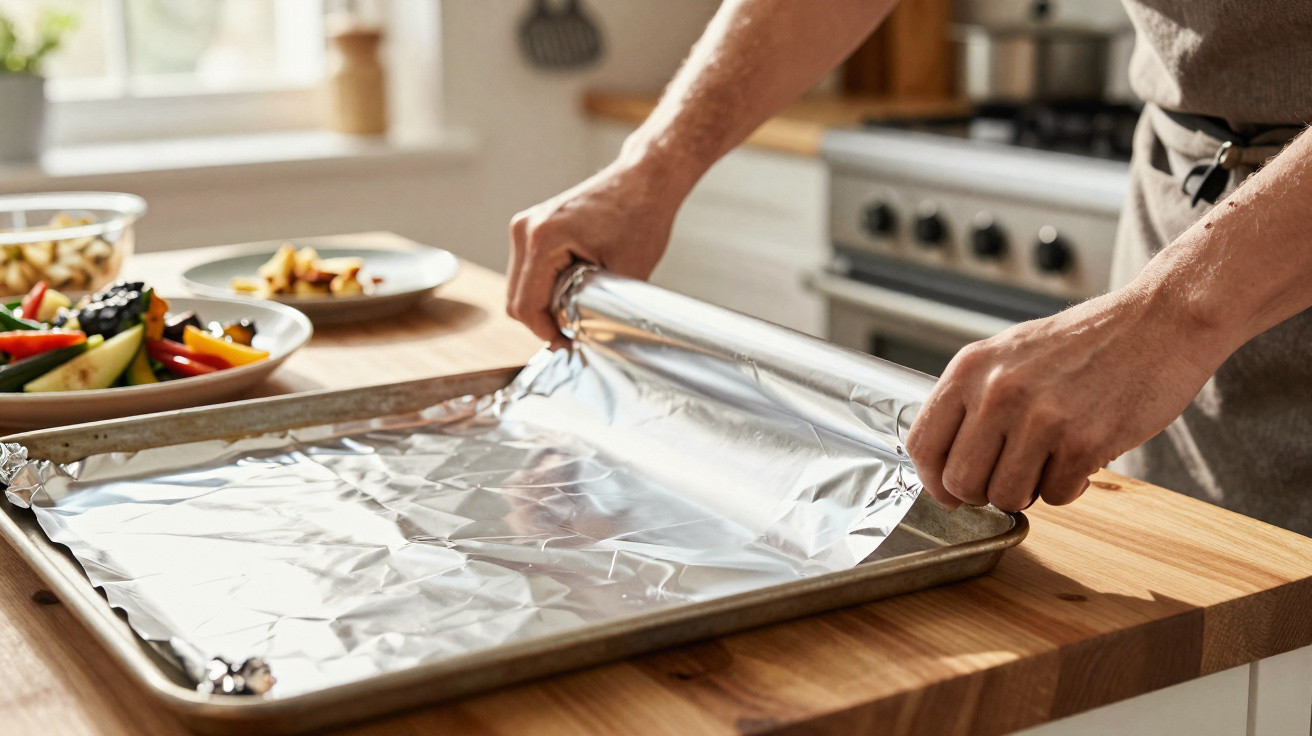
Aluminium foil is among the most frequently used items in the home kitchen, featuring in cooking, preservation and food storage. Even so, many people still use this material incorrectly, particularly when deciding how to position the matt side and the shiny side. Although it may seem like a minor question, it involves manufacturing methods and practical kitchen habits that affect everyday use. Knowing the difference can improve how it is used in the oven, fridge and when organising home cooking.
Why does aluminium foil have a matt side and a shiny side?
Aluminium foil undergoes a high-pressure rolling process, which is precisely why it has a matt side and a shiny side. In production, two sheets are pressed together simultaneously, creating different surface finishes on the material. Many people use aluminium foil incorrectly because they believe this distinction changes cooking results.
In most household situations, the shiny side and the matt side are manufacturing features rather than functional differences. However, understanding how they are created can support better use in practical kitchen tasks, including food preparation, storage and preservation. The mistake made by people using aluminium foil incorrectly generally stems from old myths that have spread through home cooking.
Do the matt side and shiny side affect cooking?
In the home kitchen, aluminium foil with its matt side and shiny side does not significantly change food preparation. What matters is using it appropriately in the oven, on the barbecue or for storage. Nevertheless, many people continue to use the material incorrectly because they assume there are important heat-related differences between its two surfaces.
From a practical cooking perspective, aluminium foil is mainly used for retaining heat, protecting against mess and providing light thermal insulation. In this setting, the shiny side and matt side have very little effect, reinforcing that incorrect use is often linked to outdated kitchen information.
Some everyday situations make its correct use easier to understand:
- Protecting food in the oven and on the barbecue;
- Preserving food in the fridge;
- Wrapping food to limit exposure to air and moisture;
- Keeping culinary preparation organised and hygienic.
When is aluminium foil used correctly in the home kitchen?
Aluminium foil works best when used for straightforward home-kitchen tasks, such as baking food or shielding surfaces from heat. The matt side and shiny side remain merely visual characteristics, but appropriate use prevents it from being used incorrectly in common daily situations.
In cooking, aluminium foil can help maintain the texture, temperature and moisture of food. Whether the shiny or matt side faces inwards, the outcome will be virtually identical, provided it is not used incorrectly for unsuitable purposes, such as prolonged direct contact with highly acidic foods.
Its most common kitchen uses include:
- Roasting meat and vegetables with improved heat retention;
- Lining baking trays to make cleaning easier;
- Wrapping food for temporary preservation;
- Protecting food from drying out.
Is aluminium foil being used incorrectly every day?
Many people use aluminium foil instinctively without fully understanding its limitations in the kitchen. As a result, the material is often used incorrectly, especially when too much importance is placed on the difference between the matt side and shiny side, which is minimal in household use.
When used properly, aluminium foil is a valuable aid for kitchen organisation and preservation. The issue is not whether the shiny or matt side is used, but rather the incorrect habits of people who continue using it incorrectly because they lack up-to-date information about home cooking.
In short, proper use depends more on the material's purpose than on its appearance:
- Avoid prolonged contact with highly acidic foods;
- Use it as heat protection for oven cooking;
- Use it for the temporary preservation of food;
- Follow good hygiene and storage practices.
Understanding how aluminium foil really works, including its matt side and shiny side, helps prevent common mistakes made by people using it incorrectly in the kitchen. Within the home category, this knowledge improves the household routine, makes better use of utensils and helps make the kitchen more efficient, practical and functional every day.

Comments
No comments yet. Be the first to comment!
Leave a Comment