
It began with an unpleasant smell in my hallway.
The place appeared spotless - shoes neatly arranged, cushions fluffed up, the kind of surface-level tidying you do before somebody calls in - yet the air was still clinging to last night’s fried onions and this morning’s wet-dog walk. I got the hoover out, because that is the default response when nothing else seems obvious. It whirred, bumped about and gathered its usual load of grit, but the odour stayed put. Then a friend messaged me with what sounded rather like a challenge: add a few drops of essential oil to your vacuum. So I tried it. The room did not merely look cleaner; it seemed transformed, as though the walls themselves had opened a window. I carried on vacuuming just to hold on to that sensation, and started wondering why it worked so well.
The unexpected pleasure of a scented clean
The scent of your own home is strangely personal. You tend to notice it most after being away, when opening the front door surrounds you with the smell of your life: washing, toast, shampoo, everything. At times it feels comforting, rather like a woolly jumper. On other days, it is simply a layer of stale air that refuses to shift, however vigorously you clean. Altering the fragrance can change the whole story you tell yourself about the room you inhabit.
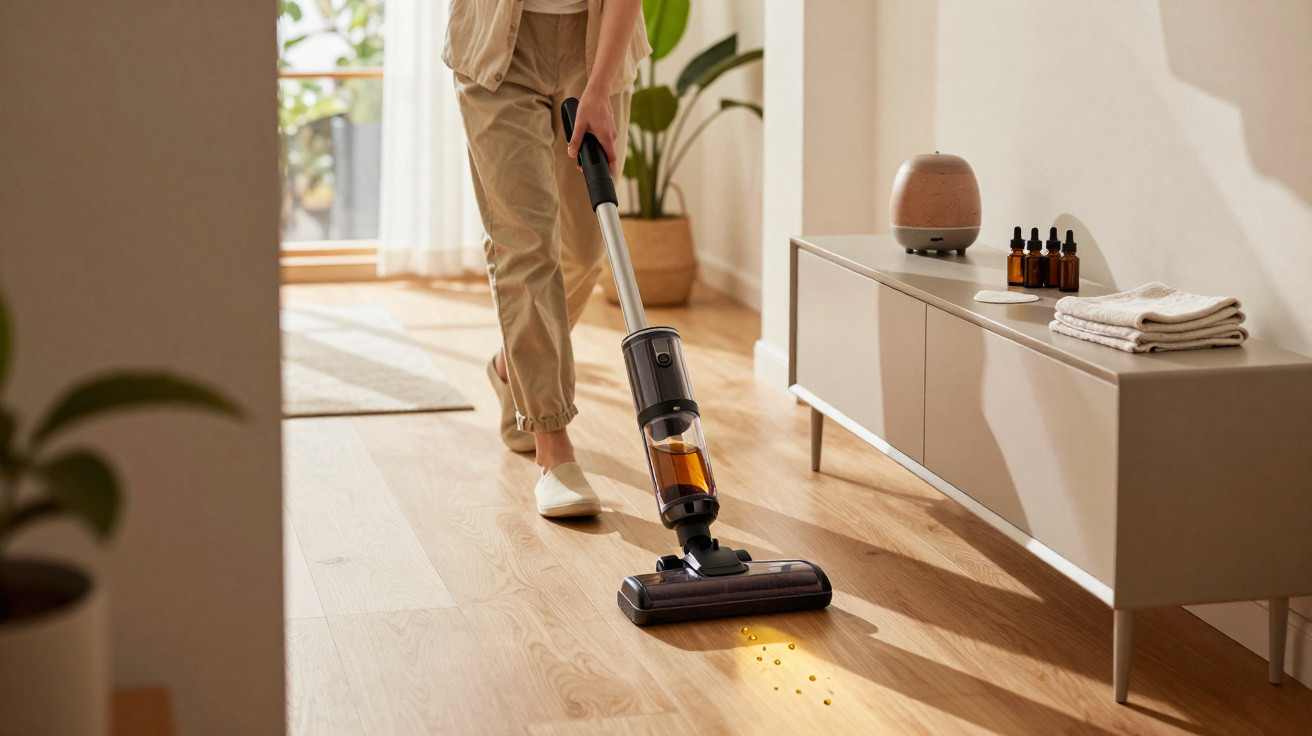
When I first used essential oils in the hoover, I was not anticipating anything miraculous. I put a few drops of sweet orange onto a cotton pad, slipped it inside the bag and began with the hall runner. As the motor warmed and air moved through it, the fragrance emerged gently - not heavily perfumed, but fresh and bright. One pass over the hallway rug, with that faint orange-peel scent lifting into the room, felt as though the house had let out a breath. It encouraged me to continue, because every extra bit of vacuuming made the space smell better.
Why a vacuum distributes scent better than room spray
The hallway wind tunnel effect
Room sprays settle and disappear. Candles offer their scent quietly from one corner. A vacuum works differently because it creates its own weather system. It pulls air into the appliance and sends it back out again, warmed by the motor; that heat helps aromatic molecules disperse. The fragrance travels on the airflow, reaching the tricky areas that spray rarely reaches, including the low-level air around skirting boards and beneath the sofa.
Carpets and fabrics act like memory foam for odours. They retain cooking smells and pet scents, then give them back when somebody walks across the room. Vacuuming agitates those fibres rapidly, and all that disturbance needs somewhere to go. Put a very small amount of essential oil in the route of the airflow and, instead of only removing dust, you release a fresh scent in its place. It gives cleaning a sense of completion.
How to use essential oils without damaging your vacuum
Bag, canister or filter? Make the right choice
The safest approach is straightforward. For a bagged vacuum, add two or three drops of essential oil to a cotton pad or tissue, then place it in the bag near the intake rather than directly against a filter. With a bagless model, position the scented pad to one side of the dust cup, or mix a teaspoon of bicarbonate of soda with two drops of oil, scatter it on the floor and vacuum it up first. The aim is to give the airflow a scented companion, not to soak the appliance.
Please don’t pour oil directly into the motor or HEPA filter. Essential oils are highly concentrated and may leave residue exactly where it is least welcome. Using less is both safer and more pleasant-smelling. If you have a high-end cyclone vacuum, use powders sparingly; a small pinch will do. Large quantities of fine powder can block the machine or irritate the warranty department faster than you can say “service centre”.
Three drops is more than enough. You can add more on another occasion if needed. Swap the pad whenever you empty the bag or bin, and do not let oils touch plastic seals or rubber components, as undiluted oils can damage them. If carpet staining concerns you, use the pad technique instead of putting drops on the floor. If you are cleaning with a steam cleaner, avoid oils entirely; it is a different appliance designed for a different purpose.
What to use when: blends that change the mood
Citrus and mint can make mornings feel more lively. Combine sweet orange with a touch of peppermint for an uplifting, “open the curtains” sort of vacuum. Afternoons suit something gentler: lavender with a little cedar gives the living room the sense of taking a long breath. In a winter hallway, eucalyptus and rosemary help cut through the scent of damp coats and make the air feel crisper.
For kitchen spills, choose lemon with a tiny amount of basil - it creates a clean-pantry effect without the artificial lemon-meringue-pie smell. Where pets are concerned, favour lighter oils and plenty of ventilation. Some essential oils - tea tree, clove and strong eucalyptus in particular - are not especially suitable around cats, so choose milder options such as lavender or chamomile and use very little. Treat fragrance like seasoning: a well-judged pinch brings the whole thing together.
Your vacuum is basically a portable diffuser with wheels. The key difference is that it moves around, taking the scent along with the cleaning you are already doing. That is why a home feels fresh instead of overly perfumed. It is not a spray concealing an odour; it is a new scent arriving as the old one is removed.
The psychology behind that “I’m done” feeling
Cleanliness has a sound - including that sharp little clatter when you accidentally vacuum up a coin - but it also has an atmosphere. Smell is a fast route to atmosphere. A citrus fragrance suggests morning energy, while lavender quietly tells you it is time to sit down. When the air changes, your brain interprets the room as finished, even when the laundry basket is still glaring at you.
We have all looked around after tidying and still felt unsettled, as if the work has not quite registered. Scent can provide that final arrival point. It is not about fooling yourself; it is about letting your senses support the same message your eyes can already see. The task turns into a ritual, a small signal that says, “This space is cared for.”
What happened when I used too much
In the second week, I became overconfident and went completely spa-like. I drizzled a small stream of oil onto a tissue, threw it in, then added a whole cloud of bicarbonate of soda because a video had suggested it. The house smelt like a beauty counter, and my head started throbbing in the way it does in shops where every candle is competing for attention. The vacuum also produced an offended-sounding whine as the fine powder attempted to circle around inside the cyclone. Lesson learned.
These days, I stick to the cotton-pad method and the smallest possible amount of fragrance. I steer clear of sticky oils or those heavy in resin, as they can leave behind residue. When I want a seasonal blend, I mix it first in a small jar with bicarbonate of soda, then use half a teaspoon immediately before vacuuming a rug. This lets the scent release gradually and stops the dust bin becoming a potpourri soup.
Honestly, nobody does this every day. There is no need to. I use it when the house needs a reset - after visitors, after cooking or after rain. It becomes a small kindness to my future self, and the result lasts long enough to justify the additional 10 seconds.
Little rules that make it foolproof
Pick good-quality oils that smell like the actual plant rather than perfume. Store them in a dark cupboard away from sunlight, so they do not deteriorate and develop an odd smell. Before committing to an entire room, test a drop on a tissue, because certain oils develop into something quite different when warmed. If anyone at home is sensitive to fragrance, choose only the mildest oils, or skip this idea altogether and focus on a more thorough clean instead.
With a bagless vacuum, tuck the scented pad where air will pass over it, but not directly against the mesh or HEPA filter. With a bagged appliance, replace the pad each time you replace the bag, otherwise old fragrances can become muddled together. Keep essential oils away from external filters, which need clear airflow. Wash your hands after touching undiluted oils too, because nobody wants rosemary-flavoured sandwiches.
Why this small change feels so significant
There is no magic involved; the idea simply works with something you are doing already. You are vacuuming regardless. It requires the same amount of time and noise, while adding a pleasant final exhale to the task. That slight shift in the air helps you recognise the work you have done, which can make tomorrow’s cleaning feel a little easier.
A home builds its identity in layers: the mug ring you eventually wipe from the desk, the cleared hallway, the fluff tumbleweeds sent off to the afterlife. Fragrance is just one of those layers, but guests will sense it before they notice your orderly shelves. It can make ordinary household maintenance feel more like care and less like another job on a list that seems to reproduce overnight.
A routine you will genuinely maintain
I keep a small bottle of sweet orange oil in the cupboard beside the vacuum bags, along with a few cotton pads in the box. There is no longer any effort involved in finding what I need, so I actually use it. For an evening vacuum, I choose lavender and cedar; for a Monday-morning cleaning burst, I reach for grapefruit and mint. The house does not smell “scented”; it simply feels alert or restful, depending on the blend.
Over time, the scent that follows vacuuming becomes associated with calm beneath your feet. That is really the point. Rooms are more welcoming when they smell like a quieter version of themselves. And after a long day, opening the door to a light citrus greeting can make it seem as though somebody has visited, tidied up and left you a note.
One final pass for curiosity
The hum of the hoover, the slight lift at the corner of a rug, the warm air following you along the corridor - it is a familiar rhythm. Adding fragrance does not make your home feel like a showroom; it simply gives a clean room another dimension. If you are unsure, begin with one drop and see how the space responds. If you share your home with pets or young children, select the gentlest oils, open a window and keep the ritual modest.
I still feel a small thrill when that first bright waft emerges from the outgoing air. It is evidence that a chore can include a treat, and that an everyday appliance can multitask without a new attachment. The hallway loses its stale heaviness, the sitting room seems clearer and the kitchen forgives your latest garlic experiment. Try it once, then repeat it on another day with another mood in mind. Who would have thought the most surprising diffuser in your home came with a handle and a plug?

Comments
No comments yet. Be the first to comment!
Leave a Comment