
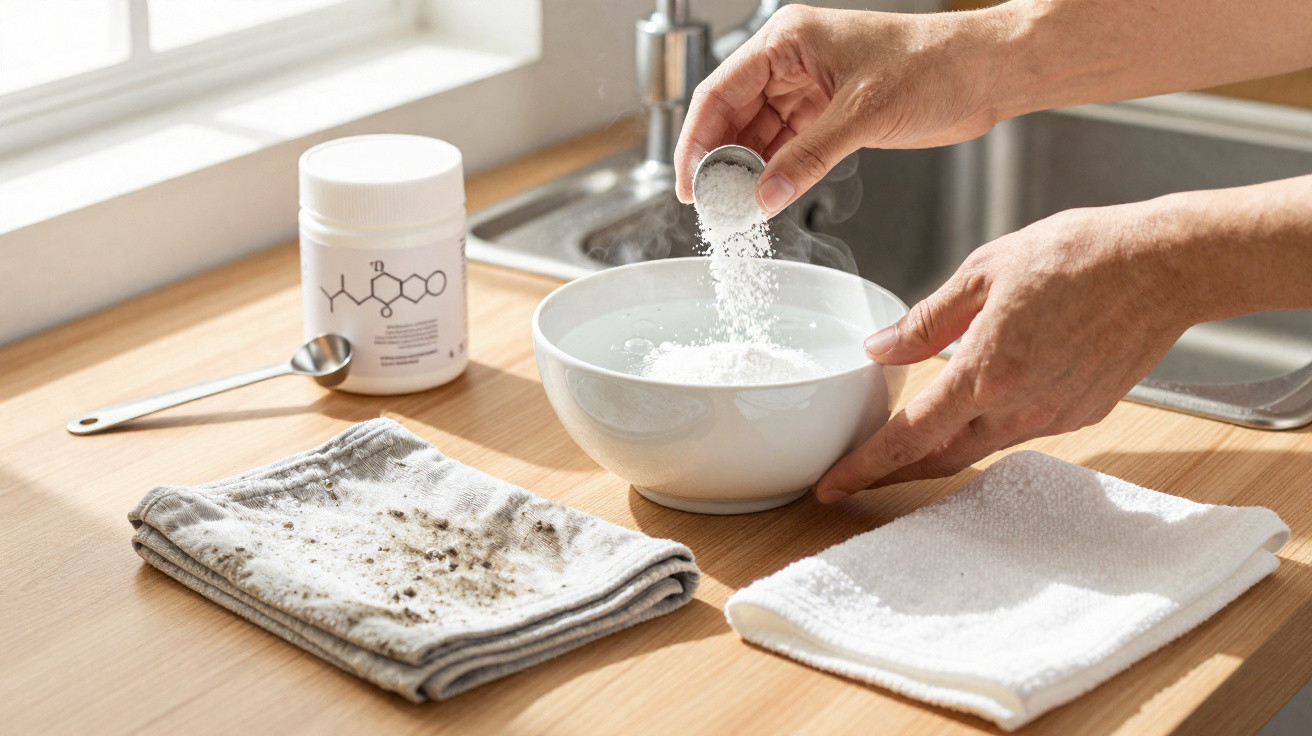
Kitchen towels are often thrown into the washing machine without much thought, washed at high temperatures and treated with powerful detergents – yet they still emerge dull, grey and slightly smelly. Many people then turn to chlorine bleach, which can be harsh on both fabric and skin. However, there is another product that can brighten towels more thoroughly, works more gently and may already be sitting unused in many homes.
Why kitchen towels stay grey despite hot washing
Kitchen towels are true workhorses. Every day, they absorb everything that comes with cooking: oil, frying fat, sauces, coffee, tea, red wine and tomato splashes. This combination of fats, colourings and tannins settles deep within the cotton fibres.
Water quality also plays a part. In hard-water areas, limescale deposits build up in the fabric. Detergent residue and grease then combine with these deposits to form a stubborn grey film. As a result, the towel becomes less absorbent, takes longer to dry and soon develops a musty smell.
Two common mistakes often follow:
- running extremely hot wash cycles in the hope of a “deep clean”
- applying chlorine bleach or harsh bleaching agents directly to heavily soiled towels
Neither approach usually delivers the desired fresh result. Very high temperatures can effectively bake dried-on stains into the material, making them even harder to remove. Traditional chlorine bleach may make fabric appear lighter, but it also damages fibres, can give cotton a yellowish tinge and has only a limited effect on grease and tannin residues.
The grey film is caused not only by colour, but above all by trapped grease and limescale residues inside the fibres.
The overlooked alternative: oxygen powder instead of chlorine
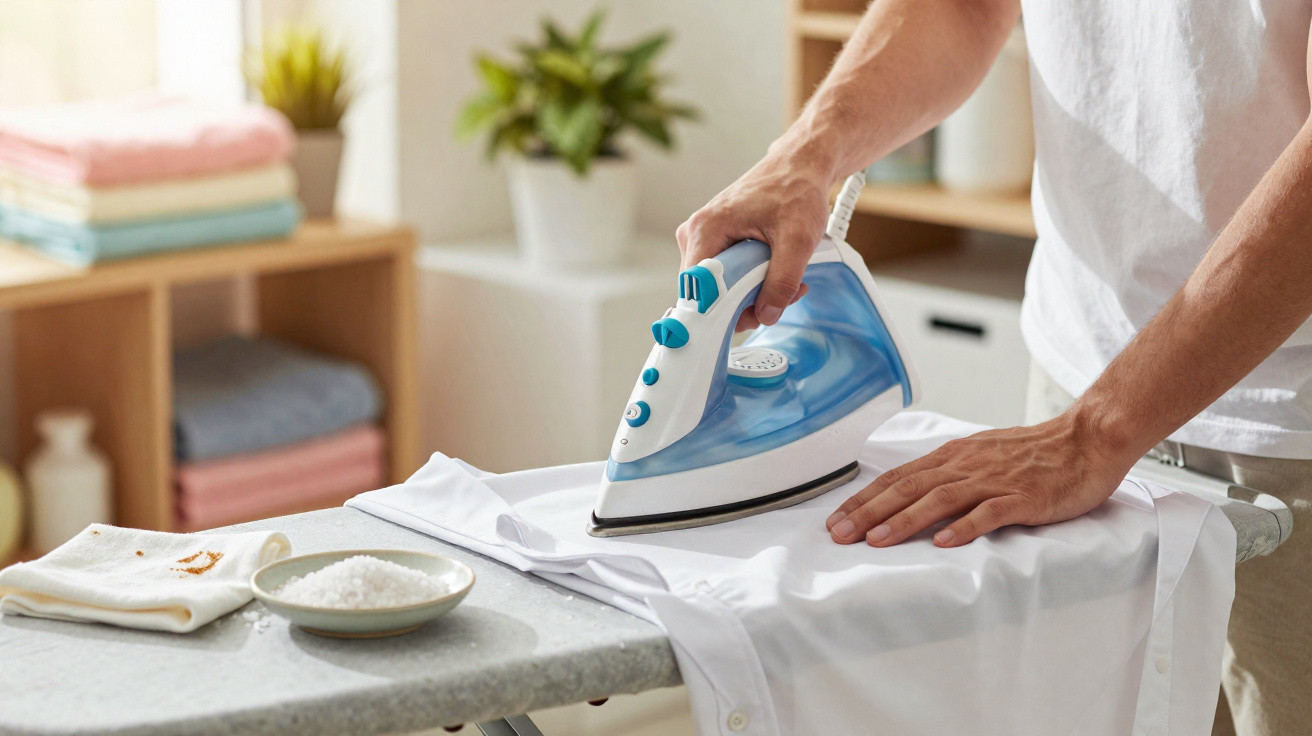
Many cleaning cupboards contain a tub or bag of white granules, often bought with the intention of using something “a little more natural for laundry” – then promptly forgotten. This is sodium percarbonate, commonly sold as “oxygen bleach” or “active oxygen powder”.
What makes sodium percarbonate special
At first glance, sodium percarbonate resembles washing soda or bicarbonate of soda, but it works very differently. It consists of soda combined with a stable form of hydrogen peroxide. When it comes into contact with hot water, the following happens:
- it releases soda, which loosens grease and dirt
- activated oxygen is produced at the same time, oxidising and brightening stains
- the reaction begins at around 40°C and becomes especially effective at roughly 60°C
This combination of degreasing power and oxygen action is what makes the powder particularly useful for kitchen towels. It works well against:
- grease and frying residues
- coffee and tea stains
- tomato and sauce splashes
- lightly greying cotton and linen
- unpleasant smells that remain after washing
Unlike standard chlorine bleach, sodium percarbonate does not give cotton a yellowish tint and is less damaging to the fibres, provided it is used at the correct dose.
Oxygen powder works inside the fibres, loosening grease and tannins while neutralising odours – without harsh chlorine compounds.
How to restore a clean white to grey kitchen towels
The key is not the wash cycle alone, but a pre-soak. It may sound laborious, but it is quick to prepare in practice and is especially worthwhile for old, dull towels.
Step-by-step guide to a whitening boost for kitchen towels
- Fill a heat-resistant bowl or tub with very hot water: at least 40°C, though around 60°C is better.
- Stir in around 1–2 tablespoons of oxygen powder, or sodium percarbonate, for every litre of water until evenly dispersed.
- Briefly treat fresh individual stains under lukewarm water with a bar of soap or gall soap beforehand.
- Fully submerge cotton or linen kitchen towels, ensuring that no part remains above the waterline.
- Leave them to soak for 2 to 6 hours depending on the level of soiling. For severely greyed towels, leave them overnight.
- Lightly wring out the towels, then place them in the machine with your normal laundry.
- Run a wash at a minimum of 40°C; 60°C is ideal. Do not use fabric conditioner.
- Let the towels air-dry after washing and, where possible, dry them in sunlight, as UV light supports the brightening effect.
When you pour away the soaking water, it will usually be noticeably cloudy. This is a clear sign that old residues have been released.
Common mistakes that ruin the effect
Sodium percarbonate has its limits. Knowing them helps avoid disappointment.
- Water that is too cold: Below 40°C, the reaction begins very slowly, leaving the powder almost ineffective.
- Sprinkling it straight into a quick programme: Short, cool washes without a pre-wash do not give it enough time to work properly.
- Using unsuitable materials: Wool, silk and delicate coloured fabrics can react badly and may be damaged.
- Using acids in sealed containers: Do not mix oxygen powder with vinegar or lemon juice in a closed vessel. Gas is produced, which can create pressure.
Oxygen powder is ideal for durable cotton and linen towels, but not for wool or silk.
Keeping kitchen towels fresh and white for longer
A powerful cleaning boost can restore kitchen towels, but it cannot replace sound everyday habits. A few simple measures will keep the fabric looking presentable for much longer:
- Change kitchen towels every one to two days rather than using them until they smell damp.
- Wipe heavily greasy pans and baking trays with kitchen paper first, then use a towel.
- Hang towels up to dry after use instead of leaving them damp in a bundle.
- Wash at 60°C where the care label allows it.
- Avoid fabric conditioner, as it coats the fibres and reduces absorbency.
Anyone following these steps will only need the full oxygen-bath treatment occasionally, perhaps every few weeks or months depending on use.
How to use oxygen powder effectively around the home
Sodium percarbonate is useful for more than just kitchen towels. Many households use it to reduce the number of products in the cleaning cupboard and replace certain specialist cleaners. Typical uses include:
- greyed white bedding and towels
- plastic chopping boards with odour and discolouration issues
- tea towels and napkins marked with red wine or coffee residue
- sportswear made from durable fibres that retains stubborn odours
One point remains important: always check the care label and test coloured fabrics first in an inconspicuous area to make sure the colour remains stable.
Risks, dosage and practical tips
Useful though oxygen powder is, it is not entirely harmless. The granules can mildly irritate the skin and eyes. Anyone using it frequently should wear basic household gloves and take care not to inhale the dust.
When it comes to dosage, start moderately and increase it only if the result is still insufficient. Using too much powder does not produce proportionately better results, but it does place unnecessary strain on materials and the environment. For heavily soiled kitchen towels, the standard amount stated on the product packaging per litre of water is usually enough.
A practical household tip is to keep a small tub of oxygen powder next to the laundry detergent. That way, a spoonful can almost automatically be added to the wash or a pre-soak for particularly dirty kitchen and bathroom textiles. Combined with regular towel changes, this makes it far less likely that the pile of tea towels in the cupboard will smell more like old textiles than freshly washed laundry.
Comments
No comments yet. Be the first to comment!
Leave a Comment