
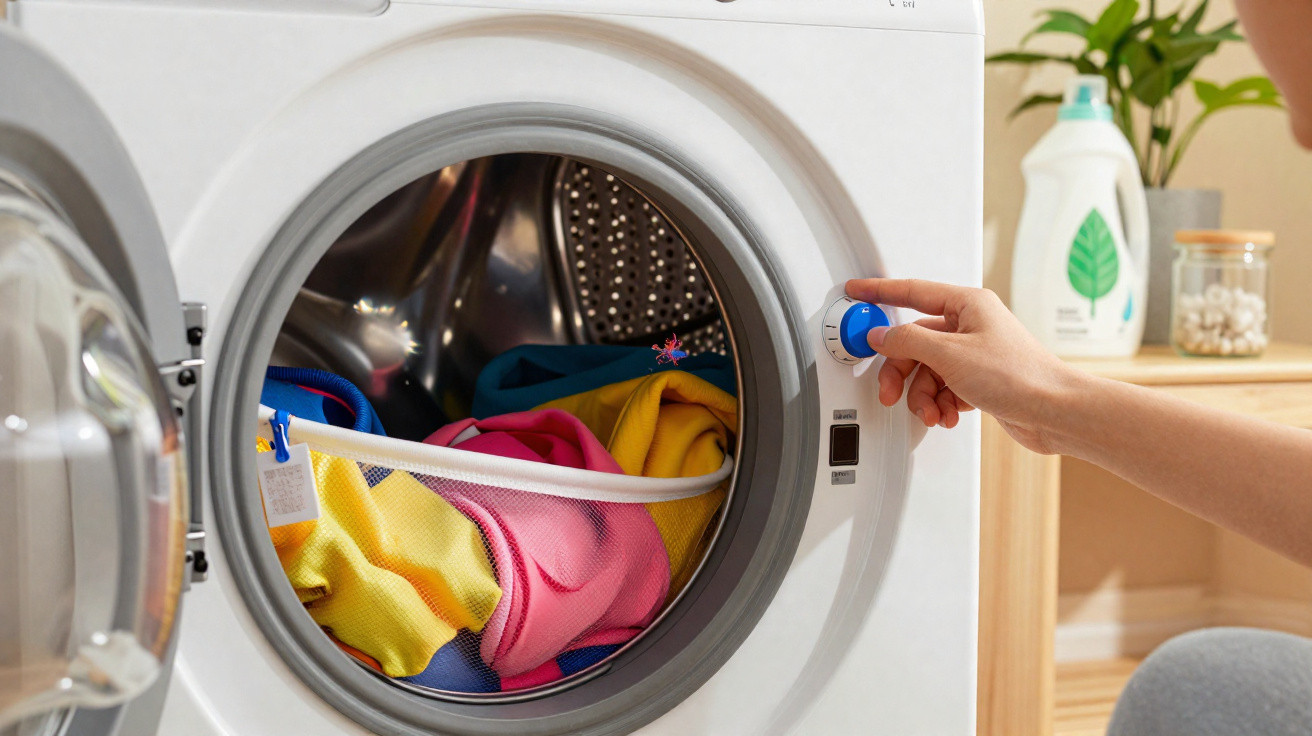
A washing machine runs on its “40°C mixed fabrics” programme, its drum throwing a knot of leggings, fleece jumpers and gym T-shirts against the door. On the shelf overhead, a bottle of “Eco fresh” detergent advertises cleaner clothes, lower energy use and greener decisions. It all appears sleek, efficient and entirely managed.
What remains unseen is what flows away with the grey water: countless invisible strands, each finer than a human hair, torn from your clothes in their hundreds of thousands. This plastic dust can then travel into rivers and lakes - and eventually into our own bodies.
The surprising part is that the choice with the greatest impact is not your detergent, washing machine make or an expensive filter. It is the number illuminated on the machine’s small display.
Cold water, hot problem: what your laundry is really doing
Loading a basket of synthetic garments into the washing machine means doing more than cleaning fabric: you are putting plastic through a storm. Polyester leggings, nylon sports bras, fleece throws and football shirts are all made from petroleum-based fibres. Long, hot washes weaken these fibres and cause them to snap, much like dried spaghetti dropped into boiling water.
Your clothes do not make a noise when this damage happens. Instead, they shed - silently and continually.
Researchers now agree that hotter temperatures and harsh wash programmes cause synthetic clothing to release substantially more microfibres. Cold water reduces that force. The drum continues to turn, but the fibres are more likely to flex than fracture. The load still gets clean, while the textile is less likely to break down into plastic particles.
At a Canadian university laboratory, researchers washed matching loads of synthetic garments at a range of temperatures. Hot programmes released clouds of fibres, whereas cold cycles at roughly 20°C discharged dramatically fewer. The figures are sobering: one study of polyester fleece found that a single wash could shed as many as 250,000 microfibres. Multiply that by weekly laundry, millions of homes and season after season of fast fashion.
On a European riverbank, a biologist collected sediment that appeared to be ordinary sand. Viewed through a microscope, it became a knotted mass of coloured threads: vivid pink, neon green and the faded grey of worn leggings. These fibres had not come from riverside factories. They had travelled from household washing machines, sometimes tens of kilometres away.
Plastic pollution in the ocean is often pictured as bottles and bags floating in island-like patches. The reality is more personal - and more troubling. Plastic found in fish stomachs, sea salt and even human lungs can come as readily from yoga trousers and fleece jackets as from carrier bags. Its journey may have begun with warm water in an otherwise quiet utility room.
Consider what heat does to fabric. It loosens fibres, opens their structure and makes them expand. With synthetics, this allows the fine filaments within each thread to detach more easily. The rotating drum then pulls them further apart. Warmer temperatures also accelerate the ageing of synthetic textiles, leaving them increasingly brittle with every wash.
Cold water has the opposite effect. It keeps fibres more compact and less pliable. Everyday dirt, perspiration and light marks can still be removed - contemporary detergents are made to do this - but the polymer chains in your leggings face less stress. Instead of a fight, the drum’s movement becomes more like a dance.
There is, of course, an energy benefit. Washing in cold water reduces electricity consumption, cuts household bills and lowers your carbon footprint. But the important shift is that energy is no longer the main story. Cold washing is becoming one of the only practical forms of household protection against the thousands of invisible plastic fragments released whenever we press “Start”.
How to wash in cold water and stop clothes falling apart
Moving to cold washes involves more than selecting 20°C and hoping it works. It begins at the laundry basket. Keep heavily soiled items - mud-covered socks, bibs and kitchen cloths - separate from ordinary daily clothing. More grit and rubbing inside the drum means greater abrasion, and more abrasion means more shedding.
Next, select the shortest and gentlest programme available on your machine. Look for “cold”, “eco cold” or an option marked around 20–30°C. Make this your standard choice for synthetics and blended fabrics, while treating hot water as an occasional exception rather than the norm.
Detergent matters too. Opt for a liquid formula intended for cold washes, and use less than the stated maximum amount. An overdose produces extra foam, leading to more movement, more friction and weaker fibres. Cold washing should feel like a gentle conversation with your clothes, not an argument.
On a wet Tuesday night after a long day, you might be standing in front of the machine with a heap of children’s football kits smelling like a changing room. Turning everything up to 60°C can feel tempting - as though it is the only way to get them “properly clean”.
However, tests of modern detergents show that they remain effective in cold water against normal sweat and dirt. The answer is pre-treatment rather than increased temperature. For grass or mud stains, apply a small amount of liquid detergent directly to the mark, rub it in gently and leave it for 10–15 minutes before starting a cold programme.
On a city balcony, a young couple hang their gym clothing on a folding drying rack. There is no tumble dryer and no additional heat. Their leggings retain their shape for longer, prints remain uncracked and the fibres stay strong. It is not flawless zero-waste living; it is simply a different default that quietly alters what reaches the water and air beyond their building.
Many people still regard cold washing as somehow “lazy” or less hygienic. They worry that clothes will smell or that stains will remain. Guilt can arrive quickly: when laundry is not spotless, we blame the lower temperature instead of the programme duration, detergent choice or the fact that the shirt may already have been three days beyond rescuing.
Time pressure is another issue. You arrive home late, put everything into one large load, choose the normal mixed programme and hope for the best. Let’s be honest: nobody manages this perfectly every day, with meticulous sorting and laboratory-style procedures.
The reassuring reality is that perfection is unnecessary. Building new habits for 70–80% of washes is enough. Keep warm or hot programmes for bed linen when somebody is unwell, cloth nappies or greasy kitchen towels. Put everything else in the cold zone. Your clothes can still emerge clean, while microfibres have far fewer opportunities to break away and escape.
“Every time we reduce wash temperature by just 10 degrees, we don’t only save energy – we also save thousands of fibers from breaking off a single synthetic garment,” explains a textile scientist from a European research lab. “Cold water is no longer a nice-to-have. It’s a frontline tool against microfiber pollution.”
For anyone who would rather take action than simply worry, this short checklist can help turn the ideas into an everyday routine.
- Wash all synthetic and blended garments in cold water, including leggings, sportswear and fleeces.
- Select short, gentle programmes, avoiding “intensive” settings unless they are genuinely necessary.
- Choose liquid detergents formulated for cold water and do not overdose them.
- Air-dry where possible, as high-heat tumble drying also puts stress on fibres and causes shedding.
- If you regularly wash synthetic fabrics, consider a microfibre filter bag or an external filter.
The quiet cold-washing revolution in your laundry room
Once cold washing becomes routine, an unexpected change can follow. The habit endures not because of distant environmental ideals, but because it makes everyday life simpler. Clothes last longer, colours stay brighter and a favourite pair of black leggings is less likely to turn grey within a month. You spend less replacing basic items that have stretched, faded or become strangely rough.
There is a quiet comfort in knowing that every tap of “cold” is both self-interested and generous. You are looking after your wardrobe while also sending fewer plastic fragments towards fish, birds and, ultimately, your own plate.
The emotional perspective changes as well. Filling the machine on a Sunday evening becomes less of a chore and more of a small choice you can repeat. It is not heroic, just practical. You still live among polyester and nylon, still occasionally buy an inexpensive T-shirt and still sometimes forget a load in the drum. Yet the background setting of daily life - the water temperature - has moved towards something a little kinder.
There can be a social effect, too. When visitors spot “cold wash only” written on a note beside the machine in a shared flat, they often ask about it. Discussions of plastic tend to focus on straws and bags. Leggings, sports bras and fluffy blankets make the issue feel much closer to home. A distant environmental concern becomes something people can feel in their hands.
Cold washing is not a perfect shield. Microfibres will still be released, even on gentle programmes and even from better-made fabrics. But while synthetic clothing continues to dominate our wardrobes - as it will for reasons of cost and comfort - the temperature control remains one of the few levers we can use. It requires no subscription and no specialist device, only a habit.
Environmental messages often end with huge, seemingly impossible demands: transform your whole lifestyle, abandon half your routines and live as if it were 1972. This change is smaller and strangely personal, right beside the laundry basket. Water can be cooler. Clothes can remain intact for a little longer. And fibres that never snap off will never need removing from a river downstream.
| Key point | Detail | Why it matters to the reader |
|---|---|---|
| Cold water slows fibre breakage | Lower temperatures keep synthetic fibres tighter and less brittle | Fewer microplastics are released, and clothes remain in good condition for longer |
| Programme choice matters as much as temperature | Short, gentle cycles create less friction than long, intensive programmes | Fabrics last longer without compromising cleanliness |
| Small habits are better than major sacrifices | Make cold the default and use hot water only in special cases, such as illness or heavy soiling | A practical routine that protects health, finances and the environment |
FAQ:
- Does cold water really clean sweaty sportswear properly? Yes, modern liquid detergents are designed to work at 20–30°C. For strong odours, pre-treat underarms with a little detergent, then use a cold, gentle programme.
- Is microfibre shedding only a problem with cheap clothes? No. Even high-quality synthetic garments shed. Construction and fabric density can help, but heat and friction still cause fibres to break away over time.
- Do laundry bags or filters replace the need for cold washing? They help, but they do not address the root cause. Cold washing reduces the number of fibres that break off; bags and filters only attempt to capture fibres once they have already shed.
- Can I wash bed sheets and towels in cold water too? Yes, for everyday use in a healthy household, particularly with a good detergent. Use occasional warmer washes if someone is ill or items are heavily soiled.
- Is switching to natural fibres enough to avoid the problem? Natural fibres such as cotton and wool do not cause plastic pollution, but they have other impacts and still wear out. Cold, gentle washing also helps them last longer and saves energy.





Comments
No comments yet. Be the first to comment!
Leave a Comment