
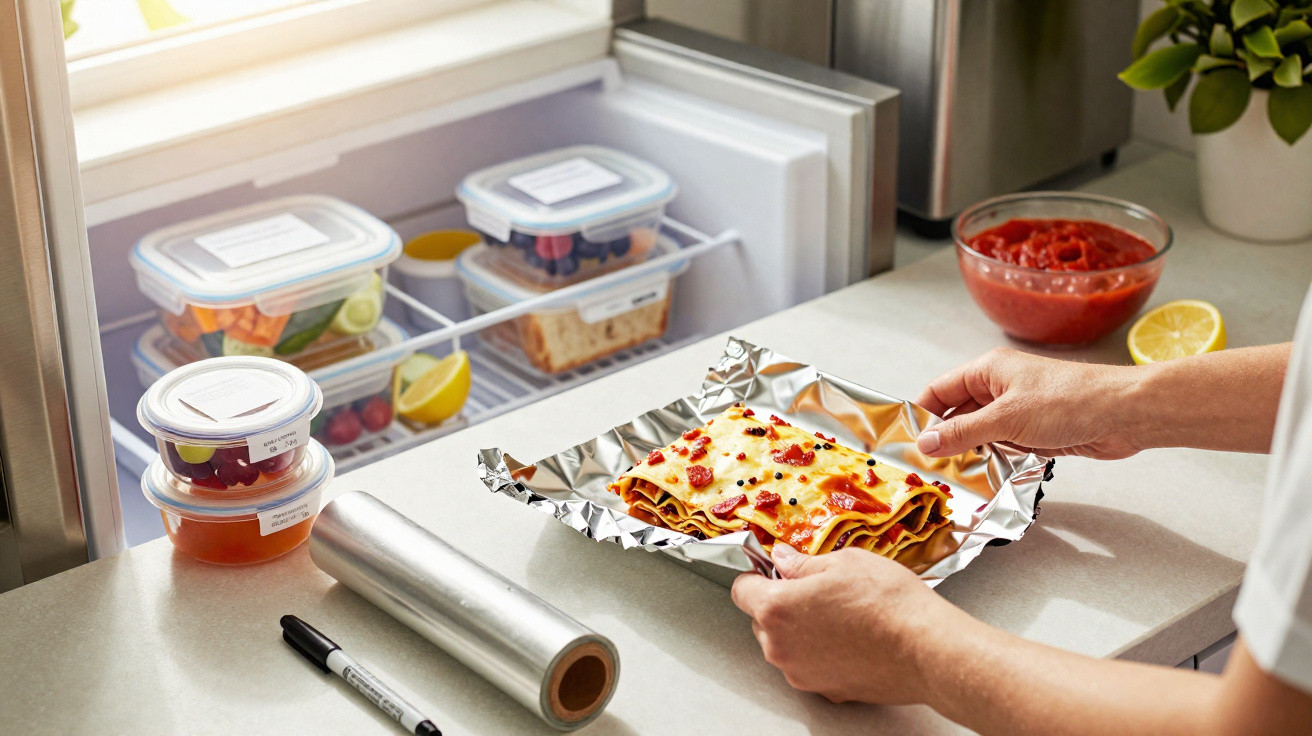
In many kitchens, aluminium foil is routinely used in the oven, fridge and freezer. Between concerns about personal health and the aim of cutting down on plastic, it can create a dilemma. How useful is aluminium foil in the freezer in practice – and when does it become a risk?
How aluminium actually behaves in the freezer
From a technical perspective, aluminium foil copes very well with cold conditions. The metal remains stable, does not become brittle and releases no substances solely because of freezing temperatures of –18 °C. For this reason, many guides list aluminium foil as a possible packaging material for a freezer.
The risk comes not from the cold, but from the combination of aluminium and certain foods – as well as packaging that is too thin or offers insufficient protection.
Aluminium foil shields food from light and reduces its exposure to air. This may help preserve flavour and slow down freezer burn. It is easy to shape and can be pressed closely around food. For short-term storage, that can appear practical at first.
The issue lies elsewhere: foil tears easily, especially against sharp edges, bones or hard crusts. Even tiny holes allow air and moisture to reach frozen food. This can lead to ice crystals, dehydration and a loss of flavour.
When aluminium foil works well for freezing
Aluminium foil can have a useful place in the freezer, provided certain conditions are met. The type of food, the storage period and the wrapping method are all important.
Suitable foods for aluminium in the freezer
- firm, relatively dry foods without marinade
- products with little salt and low acidity
- foods intended to remain frozen only for a limited period
In everyday use, aluminium foil generally works well for:
- raw, unseasoned meat, such as escalopes, chops or steak
- raw fish without lemon or a strongly seasoned brine
- bread, rolls and baguettes
- brioche, yeasted pastries and fairly dry cakes
- solid leftovers that are not heavily seasoned
For example, half a loaf of bread can be wrapped tightly in aluminium foil, frozen and later reheated directly in the oven. This usually works without difficulty for storage lasting a few weeks.
How to wrap food correctly in aluminium foil
A few straightforward steps determine whether the method works or ends in freezer burn:
- Let food cool completely before wrapping it.
- Press the foil closely around the food, smooth out creases and trap as little air as possible.
- Place baking parchment or kitchen paper around cut edges and bones to prevent punctures.
- Put the parcel in a freezer bag or container to create a second protective layer.
- Write the date and contents on the outside so nothing is forgotten for months.
Aluminium foil is more suitable as a second layer or an emergency solution than as the only material for long storage periods.
When it is better to avoid aluminium
The combination that causes concern is aluminium with acid or high levels of salt. Under these conditions, metal can dissolve and transfer to food. This effect is more pronounced at high temperatures, but the reaction can also matter during storage.
Foods that are unsuitable for aluminium foil
To be on the safe side, do not wrap the following foods directly in aluminium foil, whether for the fridge or freezer:
- tomatoes and tomato sauces
- citrus fruits and sauces containing plenty of lemon or lime juice
- dressings and marinades with a generous amount of vinegar
- heavily salted processed meats, ham and bacon
- very salty cheeses such as feta or Manchego
- ready-marinated cuts of meat and fish fillets
Health authorities view total aluminium intake with caution. Excessive amounts may accumulate in the body over the years. Studies are examining a possible link with neurological conditions such as dementia. The evidence is complex, but many specialist bodies advise reducing unnecessary sources of aluminium in everyday life.
Anyone prioritising long-term safety should not use aluminium foil for highly salty or acidic foods – including in the freezer.
Preparation is another important consideration: aluminium foil must never go in a microwave. Sparks can occur when frozen food is defrosted, damaging the appliance and, in the worst case, creating a fire risk.
Which alternatives are better for freezing
Anyone reorganising their freezer will quickly find several options that can be more practical and sustainable than aluminium foil alone.
| Packaging | Advantages | Disadvantages |
|---|---|---|
| Plastic freezer bags | flexible, can be sealed airtight, take up little space, inexpensive | plastic waste, microplastic risk, often used only once |
| Glass containers with lids | durable, odour-neutral, suitable for the oven and microwave without the lid | heavy, takes up space, can break |
| Sturdy plastic boxes (BPA-free) | reusable, stackable, transparent, usually leakproof | only suitable for heating to a limited extent, deteriorates over time |
| Beeswax wraps | natural material, washable, reduces single-use wrapping | not ideal for raw meat or fish, limited sealability |
| Aluminium foil as an outer covering | additional protection from light and odours, mouldable | resource-intensive, not infinitely recyclable, health concerns |
One practical compromise is to place food in a freezer bag or container first, then add a layer of aluminium foil on the outside only when needed for extra protection from odours and light. This significantly reduces direct contact with the metal.
How to reduce health risks associated with aluminium
Aluminium is found not only in foil, but also in cookware, baking trays, coffee capsules and baking tins. Anyone wishing to reduce exposure does not need to ban everything at once, but can make gradual changes.
- Do not cook food directly on aluminium trays or in aluminium tins; line them with baking parchment instead.
- Leave marinated foods to stand in glass or ceramic dishes rather than aluminium foil.
- Use aluminium foil sparingly and avoid repeatedly folding and reusing it after it has been in contact with food.
- Choose aluminium-free deodorants and cosmetics to reduce overall intake.
The more widely alternative materials are used, the lower a person's aluminium intake is likely to be over many years.
Everyday situations: what to do with leftovers?
Imagine a typical evening: half of the lunchtime bake remains, but everyone is already full. In the first option, the dish goes into the fridge covered with cling film and is thrown away two days later. In the second, the bake is allowed to cool, cut into portions, placed in a container and frozen. For individual servings, a thin layer of aluminium foil can also be placed directly over the surface to slow freezer burn.
Here is another situation: meat for grilling is being prepared in advance for the weekend. If raw steaks have already been marinated with lemon juice and salt, they should not be frozen directly in aluminium foil. A better approach is to freeze the pieces before marinating them, then season them freshly later. This considerably reduces the risk of metal transferring to the food.
Combining sustainability with practicality
Many households are trying to use less plastic and therefore instinctively reach for aluminium foil. The reasoning is understandable, but it does not automatically produce a more environmentally friendly result. Producing aluminium uses a great deal of energy, and recycling only works when foil is collected cleanly and disposed of in the correct waste stream.
For the long term, robust reusable options are usually the better choice: glass containers, thick-walled boxes and high-quality bags that can be washed and reused. Aluminium foil can still serve as a small aid, particularly for short-term covering or as an additional freezer layer – but not as the standard wrapping for every leftover.
A well-organised freezer needs more than foil: clear labels, dedicated containers and fewer last-minute wrapping decisions.
Building this routine saves money, reduces food waste and at the same time lowers potential health risks from aluminium. Reaching into the freezer then becomes less stressful – without an uneasy feeling every time a piece of foil is used.




Comments
No comments yet. Be the first to comment!
Leave a Comment