
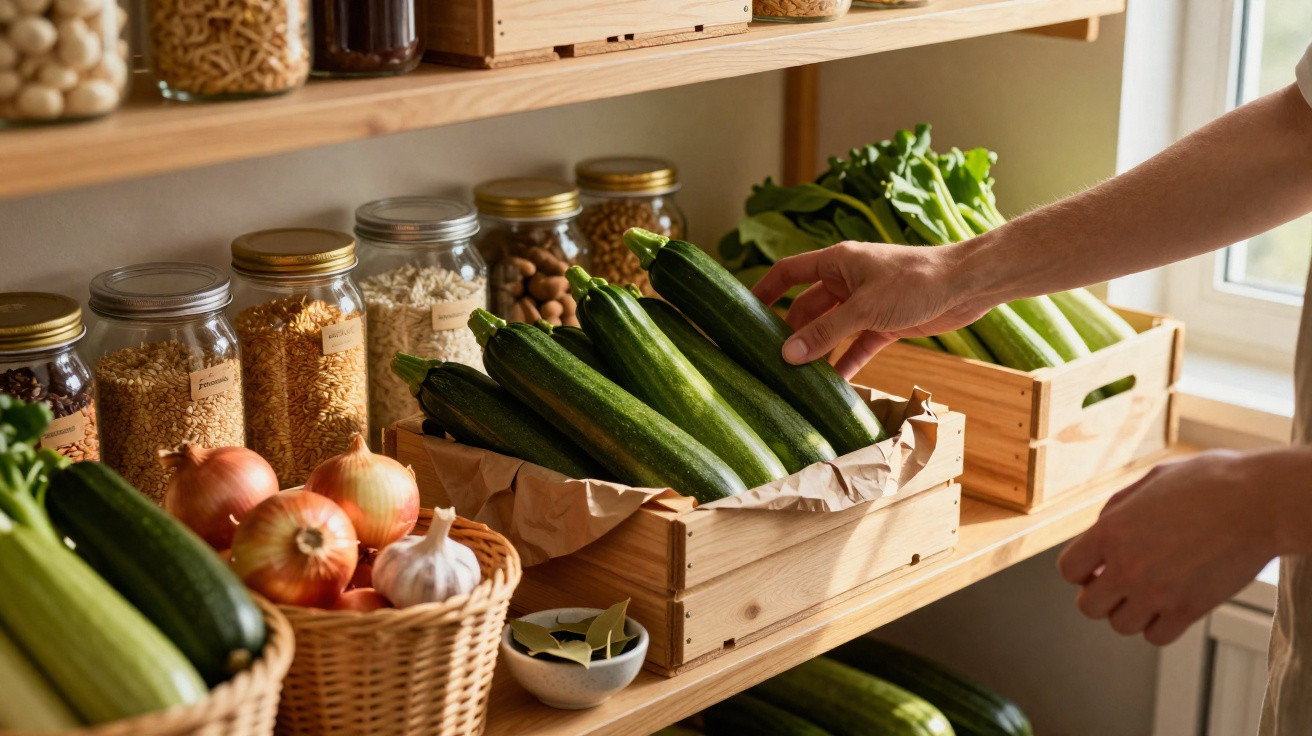
Placing zucchini in the fridge may seem like the obvious everyday choice, but it can gradually spoil a vegetable capable of remaining firm, shiny and tasty for weeks-or even months. Simply changing their storage location can transform their keeping time, flavour and the amount you throw away.
How the fridge quietly damages zucchini
A refrigerator appears to be the sensible place: it is cold, clean and seemingly protective. Yet for zucchini, low temperatures can trigger a gradual decline. Their flesh becomes softer, moisture droplets appear and the skin marks easily.
Crisper drawers are usually both crowded and humid. Condensation collects on their surfaces and directly on the vegetables. The fine, delicate skin of a zucchini takes in this moisture. Even minor knocks, scratches from nearby produce or pressure from stacking can create vulnerable areas.
Zucchini stored cold and damp tend to bruise, weep water and start to rot long before they lose their bright green color.
When moisture gets beneath the skin, brown marks can develop, followed by pale and waterlogged areas. The flesh starts to break down, the seeds become loose and the flavour weakens. By the time you take them out for an evening meal, they may already be spongy before the week is over.
Repeated changes in temperature make matters worse. Whenever the fridge opens, warmer air from the kitchen enters. The drawer then chills again, the humidity changes and condensation forms anew. These small daily fluctuations put stress on zucchini cells and reduce their storage life.
What zucchini need instead is a calm setting: consistently mildly cool conditions with sufficient air circulation to prevent moisture lingering on the skin.
Where to store zucchini for up to 3 months
Rather than the refrigerator, zucchini are best kept in a cool, dark and airy part of the home. The aim is food storage rather than cold storage.
A pantry, utility room, internal hallway cupboard or under-stairs cupboard can be more suitable than a modern fridge. Choose somewhere dry, sheltered from direct sun and kept at approximately 10–16°C (50–61°F). Steady, moderate conditions matter more than severe cold.
Zucchini also need to breathe instead of being sealed in plastic bags or shut inside drawers. A slatted wooden crate, wicker basket or a plain shelf covered with fabric allows air to circulate around every vegetable. It is a simple, almost traditional arrangement, but it works extremely well.
With good airflow, intact stems and no stacking, many home gardeners manage to keep zucchini usable for two to three months.
Creating a long-life zucchini storage area
You do not require a cellar or any specialist kit. These straightforward practices are enough:
- Select firm zucchini with undamaged skin and a fresh, unbroken stem.
- Avoid washing them before putting them away; remove dry soil with a brush instead.
- Arrange them in one layer, ensuring they are neither piled up nor pressed together.
- Store them away from direct sunlight, hot ovens and radiators.
- Inspect them weekly, taking out any zucchini that develop soft patches.
The stem is more important than many people realise. If the peduncle remains intact, it works as a natural seal. It limits moisture loss and prevents microbes entering the flesh. Shortening the stem or harming it while harvesting reduces the possible storage time.
Placing loose hessian, an old cotton tea towel or a sheet of paper beneath the zucchini provides cushioning and reduces rubbing. Each slight knock can leave damage that later develops into a bruise, so keeping them still helps them last longer.
Organising pantry vegetables by their “personality”
Once you understand that zucchini are happier outside the fridge, another question follows: which vegetables genuinely need refrigeration, and which can share pantry storage?
Produce does not all respond in the same manner. Certain crops originate in cooler climates and cope well in a fridge, whereas others that grow in warm fields are harmed by icy drawers.
| Best kept in the fridge | Best kept in a cool pantry |
|---|---|
| Broccoli, cauliflower, Brussels sprouts | Zucchini and summer squash |
| Leafy greens (lettuce, spinach, chard) | Tomatoes (for flavour) |
| Leeks, green beans, asparagus | Onions, garlic, shallots (dry) |
| Mushrooms, cut vegetables, peeled carrots | Potatoes and other tubers |
| Herbs that wilt quickly, like coriander | Winter squash (butternut, pumpkin, kabocha) |
Tomatoes, for example, retain more of their aroma and full flavour when kept at room temperature or in a cool room rather than refrigerated. Their texture remains more enjoyable as well. Refrigerated potatoes may acquire a slightly sweet, unusual taste because their starch converts to sugar. Like zucchini, they are better suited to a dark, cool pantry.
Fully dried onions, garlic and shallots can keep for weeks or months in a breathable bag or mesh net. They do not cope well with either the close humidity of a refrigerator or bright, warm kitchen windowsills, where sprouting and mould can occur quickly.
Thanks to their thick skins, winter squash are especially suited to long pantry storage. Many types will keep for several months at a stable, moderate temperature. This leaves more fridge room for delicate greens and prepared produce that genuinely require strong cold.
Everyday habits that dramatically reduce food waste
Moving vegetables to more suitable storage changes how often you discover a drawer of slimy, wasted produce. Instead of cooking in a rush because ingredients are about to spoil, you can choose what to make deliberately.
A simple routine can help:
- Give pantry vegetables a quick visual inspection each week.
- Put the first zucchini with minor marks on your “cook soon” list.
- Turn damaged portions into soups, gratins or sauces instead of binning them.
- Reserve the most flawless zucchini for raw salads, stir-fries or grilling.
Looking closely at your vegetables once a week often saves more money than hunting for supermarket promotions.
Paying attention to storage order can also alter how you shop. Knowing that zucchini may keep for up to three months in a suitable pantry location makes it easier to buy a crate from a local farm or use an abundant garden harvest. This can cushion price rises and shortages while allowing more seasonal cooking.
What longer zucchini storage changes in the kitchen and nutritionally
Correctly stored zucchini stay dense and give a slight squeak when cut with a knife. That firmness works well for frying in a pan, roasting and stuffing. You achieve defined edges rather than a soft mass that falls apart in the pan. Their taste stays gently green and mild, rather than becoming sour or watery.
Nutritionally, reduced damage and moisture loss generally support better vitamin retention. Vitamin C and certain antioxidants deteriorate more rapidly in wet, bruised conditions and at higher temperatures. Pantry storage slows both physical deterioration and the loss of nutrients.
For home cooks, this makes meal planning more flexible. A basic pantry “zucchini stack” can provide ingredients for very different meals throughout the season: ribbon salads one week, ratatouille the following week, then a tray of roasted vegetables with herbs and olive oil. Longer storage encourages variety rather than repetition.
Further options: preserving excess zucchini and controlling risks
If the pantry remains full, you can move from storing zucchini to preserving them. They freeze successfully when sliced, briefly blanched and cooled. They are also well suited to relishes, pickles and jarred spreads. Combining pantry storage with preserving methods creates a flexible supply throughout the year.
A few possible issues need monitoring. An overly warm pantry accelerates spoilage, while a damp cellar promotes mould. Rodents may nibble stored vegetables if they are left close to walls or on the floor. In most cases, basic measures-slatted shelving, raised crates and adequate airflow-address these concerns.
Viewing zucchini in this way can reshape how you approach the entire kitchen. Storage becomes part of your cooking strategy rather than an afterthought. The fridge serves fragile, short-term ingredients, while the pantry takes care of the longer term, allowing an unassuming green squash to remain ready for up to three months without losing its appeal.




Comments
No comments yet. Be the first to comment!
Leave a Comment