
A T-shirt that comes out of the machine smelling “a bit off”. A towel that is technically washed yet still has a faint, stale smell. You blame the detergent, change brands, use extra fabric conditioner or perhaps add scented beads. Still, nothing really improves.
Then, one day, you open the washing machine door and get hit by the reality: that sour, damp changing-room odour. You bend closer, smell the drum and feel mildly let down. This was meant to be the appliance that keeps things clean. The reliable one.
You rub the rubber seal with your sleeve, partly intrigued and partly disgusted, and your fingers emerge black and slimy. That is when you understand what is actually happening. It is also when you discover that a “clean” washing machine can be among the filthiest spots in your home.
You can put it right in 20 minutes, provided you know where to check.
Why your “clean” washing machine smells so bad
Your washing machine has two sides. On the surface, it is a gleaming, useful appliance that spins away like a dependable robot. Behind the door, however, it is warm, damp and dark - virtually an ideal retreat for bacteria and mould. Each wash leaves minute traces of detergent, fabric conditioner and body oils behind. These stick to the drum, pipework, drawer and rubber seal.
Those deposits combine with hard-water minerals and lint before lingering between loads. The drum remains a little wet, the door is commonly kept closed, and the machine gradually creates an ecosystem of its own. That unpleasant smell is not simply “old water”. It is biofilm: a slimy coating of microbes that has settled in and begun paying rent in odours.
A UK survey from a major appliance brand found that over half the washing machines tested contained bacterial levels comparable to those expected on a toilet seat. A separate study detected faecal bacteria on laundry believed to be “clean”. It is not a statistic you want in mind when you press your favourite pillowcase against your face at bedtime.
The same sequence comes up again and again. At first, socks and gym kit never entirely lose their odour. Next, towels seem oddly weighty and damp, even when freshly dried on the line. Eventually, you notice that unmistakable sour smell when the door opens. Some people blame their flat, the weather or even their own bodies. Others discreetly replace the entire appliance because they believe it is “too old” - when it really needed 20 concentrated minutes and a single hot cycle.
The reasoning is harsh but straightforward. A washing machine does not disinfect itself by magic. Most loads are washed in warm rather than boiling water. Modern detergents are formulated to work at 30°C to reduce energy use, which benefits the planet but also benefits bacteria. Low-temperature washing is kind to clothes and unkind to your nose. Unless you interrupt that routine regularly, dirt and microbes take over.
Front-loading machines are especially susceptible. Their rubber door gasket holds moisture and tiny socks, the detergent drawer never dries completely, and the drain filter silently gathers coins, hair, sludge and fragments of everyday life. Because the machine still runs, it is easy to assume everything is fine. It is rather like brushing your teeth without ever cleaning your toothbrush.
The 20-minute washing machine deep clean that changes everything
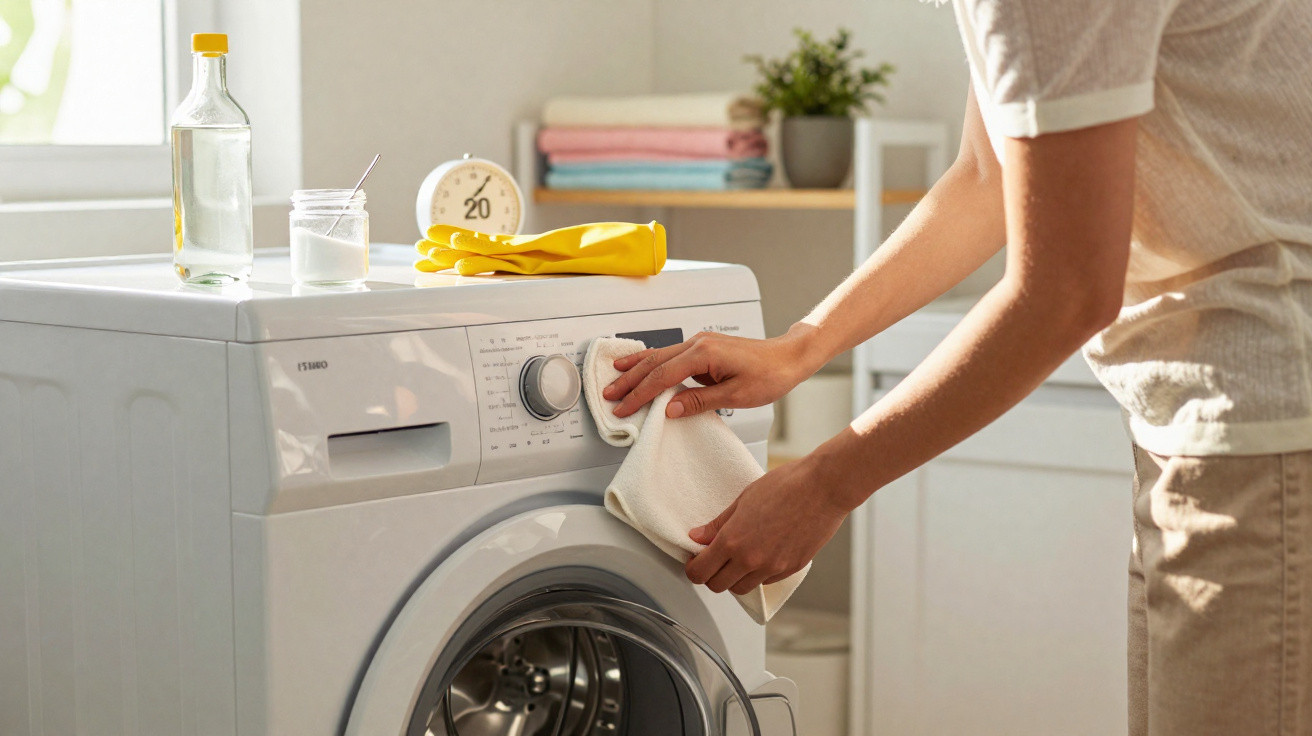
Set a 20-minute timer and work quickly with purpose. Begin with the main offender: the rubber door seal. Carefully pull it back and inspect the fold. If this is your first time, what you find may genuinely make you gasp. Clean it using hot soapy water or a mixture of white vinegar and water. An old toothbrush is useful for the grooves. Put any loose coins, hair and unexplained black residue in the bin.
Then remove the detergent drawer. Run it under hot water and scrub the corners and underside, where mould is especially likely to hide. If it is particularly grimy, leave it in a basin with washing-up liquid and a splash of vinegar for five minutes before scrubbing it. With the drawer removed, inspect the cavity it slots into - that tunnel can resemble a scene from a horror film. Wipe it carefully.
Now deal with the part most people overlook: the drain filter. It is generally behind a small panel at the front of the machine, close to the floor. Put a tray or towel beneath it, slowly unscrew it and allow any trapped water to drain out. Remove the filter, then clear away sludge, hair bands, coins and stray Lego pieces. Rinse and scrub it before fitting it back in place. Finish by wiping the door, controls and exterior with a damp cloth. In less than 15 minutes, you have completed the messiest jobs.
Use the remaining five minutes to make choices and build small habits that stop the results disappearing. A frequent error is using far too much detergent and fabric conditioner. It may seem that “more soap = more clean”, yet it makes residue accumulate more quickly. Most current powders and liquids are concentrated. When the cap states 35 ml, do not overfill it “just in case”. Your machine cannot rinse away that amount properly.
Fabric conditioner is another understated cause. It leaves a coating on fabric to create a smooth feel, but it also covers the drum and pipes with a waxy layer. If your towels never smell properly fresh, use half as much or avoid it for several loads. Many people find the musty smell lessens when they use fewer heavily fragranced products.
The easiest habit is to leave both the door and detergent drawer slightly open after every wash. Give the appliance a chance to dry. On a hectic day, it can feel like another task to remember, but it makes the difference between a neutral-smelling machine and a swamp. Let’s be honest: nobody really does it every day. Yet those people whose washing always smells like a hotel room? Most of the time, they quietly do this.
Next, start the “reset” cycle. Tip around 250 ml of white vinegar straight into the empty drum. Put two tablespoons of bicarbonate of soda in the detergent drawer or directly in the drum. Choose the hottest and longest programme available on your machine - typically 90°C, or a “drum clean” programme if your model has one. Press start, then let heat and chemistry do the work.
Vinegar can help break down limescale and old detergent deposits, while bicarbonate of soda freshens and provides gentle abrasion. Some people prefer to run another short hot rinse afterwards, particularly if they are concerned about a vinegar odour, although this usually fades as the machine cools. Once the cycle is over, dry the drum, seal and glass door with a clean cloth, then leave everything open for an hour.
“I’d got to the point where I was embarrassed to let guests use the washing machine,” says Emma, 34, from Manchester. “Twenty minutes of cleaning and one hot cycle later, the smell just… vanished. My towels came out actually smelling of the detergent again, not that weird damp stink.”
Some readers prefer to keep a small “laundry care kit” close by. It need not be elaborate - just a few essentials you will genuinely use:
- Small bottle of white vinegar (for monthly hot cleans)
- Old toothbrush and microfibre cloth
- Box of bicarbonate of soda
- Measuring scoop or cap for detergent
- Sticky note on the wall saying: “Door open. Less soap. One hot wash a month.”
We have all had that moment when we realise the “grown-up” task we have ignored for years can actually be sorted out in one quiet evening. Resetting a washing machine is exactly that sort of moment.
From swampy drum to fresh-laundry life
After the deep clean, your machine is effectively beginning a new chapter. Clothes that emerge afterwards can seem… lighter. Less coated. You may suddenly recognise what your detergent truly smells like when it is no longer battling layers of old grime. That first genuinely fresh load can feel surprisingly emotional, particularly if you have become used to silently apologising for your laundry.
Consider how far that small shift can reach. Fresh gym kit is more pleasant to wear. Clean-smelling bed sheets can make getting into bed feel like a small occasion rather than an everyday routine. Children’s clothes stop emerging with that questionable sour note that makes you smell them again before folding. A fresh-smelling home changes how you feel about the whole place.
There is also something reassuring about looking after the appliance that quietly deals with your mess, sweat and daily life. It is not glamorous, it is not Instagram-ready, and you certainly will not do it perfectly every month. But after seeing how dirty the seal and filter can become, it is difficult to forget. Your standards change. You spot more. You begin taking small actions sooner, before they develop into major, smelly issues.
| Key point | Detail | Benefit for the reader |
|---|---|---|
| Clean hidden areas | Rubber seal, detergent drawer, drain filter | Removes the real source of unpleasant smells |
| High-temperature cycle with vinegar + bicarbonate of soda | Run an empty cycle at 60–90°C | Dissolves deposits and deeply refreshes the drum |
| Small habits after every wash | Less detergent, door left ajar, monthly cleaning | Keeps the machine fresh for longer, without daily effort |
FAQ:
- How often should I deep-clean my washing machine? For most homes, once a month is enough. If you wash heavily soiled clothes, nappies or do several loads a day, every two weeks keeps odours away.
- Can I use bleach instead of vinegar? You can, but never mix bleach with vinegar or other cleaners. Use a small amount of bleach on a hot, empty cycle on its own, and always ventilate the room.
- My clothes still smell after cleaning the machine. What now? Try running one more hot cycle with vinegar, then wash a load of towels at 60°C with less detergent. Sometimes old fabrics are so saturated with residue they need a few “reset” washes.
- Is it safe to leave the door open all the time? Yes, and it helps the machine dry out. If you have small children or pets, leave it ajar when you’re around, or use a simple child lock on the door.
- Do washer cleaning tablets work? They work reasonably well for the drum, but they don’t touch the worst grime hiding in the seal, drawer cavity and filter. Using them alongside a quick manual clean is the sweet spot.

Comments
No comments yet. Be the first to comment!
Leave a Comment