
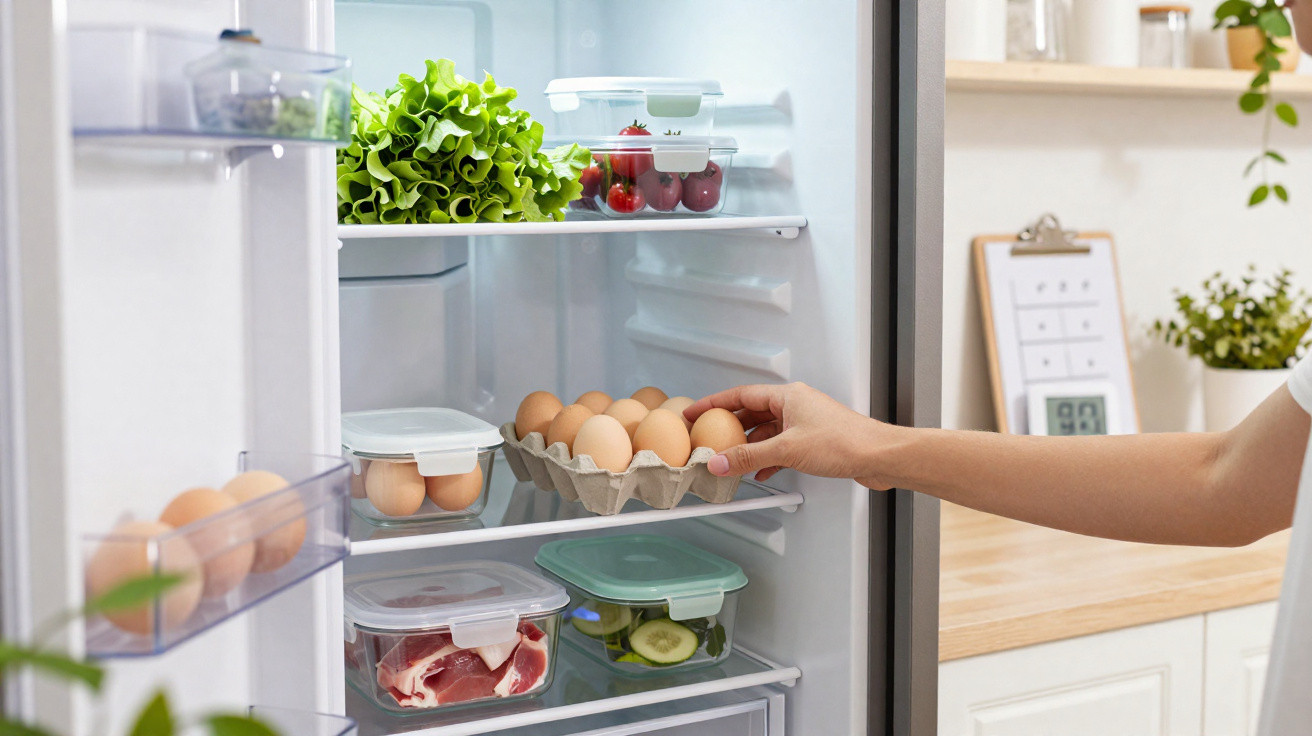
The glow from an open fridge falls across the kitchen floor, revealing the familiar scene: a neglected bag of salad, strawberries that have gone limp and a yoghurt several days beyond its date.
You shut the door with a sigh, accompanied by that subdued guilt most of us recognise. Food costs money, you do not want to waste it, yet items still vanish between the shelves. Much of the usual advice focuses on glass storage boxes, Sunday meal preparation and attractive labels. That may look good on Instagram, but it is not much use at 9:43 p.m. on a Wednesday. There is, however, an easier solution concealed by years of haphazard stacking and the habit of putting things wherever there is room. It is a modest, almost traditional fridge habit that can discreetly help food last longer. Our grandparents practised it without giving it a name, and your fridge is probably overlooking it right now.
The real problem is not what you buy, but where you put it
A look inside almost any fridge tells the story of its owner’s week: half a lemon shrivelling on the top shelf, cheese concealed behind the milk, and three identical jars of pesto arranged like an unfunny gag. The disorder may not seem serious, but it creates a straightforward problem: we overlook what is not clearly visible. Food often goes off not because it was already “bad”, but because we never notice it. Your fridge is not simply a cold box; it is a map of your habits. On that map, one neglected rule can determine how quickly fresh food becomes an “oh no” moment.
In one UK survey, households said they discarded food worth an average of €60 each month. This was not the result of burnt meals or recipes gone wrong, but of food gradually spoiling at the back of the fridge. Think of a tub of hummus: it begins at the front, gets pushed aside by leftovers, and is eventually hidden behind a juice carton. When you finally find it, there is a dubious layer on its surface. Repeat that small sequence with fruit, herbs, sliced meat and opened sauces, and what appears to be ordinary clutter becomes a silent production line sending perfectly good food to the bin.
The key point is that, although your fridge is cold, it is not the same temperature throughout. Areas by the door are warmer, the back contains colder spaces, and individual shelves can vary slightly in temperature. Manufacturers understand this, which is why fridges have designated meat drawers, vegetable crispers and butter compartments. When we disregard that internal “climate map” and cram food into any available gap, we unknowingly reduce its shelf life. The overlooked tip is neither a costly gadget nor a strict weekly system. It is about deliberately using your fridge’s natural cold zones to decide where each item belongs whenever you close the door.
The forgotten tip: use your fridge as a temperature map
The central idea is to stop viewing the fridge as a collection of shelves and instead think of it in terms of temperature zones. In most fridges, the back of the middle or lower shelves is the coldest area. The warmest place is usually the door, where many of us arrange milk, eggs and opened sauces as though creating a supermarket display. The simple rule is to keep delicate fresh items in the reliably cold area, while placing more robust foods in warmer locations. Dairy products, raw meat where there is no dedicated drawer, fresh berries and leftovers you want to keep safe for longer should sit in that deep, steady cold. Sauces, drinks and condiments that can tolerate minor temperature changes are better suited to the door.
This is not a call to transform your fridge into a Pinterest display. Instead, keep a quiet rule in mind: delicate food goes in the coldest zone, while hardy items can go in the door or on an upper shelf. When unpacking shopping, rather than asking, “Where is there space?”, ask, “Where is the right temperature?” That mental shortcut can still work on a hectic evening. Let us be honest: nobody manages it perfectly every day. That is perfectly fine. Even following the rule approximately most of the time can help salad stay crisp, leftovers remain safer and berries develop less mould. Your fridge begins to work alongside you rather than against you.
Food scientists explain the principle simply. Microbes thrive in mild temperatures that fluctuate. The nearer food is kept to a stable cold zone, the more slowly bacteria multiply, flavours deteriorate and textures break down. A yoghurt stored in the door receives a miniature sauna treatment whenever the fridge is opened. The same yoghurt, placed towards the back of the middle shelf, will age more slowly even though the date on the pot is exactly the same. One French microbiologist explained it to me like this:
“People think of expiry dates as destiny. In reality, the spot your food occupies in the fridge often matters just as much.”
- Coldest zone (back of middle/lower shelves): fresh meat, fish, dairy, leftovers, berries
- Middle zone (front of shelves): cooked dishes for quick use, opened cheese, sliced meats
- Door and top zone: sauces, condiments, drinks, butter and less delicate foods
Making the fridge temperature zones work during busy weeks
Once you regard the fridge as a map of warmer and colder areas, add one more uncomplicated rule: give foods you need to eat soon the VIP places in the coldest zone, at eye level. This could mean moving your milk slightly lower so that last night’s leftovers occupy the spot you notice first. You might reserve half of the coldest shelf for “delicate and soon” foods, such as opened cream, cut fruit and fresh herbs in a jar. Each time you open the fridge, that visible cold area quietly reminds you which items need using first. Meal ideas then come from what is in front of you rather than from what is hidden away.
The most frequent error is treating the top shelf as a catch-all because it is easiest to reach. Another is filling the door with items that dislike temperature changes: fresh juice, milk, eggs and, occasionally, raw meat in plastic bags. This is how milk turns sour before its date and lettuce becomes limp long before you intended to make salads. Then there is the “overflow drawer”, where everything is placed to disappear into darkness. It is not that you are lazy; the fridge is simply not set up to support how your brain works. On an exhausting evening, your hands will always select the nearest empty space. Change the conditions instead: make the correct locations the easiest to access.
One home cook I spoke to described the difference this way:
“I stopped trying to have a ‘pretty’ fridge and focused on a ‘cold where it counts’ fridge. My bin got lighter in two weeks.”
- Start small: On your next shopping day, move dairy and leftovers to the back of the middle shelf, and put drinks and sauces in the door.
- Use a “front row” rule: Keep food that needs eating soon at the front of the coldest shelf rather than spreading it around the fridge.
- Do not hide berries: Store them visibly in the cold zone instead of letting them be crushed beneath vegetables in the drawer.
- Respect the drawers: Put vegetables in the crisper and meat in its dedicated drawer if your fridge has one - they exist for a reason.
- Forgive the mess: The goal is not perfection, but a fridge that quietly preserves food for a few extra days.
A small fridge change that affects the whole week
When you begin using this temperature-map approach, your fridge feels different. On opening the door, your eyes find the right items in the right places. The yoghurt at the back is still fine, berries make it through the week and last night’s pasta does not turn into a science experiment. You cook more often with what you already own rather than with what you vaguely recall buying. That relieves some pressure on both your budget and your conscience.
There is something unexpectedly grounding about arranging food around the fridge’s genuine internal climate. It does not require rigid meal preparation or expensive containers; it simply means paying attention to where the cold really is. That modest organisational decision leads to bigger questions about how much we waste without noticing and how much of the kitchen runs on autopilot. On a difficult day, opening a calm, sensible fridge can feel like a small way of regaining control without committing to a huge “new me” plan.
On a Sunday afternoon, you may find yourself slowly checking each shelf. Move the yoghurt from the door to the back. Slide the strawberries into the cold zone, where you will spot them the following morning. Shift the mustard and ketchup to the door, where they will be absolutely fine. There is no drama and no elaborate system, only a quiet, practical adjustment that helps food last longer and makes meals a little easier. You may forget where you first heard this fridge tip. You will not forget the relief of opening the door to find food that is still fresh and waiting for you.
| Key point | Detail | Benefit for the reader |
|---|---|---|
| Fridge = temperature map | The zones are not all the same temperature; the back of the middle section is the coldest | Understand where each type of food should go to extend its freshness |
| Delicate food in the cold, robust food in the door | Dairy, leftovers and delicate fruit go at the back; sauces and drinks belong in the door | Reduce waste and avoid unpleasant surprises when opening products |
| “Eat soon” zone | Place urgent foods at eye level in the coldest area | Cook what is most at risk of being wasted first, without mental effort |
FAQ:
- What is the coldest part of a typical fridge? The back of the middle or lower shelves is generally the coldest area, whereas the door and top shelf are often a little warmer and subject to more temperature changes.
- Should I store milk in the fridge door? It is better to keep milk towards the back of a middle shelf, where the temperature is more stable, so it remains fresh closer to, or even beyond, the printed date.
- Where should I put leftovers so they last longer? Keep leftovers in shallow containers on the coldest middle shelf rather than stacking them, and place them near the back while ensuring they remain visible so that you actually use them.
- What about fruit and vegetables? Most vegetables fare best in the crisper drawer, which regulates humidity, while delicate fruit such as berries benefits from the coldest zone, ideally at the front so it is not forgotten.
- Do I need special organisers for this tip to work? No. The important thing is to follow your fridge’s natural temperature zones and give delicate foods the coldest, most stable positions; boxes and storage bins are merely optional aids, not essential equipment.


Comments
No comments yet. Be the first to comment!
Leave a Comment