
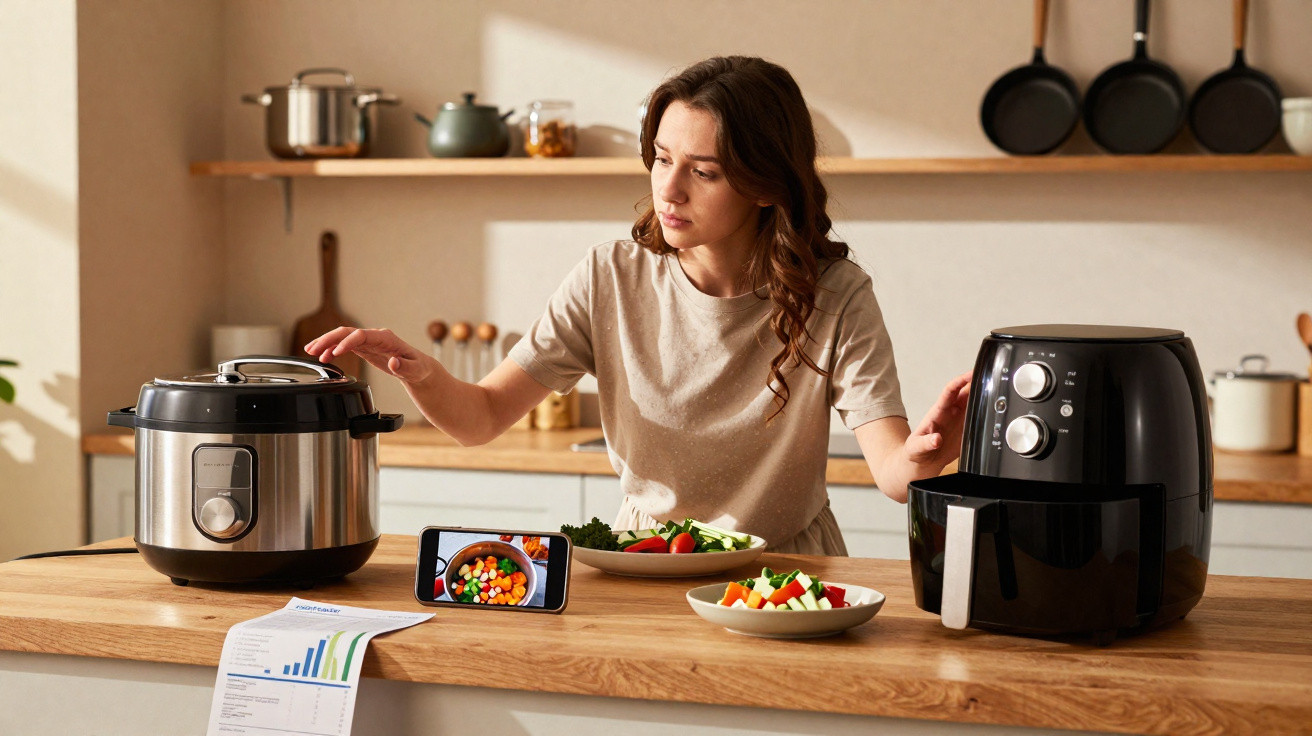
A smart new worktop appliance is challenging the air fryer’s dominance, with claims that it can take over the role of half the kitchen at once.
On social feeds and in supermarket displays, a multi-tasking cooker with nine separate functions is emerging as the newest source of both excitement and exasperation for home cooks wondering whether they need another upgrade.
A fresh contender for gadget-filled kitchens
During the last five years, the air fryer has shifted from a specialist novelty to an everyday appliance in countless UK and US homes. It is used for meals ranging from frozen chips to whole chickens, frequently cooking more quickly and using less energy than an oven.
A newer wave of multi-cookers is now being promoted as “the next step”. In one box-shaped worktop appliance, these machines generally bring together air frying, pressure cooking, slow cooking, grilling and even yoghurt making.
This nine‑in‑one gadget is being sold as a one-stop solution that could replace the air fryer, pressure cooker, slow cooker and more.
Retailers are giving these appliances a major push before the warmer months, when people often want to avoid turning on the main oven. TikTok and Instagram influencers are sharing comparison tests that put conventional air fryers up against their multi-function competitors.
Nine cooking methods in one machine
Specific functions differ between brands, although most leading appliances provide a comparable range. Their marketing commonly focuses on nine principal settings:
- Air fry
- Pressure cook
- Slow cook
- Steam
- Sauté or sear
- Grill or broil
- Bake or roast
- Reheat
- Dehydrate or yoghurt
The attraction is clear: a single machine able to do the work of several large appliances. For people living in a small flat or cooking in student accommodation, combining nine tasks in one unit can be especially appealing.
Supporters say the gadget is less about trendy recipes and more about reclaiming space, time and energy in small homes.
According to manufacturers, these multi-cookers may reduce cooking times, lower energy costs compared with a full oven and deal with tougher meat cuts that ordinary air fryers find difficult. In particular, the pressure-cooking setting can make beans, stews and curries tender in less than an hour.
Why some home cooks welcome the nine-in-one cooker
Supporters of the new appliance see it as a natural development for contemporary kitchens. Many report that they have already dispensed with a slow cooker and rice cooker, and are considering donating or selling their air fryer through a charity shop or online marketplace.
Enthusiasts most often point to the following advantages:
| Perceived benefit | What users say |
|---|---|
| Space saving | A single worktop gadget replaces three or four individual appliances. |
| Versatility | Use the same pot to pressure cook a stew, air fry chips and bake a cake. |
| Energy use | Its smaller cavity wastes less heat when preparing small meals than a full oven. |
| Speed | The pressure setting prepares dried pulses and tougher cuts much more rapidly than simmering on the hob. |
Parents with packed timetables describe batch cooking at weekends with the pressure and slow-cook settings, before using the air-fry function to reheat leftovers until crisp during the week.
Why others are rolling their eyes
The appliance has not won everyone over. Alongside every enthusiastic review is a tired social media post questioning whether another plug-in worktop box is really necessary.
Critics view the nine‑in‑one machine as the latest in a long line of over‑hyped gadgets that end up gathering dust.
Some home cooks already have a capable oven, a straightforward air fryer and perhaps a slow cooker, so they see little reason to combine them in a more complicated appliance. Other concerns include:
- The difficulty of learning nine separate modes and settings
- Large designs that can be awkward to lift, store or move
- Prices above those of stand-alone air fryers
- Depending on one appliance, meaning multiple functions are lost if it fails
There is a further practical issue: multi-cookers commonly have a deep, tall pot, making it less convenient to brown, turn or inspect food than it is in the shallow drawer of a conventional air fryer or oven.
Social media pressure meets real-life kitchens
Part of this divide reflects how rapidly kitchen fashions now change. TikTok recipe creators routinely highlight “must-have” techniques based on the newest appliance. One month, the focus is the traditional air fryer; the following month, it is a multi-cooker claiming to produce restaurant-style ribs in 30 minutes.
This continual turnover can make everyday shoppers wary. Many remember the bread-maker boom, the juicer craze and the brief spiralizer obsession. Each was followed by a surge in second-hand listings after the initial enthusiasm.
For some, the nine‑in‑one cooker symbolises both convenience and consumer fatigue: impressive tech, but another decision to make.
Online forum users say they are divided between the desire for quicker, cheaper meals and the reluctance to enter a never-ending cycle of upgrades. The phrase “goodbye air fryer” appears regularly, at times as a joke and at other times as real irritation that an appliance bought last year is already being presented as obsolete.
Energy prices, smaller homes and changing habits
Beyond the advertising, cooking habits are genuinely changing. Rising energy bills in the UK and US have encouraged many households to find alternatives to heating a large oven for only one tray of food.
Renters and homeowners in more compact homes often do not have spacious kitchens. Where worktop room is scarce, one multi-cooker that manages rice, stews, Sunday roasts and midweek chips may seem a sensible compromise.
Meanwhile, more people are preparing food from frozen or using batch-cooked ingredients rather than cooking from scratch each evening. Multi-cookers offering reheat, steam and air-crisp settings fit this routine well, restoring leftovers with a texture that is often better than a microwave can provide.
What to consider before saying “goodbye air fryer”
Anyone drawn to the nine-in-one proposition can start by asking a few simple questions:
- How frequently do you currently use your air fryer, oven and slow cooker?
- Do you truly require pressure cooking or steaming, or would these functions only be novelty features?
- Do you have room to keep the appliance on the worktop, or would it need to be taken in and out of a cupboard?
- Will replacement seals and parts still be readily available in several years?
A small household making uncomplicated meals may remain perfectly well served by a basic air fryer and a hob. A bigger family preparing stews, curries and roast dishes several times weekly might get greater value from the additional modes and capacity.
Unpacking the jargon: air frying and pressure cooking
Air frying and pressure cooking are two phrases that recur throughout the debate, although neither is as technologically complex as it sounds.
“Air frying” generally refers to a miniature fan oven that circulates hot air powerfully around food in a small space. This strong airflow can brown food in a way similar to deep frying while using much less oil. Chips, breaded chicken and vegetables usually respond particularly well.
“Pressure cooking” means sealing steam inside a pot, allowing the temperature to rise beyond water’s normal boiling point. The extra heat speeds cooking, particularly for dense ingredients such as beans, lentils and tough meat cuts. It can reduce cooking time and gas or electricity use, although users need some confidence with lids, valves and pressure-release settings.
Practical scenarios: who really benefits from nine functions?
Take a student in a shared flat. They may use the air fry and reheat functions every day but seldom use the slow-cook or yoghurt settings. In that case, a more compact and affordable air fryer may still be more suitable than a larger, more expensive multi-cooker.
Alternatively, consider a family of four in a suburban house. At weekends, they pressure cook a large batch of chilli before slow cooking a joint of beef. During the week, they use the air-fry lid to reheat and crisp the leftovers. In this situation, a nine-in-one machine could realistically replace several separate appliances and lower energy use over time.
There are risks as well. Filling a kitchen with functions can create decision fatigue. When faced with nine buttons and several lid attachments, some people return to two or three familiar settings while leaving the rest unused. Others may continue using ovens and hobs through habit, with another unused gadget left on the worktop.
On the other hand, multi-functional cookers may prompt people to experiment. A pressure-steam setting could encourage someone to use dried beans rather than tinned ones, reducing packaging waste. Dehydrating could lead to homemade snacks instead of packaged crisps. Repeated small changes of this kind can alter how people eat and shop.


Comments
No comments yet. Be the first to comment!
Leave a Comment