
In a nutshell
- 🌬️ Cold air freshens fibres because of low absolute humidity and a strong vapour pressure deficit. Wind speeds up moisture removal and ventilates odours, while keeping condensation out of the home.
- ❄️ The science: keep an eye on the dew point. Close to freezing, drying may continue through sublimation, while even faint winter sunshine supports evaporation-chase low dew points and steady breeze rather than raw temperature.
- 🧰 Practical setup: select a high-speed spin, leave ample room between items, peg seams and corners, turn sheets towards the wind, and, if required, finish briefly on a warm-rail for softness and complete drying.
- ⚖️ Pros vs. Cons: it saves energy, looks after fibres, and reduces indoor humidity, although you must account for weather, possible stiffness, limited daylight, and local air quality.
- 🧪 Troubleshooting & hygiene: tackle stiffness with a snap-shake; prevent mustiness with a faster spin and better spacing. Drying does not sterilise laundry, but UV and moving air limit odours-bring items indoors to finish if fog or pollution is expected.
With energy costs rising and radiators operating at lower temperatures, households across Britain are returning to a modest winter habit: air-drying bedding outdoors. Visit a back garden on a sharp January afternoon and sheets are often billowing like sails, their fibres pulled tight and looking bright. It may seem illogical, but cold air can freshen fabrics without leaving them clammy. Humidity, wind and timing make the difference. Provided the dew point is well below the fabric temperature and a consistent breeze is blowing, moisture moves outwards, smells disperse, and fibres recover their bounce. Here is the science, alongside proven methods for turning a winter washing line into an inexpensive finishing stage for linen, cotton, and everyday bedding.
Why Cold Air Freshens Fibres Without Dampness
Freshness is commonly linked with warmth, yet winter air has a less obvious benefit: low absolute humidity. Air at 4°C contains very little water compared with a room at 20°C, even where relative humidity appears to be a reasonable 60%. This difference creates a vapour pressure deficit, drawing moisture out of fibres and into the surrounding air. Wind enhances convection over the yarn surface, quickly carrying away both water and airborne odours. What feels like “cold and wet” can, hour by hour, be drier than your centrally heated lounge, especially during clear, breezy intervals between showers.
There is a physical refresh, too. When sheets move in the wind, their weave opens on a microscopic scale, allowing trapped indoor smells and body odours to escape. This creates that recognisable outdoor scent-clean rather than fragranced-as odour molecules are aired away instead of concealed. Crucially, line-drying outside prevents litres of water vapour entering your household air, which is a leading cause of condensation and black mould. Rather than collecting on window sills, the moisture simply disperses into the atmosphere.
For example, a king-size cotton sheet secured generously in a 6–10 mph breeze can move from “washed” to “cupboard-ready” with just a brief indoor final stage-often under 20 minutes on a warm rail. Freshness isn’t about heat; it’s about air exchange.
The Physics: Sublimation, Dew Point, and Winter Sun
When temperatures sit close to freezing, water held in fibres can temporarily freeze. Despite seeming unlikely, the fabric can still dry through sublimation-the direct change from ice to vapour-particularly where air is circulating and the dew point stays below the cloth’s temperature. When the dew point rises, as it does on foggy afternoons, moisture condenses into the material again and drying slows to a halt. The golden rule: chase low dew points, not high temperatures. Checking your weather app for dew point and wind speed is therefore much more useful than looking at temperature alone.
The weak winter sun also plays a part. Although UV levels are lower, radiant warmth heats dark pegs and the washing line, making small zones of warmer, drier air that help water migrate from the fabric. In contrast to tumble-drying, which may wear fibres and dull printed designs, cold-air drying treats cotton percale and sateen weaves gently, helping to retain their handle and tensile strength. This quick reference is based on winter testing in Yorkshire and Fife:
| Air Temp | Relative Humidity | Wind | Sky | Likely Outcome |
|---|---|---|---|---|
| 0–2°C | 40–55% | 15–25 mph | Bright/cloud | Fast “freeze-dry”; sheet near-dry in 2–3 hrs |
| 3–6°C | 50–65% | 10–20 mph | Bright | Consistent drying; indoor finish 10–20 mins |
| -2–1°C | 70–85% | 5–15 mph | Overcast | Slow; expect stiffness, then soften indoors |
| 3–8°C | 80–95% | <5 mph | Fog/drizzle | Poor; risk of re-dampening-postpone |
Practical Setup for Winter Line-Drying
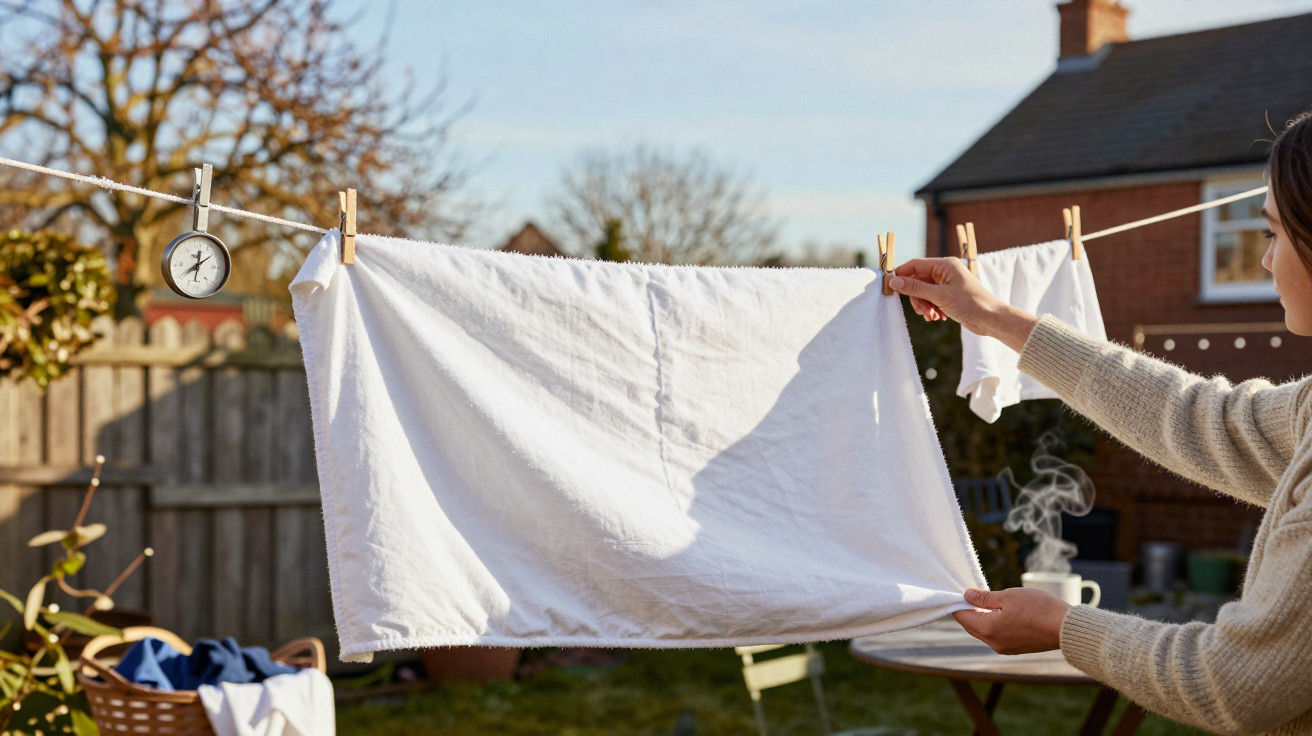
Good results begin in the washing machine: a high-speed spin of 1,200–1,600 rpm removes most of the water and substantially reduces the time needed outside. Then choose the right weather window. Late morning through mid-afternoon works best, when the dew point falls and breezes become more reliable. Generous spacing is essential. Give fibres room to breathe and you’ll halve the time to “touch-dry”. Hang bedding with long edges facing down to let water run off, while duvet covers should be pegged at their corners and opening so that they work like windsocks.
- Shake every item twice to raise the pile and straighten the fibres.
- Use two lines, or alternate arms on a rotary dryer, so pieces do not overlap.
- Place pegs on stress points, including seams and corners, to limit sagging and creasing.
- Position the broad face of sheets towards the prevailing wind to maximise airflow.
- Turn items over once in a gentle breeze to renew the boundary layer.
- Keep clear of trees and walls, which hold moisture; a basic windbreak may help direct the airflow.
Finish with care. When corners feel cool but are no longer clammy, bring the item inside for a short warm-rail or airing-cupboard finish. Limit outdoor drying to sheets, pillowcases, and duvet covers; filled duvets are more substantial and can need professional drying. Monitor the Met Office app as well: if humidity rises or drizzle is on its way, take laundry in before it becomes damp again.
Pros vs. Cons for UK Households
Winter line-drying is not an exercise in needless hardship; it combines economy with sensible fabric care. During a week of notebook testing near Leeds, with temperatures of 4–6°C, 55–65% RH and winds of 12–18 mph, a king-size cotton sheet became “cupboard-dry” in less than three hours after a 15-minute radiator finish. Pillowcases needed no additional drying at all. Outdoors, the air does the heavy lifting; indoors, you simply polish. Even so, it is worth considering the compromises before hanging your next load.
- Pros: Energy savings; lower indoor humidity; gentler on fibres; signature outdoor freshness; fewer set-in creases if pegged taut.
- Cons: Weather dependency; occasional stiffness (solved by a warm-rail minute); short daylight; urban air quality on busy roads; the need to plan around showers.
Against tumble-drying, line-drying keeps fabric temperatures low and helps preserve elastics and hems. Compared with indoor drying racks, it avoids the condensation that supports mould spores. Winter also brings lower pollen levels, reducing allergen concerns compared with spring. If you live beside a road, choose cleaner periods for drying-afternoons after rainfall rather than rush hour-and shake items briskly indoors before folding to remove settled particulates.
Troubleshooting and Hygiene Myths
If your bedding comes in feeling “crisp” or a little stiff, there is no need for concern: this is usually caused by aligned fibres after freezing or quick surface drying. A soft snap-shake, followed by five minutes on a warm rail, brings back softness. Musty smells generally result from a slow spin or an overcrowded line; increase the spin speed, space pieces farther apart, and make sure air can reach the centre of duvet covers. Stuck odours rarely survive a breezy hour and a firm shake. If grey weather is due, dry items partly outside before completing the job with a dehumidifier in a small room for a fast, condensation-free finish.
As for hygiene, cold air does not “sterilise” laundry. The wash programme and detergent provide cleanliness, while drying merely removes the moisture microbes require. Nevertheless, outdoor UV and airflow lower the load of odour-producing bacteria compared with damp racks indoors. Concerned about pollution? Once smooth cotton is fully dry, most particulates will not adhere strongly, and a shake after drying removes much of what has landed. In homes with babies or people with sensitive skin, follow manufacturer-recommended wash temperatures and consider finishing indoors if fog is forecast.
On a favourable winter day, outdoor air is a cost-free and mild finishing method that draws out water, revives fibres, and prevents damp indoor walls. In Fife, sheets can go from sodden to pleasingly crisp while the kettle boils for a late lunch, with the breeze doing what no tumble cycle can: lift, loosen, and revive. Freshness, in winter, is the art of timing and airflow. Will you give your bedding a cold-air audition this week-and what micro-tweaks to timing, pegging, or finish will earn your household the freshest sleep of the season?





Comments
No comments yet. Be the first to comment!
Leave a Comment