
A basic kitchen essential could subtly transform the way you tackle this household task.
In many homes, freezers frost up much too fast, reducing space for food and steadily increasing electricity costs. A straightforward aluminium foil method is gaining attention online, claiming to make defrosting quicker without the need for specialist equipment.
Why modern freezers still freeze up
Although most recent appliances advertise “no frost” technology, plenty of owners find substantial ice layers appearing within a few months. The explanation is simple physics. Whenever the freezer door opens, warm, moisture-laden room air gets inside and hits the cold internal surfaces. Its moisture condenses and subsequently freezes, gradually creating layer upon layer of ice.
Worn or grimy door seals can make matters worse. If the gasket fails to shut tightly, a small but constant flow of warm air can enter throughout the day. As a result, the freezer operates for longer, consumes additional electricity and accumulates extra ice on the evaporator and interior walls.
Ice build-up narrows storage space, pushes the compressor to work harder and can shorten the life of the appliance.
Obstructed vents, packed drawers and food that is not wrapped properly can also affect the movement of cold air. The result may be inconsistent temperatures, concentrated frost patches and damp ice on certain shelves, even when other areas appear almost frost-free.
Why aluminium foil works on freezer ice
Aluminium foil is normally used for covering leftovers, yet its physical qualities make it unexpectedly useful for defrosting. As aluminium transfers heat rapidly, even a thin piece absorbs warmth from the surrounding room and passes it into any ice it touches.
It also creates a flexible layer between the frost and the freezer’s plastic lining. This makes it easier to loosen ice while avoiding scratches caused by knives or other metal implements.
Foil does not magically melt ice on its own, but it speeds up the process and concentrates heat exactly where you need it.
Foil has another practical benefit: it can be moulded into different shapes with ease. Fold it into broad panels for larger areas, or twist it into slim strips for corners, shelf edges and rails where concealed ice often collects.
Step-by-step: using foil to remove ice safely
Prepare the freezer before handling ice
- Disconnect the freezer from the mains or switch it off at the wall.
- Transfer food to cool bags, an insulated container or a different freezer.
- Put towels on the floor and, where possible, position a tray at the base to collect melting water.
Do not work on an appliance that is still powered while water is present nearby. Turn it off first, then begin removing the ice.
Arrange the aluminium foil panels
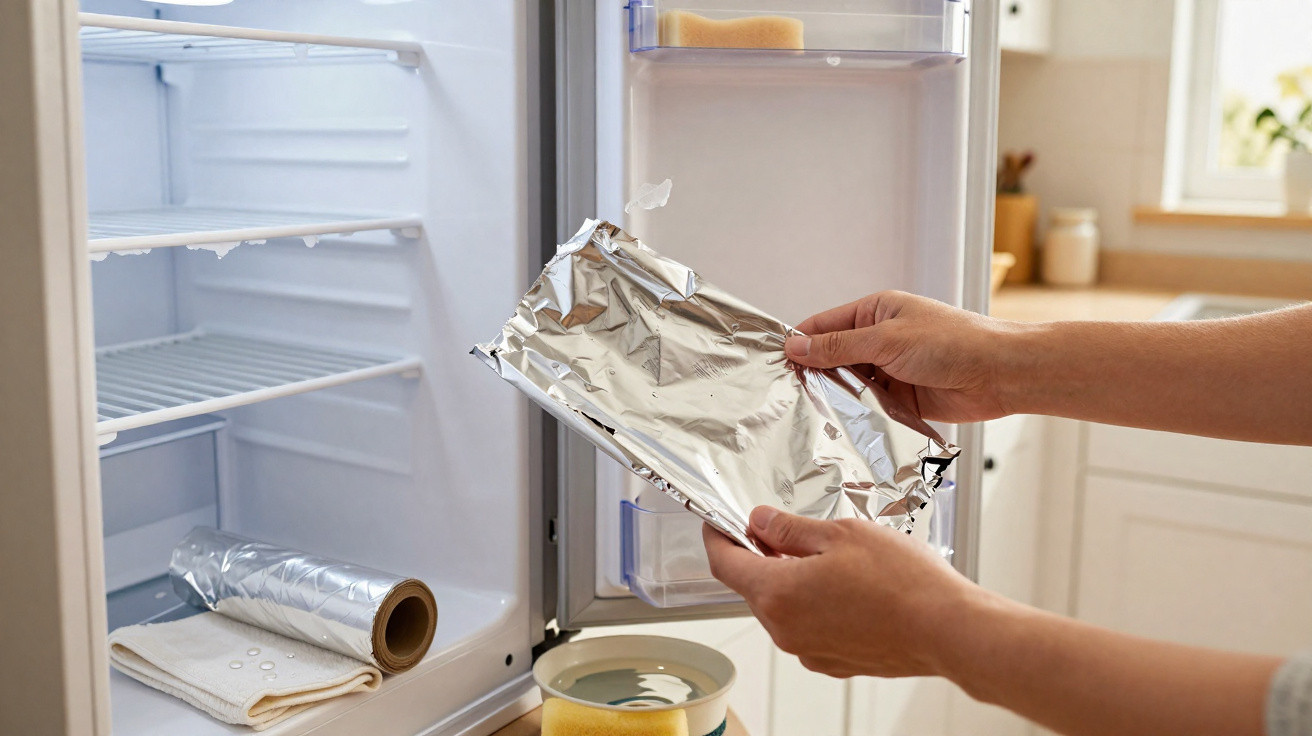
Pull off several sizeable pieces of foil. Fold every sheet two or three times to form sturdier panels approximately the size of a book page. These thicker pieces keep their form better and are easier to manage with cold hands.
Carefully press the foil against frosted areas. Place it over extensive ice deposits on the rear wall, ceiling and around any fixed shelves. Aim for the foil to lie as flat as it can, ensuring a generous contact area.
When the room is chilly, set a bowl of warm, rather than boiling, water on a shelf and nearly close the door, keeping the cable outside. The warmer air within the freezer will warm the foil more quickly and help release the ice from the surface behind it.
Loosen and lift away the ice
Reopen the door after around 15–30 minutes. You may notice droplets gathering along the foil edges, as well as fine cracks forming through the ice. Slowly peel back a foil panel from one side. Often, an entire section of ice will detach with it.
For more persistent frost, leave the foil where it is and lightly press a warm, damp cloth over it for a minute. The cloth heats the foil, the foil transfers that warmth to the ice, and the frozen layer starts to release. Use a plastic scraper or a purpose-made defrosting spatula to remove the softened ice afterwards.
Avoid knives, metal spatulas and screwdrivers. One slip can pierce coolant pipes and put the freezer beyond repair.
Tackle the freezer in brief stages, finishing one section before progressing to another. Change the foil panels if they become torn or saturated, since damp foil has less effective contact and is more awkward to hold.
Clean and restart the freezer
Once all the ice is removed, dry every surface with a clean cloth. Then wipe the interior using a cloth lightly moistened with a mild mixture of water and bicarbonate of soda. This helps remove odours and gets rid of any remaining meltwater film that could otherwise freeze into a thin coating.
Thoroughly dry the inside, paying particular attention to seals and grooves around the door. Shut the door and switch the appliance on again. Allow it to return to its normal operating temperature before putting food back, preferably within a couple of hours to maintain food safety.
Routine habits that slow down ice build-up
Freezers will still need defrosting occasionally, but a few everyday adjustments can extend the time between sessions.
Review how you use the door
Many freezers experience what technicians refer to as “door abuse”. Leaving the door open while deciding what to take out allows humid air to fill the compartment. Decide what you need before opening the door and make sure it closes firmly afterwards.
Inspect the gasket carefully. Cracks, mould or a door that no longer closes with a firm snap may indicate that the seal requires cleaning or replacing. A straightforward “paper test” can help: close the door on a sheet of paper and try to pull it free. If it comes out with little resistance, the seal is not gripping properly.
Loading patterns and temperature setting
A freezer that is only partly full contains a large volume of warm air. A more fully stocked appliance, with items packed neatly, holds its temperature more effectively whenever the door opens. If you do not often fill the freezer, clean water containers or ice packs can provide thermal mass and help keep the internal environment stable.
Check the thermostat as well. Many homes set their freezers colder than necessary. In most domestic appliances, approximately -18 °C (0 °F) is sufficient to store food safely. Lower settings seldom improve food quality, but they may increase frost formation and energy consumption.
Comparing common defrosting methods
| Method | Speed | Cost | Risk level |
|---|---|---|---|
| Natural thaw (door open, power off) | Slow | Free | Low, but more water to manage |
| Aluminium foil panels | Medium | Very low | Low, if used with plastic tools |
| Bowl of hot water inside | Medium–fast | Low | Moderate, risk of steam near electrics if careless |
| Hair dryer directed into freezer | Fast | Low | High, due to heat and moisture near live parts |
| Metal tools chipping ice | Variable | Free | Very high, can pierce pipes or liner |
Aluminium foil offers a useful middle ground: it is faster than simply allowing the freezer to thaw naturally, gentler than forcing hot air onto the ice or chipping at it, and inexpensive enough for nearly any household.
When to suspect a deeper technical fault
When you need to defrost every few weeks, aluminium foil will have limited effect. Frost that returns quickly and repeatedly may point to faults including a malfunctioning thermostat, damaged automatic-defrost components or a blocked drainage channel behind the internal panel.
Water beneath the drawers, ice that develops solely in one upper corner, or a motor that almost never stops are all potential warning signs. In these circumstances, a qualified technician should inspect the sensors, fans and seal surrounding the evaporator housing.
Extra tips for safer, cleaner freezer care
Defrosting day can also be an opportunity for a brief food check. As the appliance comes up to temperature, examine use-by dates, packaging and labels. Sort food by type and age before returning it, placing older products towards the front. This can cut food waste and reduce the time spent searching with the door open.
If you are concerned about aluminium coming into contact with food, keep foil solely for removing ice and throw it away after every use. Silicone mats or slim plastic chopping boards can be placed on shelves afterwards to collect minor spills and crumbs, simplifying the next clean and preventing frost from developing around sticky residue.



Comments
No comments yet. Be the first to comment!
Leave a Comment