
The scent that meets you at the threshold is not necessarily overpowering. It may be the stale tang of bin liquid after a warm day, the lingering damp-dog smell from the hall rug, or yesterday’s curry caught in the curtains. Sprays merely disguise it. Baking soda does its best, but can only do so much. The real source sits further down, within fibres and microscopic pores. That is where a housekeeper’s understated technique succeeds where the white powder fails: rather than hiding the odour, it removes it at its source.
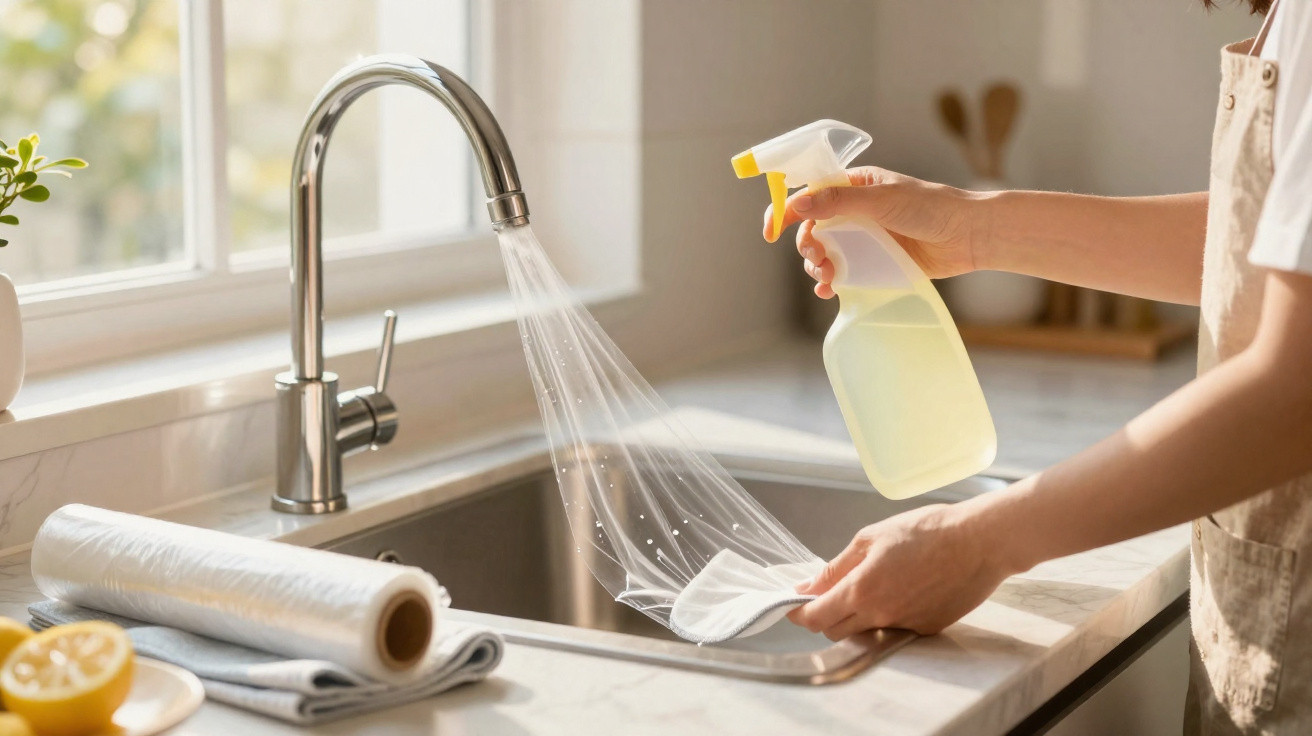
At 15:00, the cleaner arrives, keys clinking and a well-used tote bag in hand: she has dealt with rental properties between tenants, flats after parties, and a coastal cottage whose sofa smelled of damp toast and seaweed. She heads straight for the carpet patch everybody has been avoiding, kneels calmly, and places a hand on the fibres as though assessing them by touch. Baking soda is not her choice. Instead, she takes out a dark bottle, a roll of cling film and a spotless white towel, handled almost like a lucky charm. It is a routine learned across countless homes and quietly shared by people who value fresh air over clouds of fragrance. First comes the towel, then the film, and then time achieves what scrubbing alone cannot. When the atmosphere in the room eases, she smiles. The method is surprisingly mild - and remarkably decisive.
Why smells stay behind when a home looks clean
You clean the worktop, wash out the bin and open a window, yet the odour continues in the background, like a refrigerator hum that cannot be turned off. Smell molecules attach themselves to porous materials - carpets, grout, MDF, curtains - and settle inside rather than on the surface, which is why routine cleaning cannot reach them. Sprinkle baking soda over the affected area and it may help slightly, as it buffers acidity and dulls the sharpness. But once the room heats up or humidity increases, the smell returns like a tune you believed you had forgotten.
I encountered this in a neat Bristol terrace: the kitchen was spotless, with no crumbs anywhere, but the cupboard beneath the sink still carried a sour smell. Its owner had poured eco-friendly detergent into containers, changed the bin daily and scattered baking soda as liberally as salt over chips. Yet the odour remained. The housekeeper opened the cupboard, felt the chipboard bottom and immediately understood: a spill from months earlier had penetrated the material and simply become less noticeable. Rather than scrubbing, she soaked it, covered it and waited. Four hours later, the cupboard had no discernible smell - precisely what a cupboard should be like.
The principle is straightforward. Odours frequently come from proteins, fats and organic matter that feed bacteria and mould; it is their by-products that you notice. Baking soda does not break down these long-chain molecules. It mostly neutralises and absorbs at the surface. Enzyme mixtures - protease, amylase and lipase - actually digest the material, converting it into harmless particles that can be rinsed away. Activated charcoal can then capture remaining volatile compounds in the air as a final stage, rather like a bouncer gathering forgotten coats. Smell is memory, and memory sticks. To remove it properly, tackle the residue rather than its symptom.
The housekeeper’s cling-film enzyme method
When powders and fragrances no longer work, the answer is to thoroughly saturate the source with an enzyme cleaner and prevent it from drying out. Choose a reputable bio-enzymatic cleaner, such as one sold for pet stains, and test it in an inconspicuous spot. Warm the area with a hairdryer for one minute to open the fibres, then soak the affected patch until it is genuinely wet. Cover it with cling film to retain moisture, placing a clean towel over the top. Leave it for 3–8 hours, remove the film, blot carefully, rinse with cool water and dry using airflow or a fan. Place a bowl of activated charcoal nearby for 48 hours to finish. Keep it covered so the enzymes do not dry out. That is the key.
Small errors can undermine the whole process. Many people spray rather than soak, meaning the enzymes cannot penetrate deeply enough, while vigorous scrubbing spreads the contamination sideways instead of lifting it out. We have all noticed an unpleasant smell just before visitors arrive and reached for the strongest spray available. Realistically, that is not a solution anyone uses every day. Rely on time rather than force: allow lengthy contact, blot gently and then ventilate. For a drain, apply an enzyme gel overnight, leave it untouched until morning, flush it with hot water and leave it alone. Fragrance sprays create atmosphere; they do not solve the problem.
When I asked an experienced housekeeper what she truly thought about odours, she answered without hesitation. Odour doesn’t vanish; it’s eaten. That is the change in thinking required. Managing moisture is equally important, as a damp underlay invites unpleasant smells. With delicate surfaces - wool, silk or vintage leather - shorten the contact period, dab instead of soaking, and consider professional help for irreplaceable items. Test on a hidden patch first.
“You can’t mask a bad smell into submission. You take away its food, then give the room a day to forget.”
- Tools: enzyme cleaner, cling film, white towels, fan, activated charcoal.
- Areas: carpets, rugs, mattresses, chipboard bases, car seats, fabric curtains.
- Timing: 3–8 hours of contact, followed by 24–48 hours of gentle airflow.
- Finish: a bowl of charcoal or a small bag of zeolite to capture lingering odours.
When the room finally smells of nothing
There is a subtle pleasure in a hallway smelling like a hallway once more. You no longer notice the bin, the dog or last night’s onions; the room simply exists at its natural temperature, and your nose does not tense as you come through the door. That is what this method offers - not an artificial meadow scent, but the absence of odour. You will begin to tell the difference between a smell that patience can remove and one requiring specialist help, such as smoke embedded in old plaster, where repeated treatments and ozone treatment may be needed. You may also become more confident: cushions once destined for the bin can be saved, and a car that seemed permanently scented with crisps can feel like your car again. Pass the method on to a neighbour and you may both breathe more easily.
| Key point | Detail | Benefit for the reader |
|---|---|---|
| Cling-film enzyme soak | Soak thoroughly, seal with film and allow hours rather than minutes | Reaches the source instead of merely treating the surface |
| Charcoal finish | Put a bowl or bag nearby for 48 hours after cleaning | Freshens the air and removes lingering volatile compounds |
| Gentle, not frantic | Blot, ventilate and repeat the cycle if necessary; avoid heavy scrubbing | Protects fibres while genuinely resolving the odour |
FAQ:
- What exactly is the “housekeeper’s trick”? It is a deep enzyme soak sealed beneath cling film, keeping the solution wet long enough to digest odour-causing residue. This is followed by careful blotting, drying and activated charcoal to capture any remaining airborne smells.
- Will enzyme cleaners damage wool or silk? They may be too harsh when left on delicate fibres for too long. Limit contact time on wool and silk, dab rather than drench, and rinse quickly; professional cleaning is the safer option for heirloom items or uncertain dyes.
- Does this work for old pet accidents? Yes, particularly for urine smells that have reached the underlay. Two cycles may be necessary: soak and seal, dry fully, then repeat. If contamination in the underlay persists, lifting a corner and treating it from underneath can interrupt the cycle.
- What about food or bin smells in cupboards? Empty the cupboard, clean hard surfaces, then saturate any porous base, such as MDF or chipboard, with enzymes. Seal it with film and leave it to work. After drying, place a small bag of activated charcoal or zeolite inside for a couple of days.
- Is vinegar a good alternative? Vinegar can neutralise certain odours, but unlike a bio-enzymatic cleaner, it does not digest the residue causing them. Use vinegar for quick deodorising on hard surfaces, and enzymes where odours are trapped in fibres or porous materials.


Comments
No comments yet. Be the first to comment!
Leave a Comment