
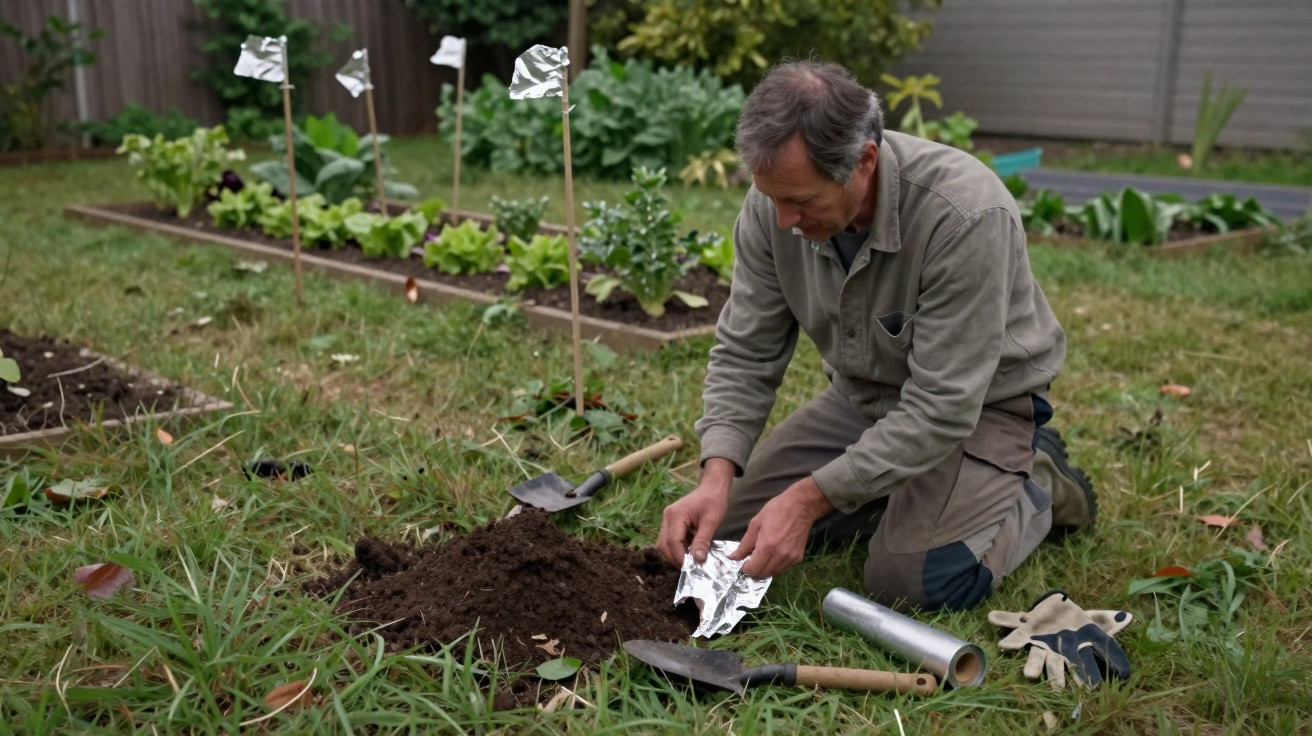
That roll of foil beside your cling film could hold a surprising solution to the mysterious heaps spoiling your lawn.
Gardeners throughout Europe have begun using kitchen aluminium foil in an unusual manner. Many report that, after trying it, their lawns appear more settled, greener and much less like a battleground.
Why moles can wreak havoc on an otherwise tidy lawn
Moles spend virtually all their lives below ground. Rather than being rodents, they are insect-eaters adapted to dig and hunt in darkness. Their oversized front paws, long pointed snouts and tiny eyes are all designed for one job: forcing their way through soil to make extensive tunnels.
They do not eat roots or bulbs. Instead, they hunt earthworms, larvae and other small invertebrates. Trouble begins when their tunnel networks cut through the root zone beneath a lawn or vegetable plot. The soil becomes loose, roots are pushed nearer the air, and grass can then turn yellow or dry out.
A single mole may dig dozens of metres of galleries. New molehills appear as it clears tunnel entrances and forces excavated soil upwards. One or two hills may seem manageable, but a network scattered across the lawn can rapidly turn a well-kept garden into uneven chaos.
Moles rarely kill plants on purpose. Their feeding is underground, but their engineering tears up the structure that a healthy lawn needs.
Most people have no wish to hurt these creatures. Equally, they do not want tunnels beneath a children's play area or freshly laid turf. This is where the mole's unusual vulnerability matters: it is highly sensitive to vibration and changes in and around its tunnels.
Why aluminium foil unsettles moles
Kitchen foil may look innocuous on the worktop, but placed correctly underground, it creates disruption that moles find difficult to overlook. The material causes two forms of stress:
- Reflected light: even small traces of daylight entering a gallery can reflect from the foil.
- Tiny vibrations: movement from footsteps or wind catching an attached strip can produce faint clinking and rustling.
Underground mammals such as moles depend greatly on touch and hearing. Their skin, whiskers and bones detect the slightest tremors. A strip of foil that shifts, jingles and catches light inside a tunnel can transform a secure, dark passage into an unsettling environment.
The goal is not to poison or trap the mole, but to turn its favourite tunnel into a noisy, shimmering corridor it no longer tolerates.
Gardeners using this technique make slim lengths of loosely scrunched foil, around 20 to 30 centimetres long, and place them straight into active tunnels. The strips work rather like a permanent alarm: continually present, persistently irritating and never entirely still.
Step-by-step: using kitchen foil against moles
1. Find active galleries
A busy tunnel does not lie beneath every molehill. Some hills mark old exits the mole no longer uses. Concentrate on the newest mounds, where the soil appears moist and loose.
- Watch for a row of several fresh hills, usually about a metre apart.
- Carefully press the soil down over a short section of tunnel, then inspect it again the following day.
- If the earth has been raised again or the mound rebuilt, the gallery is active.
Active galleries commonly link important parts of the mole's feeding territory. Disrupting these routes can encourage it to relocate away from your lawn.
2. Prepare the foil strips correctly
Take a sheet of aluminium foil and tear or cut it into bands approximately the length of your forearm. Loosely scrunch each one into a pliable cord, rather than a dense ball. Aim for irregular edges and little creases that can pick up and transmit vibrations.
When foil is compressed too firmly, it acts as a solid mass and moves very little. A lightly crumpled strip responds to small shifts in the soil, footsteps overhead and temperature changes.
3. Place foil in the tunnels
With a narrow dibber, bamboo cane or an old screwdriver, open the tunnel just above the active area. Raise the soil carefully to avoid collapsing the gallery completely.
Insert the foil strip and arrange it lengthways within the tunnel rather than across it. This allows it to shift and rattle faintly when the mole passes or when the ground vibrates.
Cover the opening with soil again, without compacting it firmly. A light layer keeps the foil in position while allowing sound and movement to travel through the tunnel network.
A foil strip that can flex and rustle inside the gallery works far better than a thick plug jammed in one spot.
4. Add surface “flags” to increase vibration
Some gardeners create an additional source of disturbance. They fasten a small foil flag to a slim stick or garden cane, then push it into or close to a molehill. As wind catches the flag, it flutters and transfers micro-vibrations down the stick into the surrounding soil.
This approach is especially useful around the edge of a treasured lawn, vegetable bed or newly planted area. Underground strips combined with surface flags create varied signals across the territory: the area never becomes fully quiet, leaving the mole under continual pressure.
What to expect: timing and limitations
You should not expect instant results, as moles need time to explore other routes and assess the disruption. Many gardeners notice altered activity within several days, followed by a clear reduction in fresh molehills after two to three weeks.
| Timeframe | What usually happens |
|---|---|
| Days 1–3 | Some new hills as the mole checks tunnels and tries to reopen them. |
| Days 4–10 | Fewer fresh mounds in treated zones, more activity on the outer edges. |
| After 2–3 weeks | Galleries near foil often fall inactive as the mole shifts territory. |
Soil type and weather affect how well the method works. Vibrations move differently through dense, compacted clay than through light sandy ground. Exposed, windy gardens create more movement in surface flags, strengthening the technique. Exceptionally wet soil may dampen sound and delay results.
Why this aluminium foil method suits a wildlife-friendly garden
Conventional mole control frequently involves lethal traps or strong repellents. That can seem excessive when the animal's principal offence is simply digging where we would prefer an immaculate lawn. Foil strips offer another option: they alter the conditions so that the mole decides to move on, rather than being driven away by poison or steel jaws.
By using noise and disturbance instead of toxins, gardeners can protect a lawn while leaving worms, beetles and birds unharmed.
The technique is also simple to adapt. If a mole begins working in another part of the garden, move several foil strips and flags to that area. There is no chemical residue, no danger to pets and nothing to leave behind once the foil has been removed.
Other gentle measures to use alongside foil
Aluminium foil is most effective as one element of a wider approach. Gardeners who keep their lawns more stable generally combine several low-impact methods:
- Keeping soil a little firmer through regular rolling in early spring.
- Watering thoroughly but less frequently to encourage stronger grass roots.
- Maintaining a wilder strip along the property edge, where moles can remain without disturbing the main lawn.
- Avoiding heavy chemical treatments that kill worms; fewer worms can cause moles to hunt nearer the remaining pockets, sometimes beneath the lawn.
For new lawns in areas with a high mole risk, some gardeners fit underground barriers, including fine mesh or rigid edging, around the boundary. Used with a ring of disturbance from foil flags, this can gently direct moles towards nearby fields or hedgerows rather than the garden's centre.
A long-term approach to underground wildlife
Moles can bring less obvious benefits too. Their tunnels aerate compacted ground, blend organic matter and form channels that allow rainwater to drain more readily. In heavy soil, removing them altogether could even result in more puddles and surface crusting.
A practical aim often lies somewhere between complete acceptance and total removal. Using kitchen foil as a non-lethal irritant allows you to shift mole activity away from important spaces without waging war on everything beneath the lawn. Over time, many gardeners achieve a balance: a neat, practical lawn in the middle, with calmer, less manicured margins where wildlife can continue digging undisturbed.






Comments
No comments yet. Be the first to comment!
Leave a Comment