
Amid all this chaos, there is one cleaning tool that nearly everyone owns and nearly everyone gets wrong. The more we reach for it, the less effectively it quietly works. Still, we pick it up automatically, like a comforting little brush-covered security blanket.
I first saw this in a friend’s kitchen, where it sat gleaming beside the sink. Her floors were streaked, her worktops looked oddly lacklustre, and she was worn out after “cleaning all day”. Dirt was not the problem. The issue was her repeated use of one particular tool, almost like a nervous habit.
The contradiction is simple: this cleaning tool performs best when you use it less.
The cleaning tool you are overusing without noticing
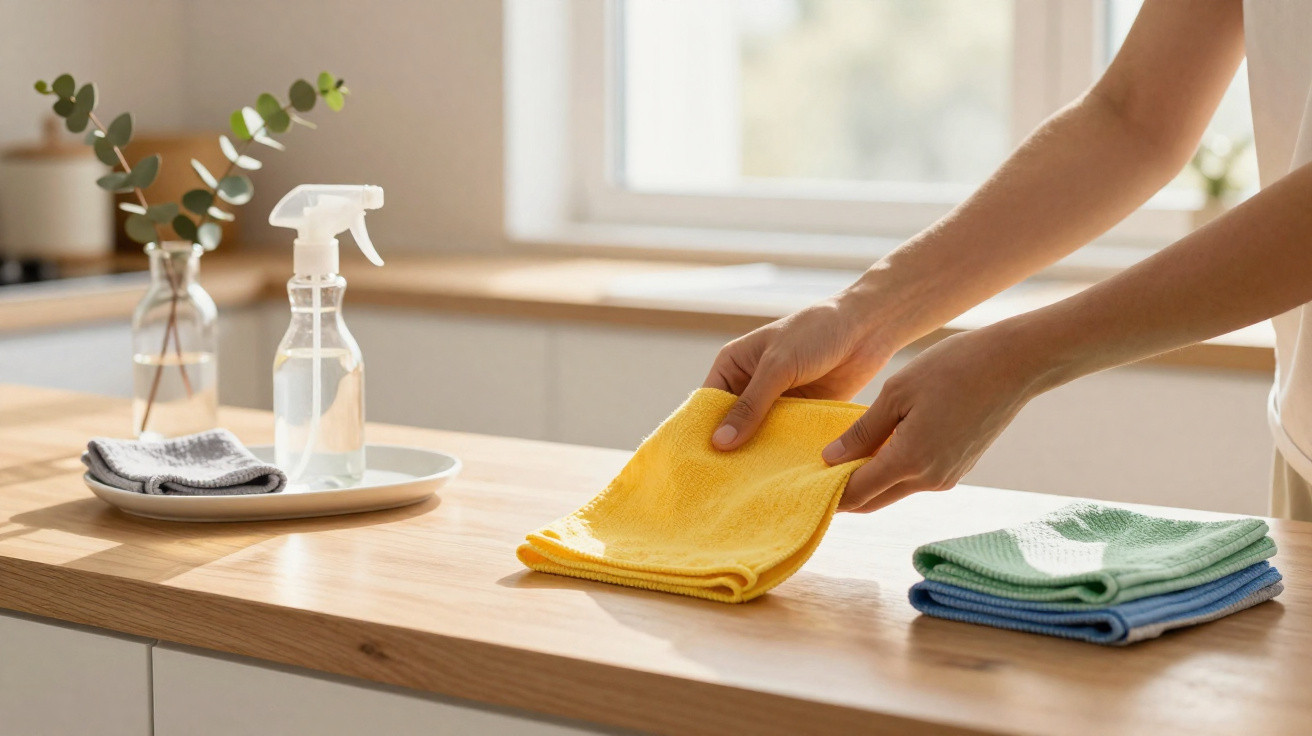
It is the standard multi-surface microfibre cloth: the one hanging over the tap, thrown onto the radiator or hooked over a cupboard handle. It is marketed as a wonder product for dust, fingerprints, grease, windows and stainless steel, so naturally we use it for… absolutely everything.
Every wipe can feel satisfying, even therapeutic. A sweep across the hob, a swift rub over the fridge door, then a little buffing of the table. Before long, though, the cloth becomes heavy. Rather than removing marks, it begins to leave smears behind. Yet we continue because it still looks like a cleaning tool.
In an ordinary home on an ordinary day, that same cloth can transfer yesterday’s grime onto the surfaces you are cleaning today. The more frequently you use it, the more it lets you down.
One professional cleaner told me she can identify a “microfiber addict” as soon as she enters a home. The signs are understated: glossy surfaces covered with a dull layer, bathroom taps that never properly shine, and fridge doors which appear clean at a distance but reveal cloudy, curved traces of residue up close.
She once helped a young couple who were always cleaning. Several times a day, they wiped their kitchen with the same much-loved cloth. Whatever they did, the worktop remained sticky. After observing them for ten minutes, she took the cloth and rinsed it under hot water. Dark grey water poured out. They were astonished.
They believed they were lifting away dirt. In fact, they were spreading a fine, unseen coating across the entire kitchen, rather like butter spread over toast.
The reasoning is harsh but straightforward. Microfibre is made to capture minute particles, including grease, dust, bacteria, skin cells and soap scum. Once the fibres are full, every further wipe redistributes grime rather than removing it. You are effectively decorating your surfaces with a microscopic collage of the previous week’s mess.
When you use the cloth less frequently but more effectively, it starts acting like the miracle tool promised on the packet. The fibres have enough capacity to collect and retain dirt. They lift particles instead of smearing them around. Your cleaning products can work properly rather than battling residue lodged in an overworked cloth.
Put simply, the answer is not more wiping; it is better timing and firmer limits.
How to use your microfibre cloth less and achieve a cleaner home
The easiest approach is almost laughably simple: restrict each cloth’s “tour of duty”. Assign every cloth a clear purpose and a brief shift. Keep one solely for kitchen worktops, another for the bathroom basin and taps, and another for glass and mirrors. Then take them out of use promptly, before they become unpleasant to handle.
Plan by zones and days rather than wiping constantly. Use a kitchen cloth for one thorough session each day, rather than ten hurried passes. Give the bathroom cloth a quick, focused clean every two days instead of making anxious little wipe-downs whenever you notice a water mark. Once finished, put it straight into a laundry basket or a designated box for dirty cloths.
You are not doing less cleaning. Instead, you are swapping 20 scattered, unproductive actions for 1 or 2 deliberate, efficient tasks.
Let’s be honest: hardly anybody really does this every day. Most of us rinse the cloth in lukewarm water, wring it out, leave it somewhere random and consider the job done. This is how overuse gradually takes hold. The cloth never gets a complete reset; it merely goes from damp to dry and back to damp, bringing yesterday’s dirt into today.
A better routine can look almost lazy to anyone watching. Clean thoroughly with the cloth, then leave it alone. Group wiping into short sessions: tackle the kitchen after dinner and the bathroom every other evening. Between those times, resist the instinct to “just quickly run the cloth over” every mark you notice. For isolated spills, use kitchen roll or a dedicated sponge so your main cloth does not become a permanent taxi for dirt.
In practical terms, this requires owning several cloths and rotating them. Each cloth gets used less often, while receiving more time to rest and be washed between cleaning rounds.
“The dirtiest homes I see rarely belong to people who never clean,” explains one London-based housekeeper. “They usually belong to people who over-clean with the same tired tools.”
- Rule 1 – One cloth, one zone: Do not take a cloth from the bathroom into the kitchen, or from the sink to the dining table.
- Rule 2 – Short shifts only: Change the cloth after one concentrated cleaning session, rather than waiting until it “looks awful”.
- Rule 3 – Proper resets: Wash hot, avoid fabric softener and dry completely. A limp cloth that is permanently damp is an ideal breeding ground for bacteria.
When using it “less often” actually means cleaning far better
There is an unexpected sense of relief in recognising that you do not need to chase every fingerprint with the same cloth. You no longer exist in permanent “wipe mode”. Your tools do more in shorter bursts, while your mind is spared the constant, low-level guilt of thinking, “I should clean that spot”.
More fundamentally, using this cleaning tool less often changes the way you view dirt. Not every surface has to sparkle every hour. Some smudges can wait until the evening clean. The aim moves away from frantic perfection and towards a home that remains reliably and quietly clean: not showroom-perfect, simply healthy and comfortable.
On a shelf, a microfibre cloth is just a small, unremarkable square of fabric. In everyday life, it reflects our habits: hurried, repetitive and sometimes slightly obsessive. Altering how often you pick it up does more than protect its fibres. It preserves your time and energy, as well as the invisible mental burden of endlessly pursuing crumbs.
| Key point | Details | Why it matters to readers |
|---|---|---|
| Restrict each cloth to one area | Keep separate cloths for the kitchen, bathroom, glass and dusting, and do not move them between rooms. | This limits cross-contamination and prevents hob grease ending up on your taps, mirrors and dining table. |
| Brief, focused cleaning sessions | Use each cloth for one proper daily, or every-other-day, session instead of dozens of small wipe-downs. | Surfaces receive a genuine deep clean, while you spend less overall time cleaning than you would with continual “quick wipes”. |
| Wash less often, but properly | Wait until a cloth has been used for a full session, then machine-wash it on a hot setting without fabric softener, before air-drying or tumble-drying on low. | This prolongs the life and effectiveness of the microfibre, meaning every cloth cleans more effectively instead of simply spreading grime. |
FAQ
- How often should I actually wash a microfibre cloth? For daily kitchen cleaning, a sensible rule is to wash it after one substantial cleaning session or one day’s use. For lighter jobs such as dusting, it can be used two or three times, provided it still feels light rather than greasy or damp.
- Why does fabric softener ruin microfibre cloths? Fabric softener leaves a fine coating on the tiny fibres, making them feel soft and fluffy but much less able to grip. That layer prevents the cloth from trapping dust and grease, so it begins pushing dirt around instead of lifting it away.
- Can I use the same cloth for floors and worktops? It is better not to. Floors collect dirt from shoes, outdoor bacteria and fine grit that should not be transferred to food-preparation areas. Using a separate cloth or mop head for floors keeps kitchen hygiene safer without creating extra work.
- Is it okay to just rinse the cloth with hot water between uses? Rinsing works between jobs completed on the same day, but it does not fully remove oils or bacteria. Over several days, this build-up reduces the cloth’s effectiveness and can make it smell, which usually means it needs a proper wash.
- How many microfibre cloths should a typical household own? In a small flat, a set of 8–10 is generally sufficient: several for the kitchen, a couple for the bathroom, one or two for glass and a couple for dusting. Rotating them means each cloth is used less often and works well for longer.



Comments
No comments yet. Be the first to comment!
Leave a Comment