
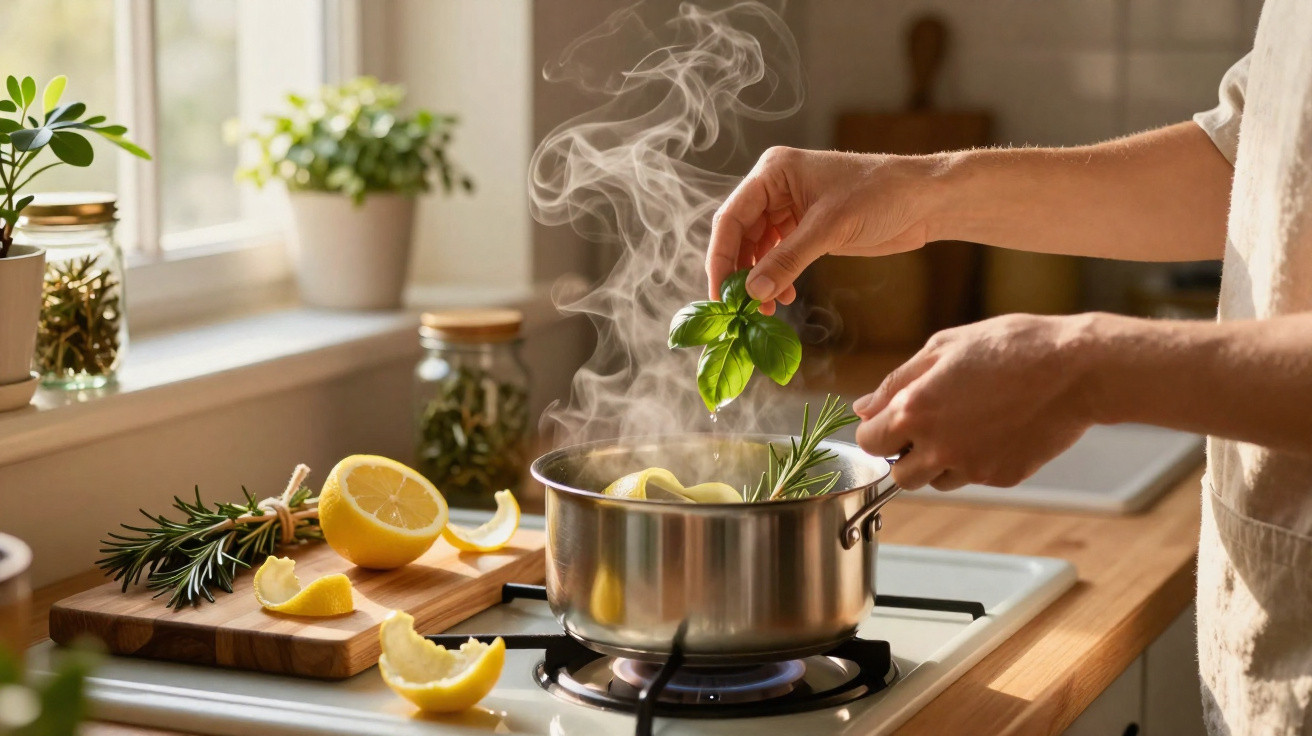
Across homes in Brazil, a saucepan of steaming lemon peel, basil and rosemary has quietly become a familiar sight on the hob. The practice is now spreading internationally, fuelled by growing interest in natural cleaning, more peaceful homes and affordable ways to make rooms smell inviting.
How a simple pan of herbs became a home trend
The method is strikingly straightforward: rather than using synthetic air fresheners, households simmer leftover lemon peel, fresh basil and rosemary in water. Once heated, fragrant compounds are released into the steam and circulate around the home.
There is no need for a diffuser, scented candle or plug-in appliance. All it takes is a saucepan, tap water and kitchen leftovers that could otherwise be thrown away.
Boiling lemon peel, basil and rosemary works like a homemade diffuser: heat releases aromatic oils that slowly scent the air.
Originating as a household custom in Brazilian kitchens, the idea has gathered pace on social media, wellness websites and within zero-waste communities. It brings together three major trends: natural home fragrance, inexpensive household tips and a wish for living spaces that feel more deliberate and restful.
What boiling lemon peel, basil and rosemary is used for
Fundamentally, people use this approach to tackle lingering odours and freshen the air indoors, particularly in compact or inadequately ventilated rooms.
- Reducing strong food smells after frying or cooking fish.
- Easing the stale odour in shut-up rooms during wet or cold conditions.
- Giving rooms a gentle “just cleaned” feel without chemical sprays.
- Using a more natural alternative to shop-bought air fresheners.
The heated vapour transports aromatic compounds from the plants, helping to disperse persistent odours caused by grease, dampness or stagnant air. Users often describe the fragrance as softer and more “real” than artificial scents.
There is a psychological element too. Filling the pan, selecting the ingredients and monitoring the gently simmering water can become a brief household ritual. For some people, it provides a simple dividing line between a “busy day” and “home time”.
Why lemon peel, basil and rosemary work particularly well
This is not an arbitrary blend. Every ingredient contributes its own scent character, producing a balanced fragrance with several layers.
| Ingredient | Main aromatic role | Everyday association |
|---|---|---|
| Lemon peel | Fresh, bright, slightly sharp | Clean kitchen, degreasing products, morning energy |
| Basil | Soft, herbal, slightly sweet | Comforting home cooking, warmth, calm atmosphere |
| Rosemary | Strong, resinous, pine-like | Focus, clarity, masking stubborn odours |
Lemon peel contains high levels of d-limonene, a compound commonly included in cleaning products because it creates a fresh, “soapy clean” impression. Basil gives off mild herbal notes that people frequently associate with comfort and relaxation. Rosemary produces more powerful, resinous volatile compounds, often linked with alertness and clearer thinking.
Heated together, the aromas complement rather than compete with one another. Citrus helps cut through heavier odours, basil rounds out the blend and rosemary supplies richness. This creates a fresh but restrained scent, an important consideration in bedrooms and smaller flats.
The strength of the trend lies less in magic claims and more in a clever mix of citrus brightness, herbal softness and woody depth.
How people prepare it at home
Household recipes differ, although most use the same basic approach.
Basic method used by many households
- Half-fill a small saucepan with water.
- Add the peel from one lemon, either fresh or kept from cooking.
- Put in a handful of fresh basil leaves.
- Add a small sprig of rosemary.
- Bring the water to a gentle boil before turning it down to a low simmer.
- Keep it on the hob for 15–40 minutes, adding more water when necessary.
Some households use extra rosemary and less basil, while others include orange peel, cloves or cinnamon sticks during winter. It is easy to adjust the mixture according to local preferences and whatever ingredients are available in the fridge.
The pan is most often placed in the kitchen, although the fragrance can soon reach the hallway or living room in a small home. People worried about gas consumption may put the hot pan on a secure heat-proof surface and allow the remaining steam to spread naturally.
Is it safe, and does it offer health benefits?
When used to scent indoor air, simmering lemon peel, basil and rosemary is generally regarded as low risk. These plants are familiar cooking ingredients, while exposure is mainly to diluted vapours rather than concentrated oils consumed or applied directly.
Researchers and aromatherapy professionals nevertheless emphasise an important distinction: it is not a treatment. It cannot replace medical care, medicines or professional guidance. Any impact on relaxation, mood or concentration comes from scent and personal perception, rather than powerful pharmacological effects.
The benefits sit in the realm of comfort and ambience, not in curing illnesses or acting as a medical therapy.
Even so, many people find that pleasant-smelling homes can support routines connected with mental well-being. A room that smells fresher may motivate people to clean, lessen feelings of stuffiness and make everyday spaces seem better cared for. This psychological factor can be significant in small urban homes, where residents may work, sleep and relax within only a few rooms.
People with asthma, allergies or sensitivity to fragrances should remain careful. Natural scents can still cause reactions in certain individuals. Specialists generally recommend proper ventilation and brief trial periods, particularly where children, pregnant people or pets are present.
The wider backdrop: natural scenting becomes mainstream
This modest herb-filled pan forms part of a broader move away from intensely perfumed sprays and towards lower-impact alternatives. Consumer research in the UK, the US and Latin America indicates increasing distrust of aggressive cleaning chemicals and aerosol propellants.
Meanwhile, inflation has encouraged households to find new uses for food leftovers. Lemon peel is commonly discarded, but here it receives another purpose before being composted. For those trying to create less waste, this small action has symbolic importance.
Companies that sell plug-in air fresheners and scented candles are now facing subtle competition from DIY alternatives. Home fragrance has become a broad range, stretching from premium diffusers at one end to kitchen-herb simmering pots at the other.
Potential drawbacks and points to consider
Although it is a simple technique, it still has disadvantages.
- An unattended pan left on the hob creates a fire hazard.
- Simmering for extended periods on a gas hob consumes energy and increases moisture indoors.
- Those with severe fragrance sensitivity may experience irritation or headaches.
- Pets, particularly cats, may be affected by certain plant oils at high concentrations.
Household safety bodies consistently advise against leaving anything on the hob while asleep or away from home. Anyone seeking a lower-risk version can use electric simmer pots, or heat-proof bowls containing hot water and herbs, as a middle ground.
Beyond fragrance: what this small ritual reveals about home life
The growing popularity of this Brazilian-inspired practice suggests a broader change in how domestic spaces are viewed. Particularly after pandemic years, when work, education and rest were forced into the same rooms, the home is again being treated as somewhere to safeguard, shape and make personal.
A pan of bright citrus and herbs offers something understated: not merely a more pleasant aroma, but a feeling that the air itself is receiving care. It demands a little time and attention, qualities many people believe are absent from rapid, spray-and-go cleaning habits.
For people who want to take the idea further, the same principle can apply elsewhere: drying citrus peel for future use, preparing little rosemary sachets for wardrobes or trying brief fragrance-free periods to assess how much scent a household truly needs.
What may appear to be a small kitchen tip ultimately raises larger issues: how indoor air is shared, how sensory overload is handled, and how willing people are to exchange convenience for a slower, more hands-on approach to caring for the home.

Comments
No comments yet. Be the first to comment!
Leave a Comment