
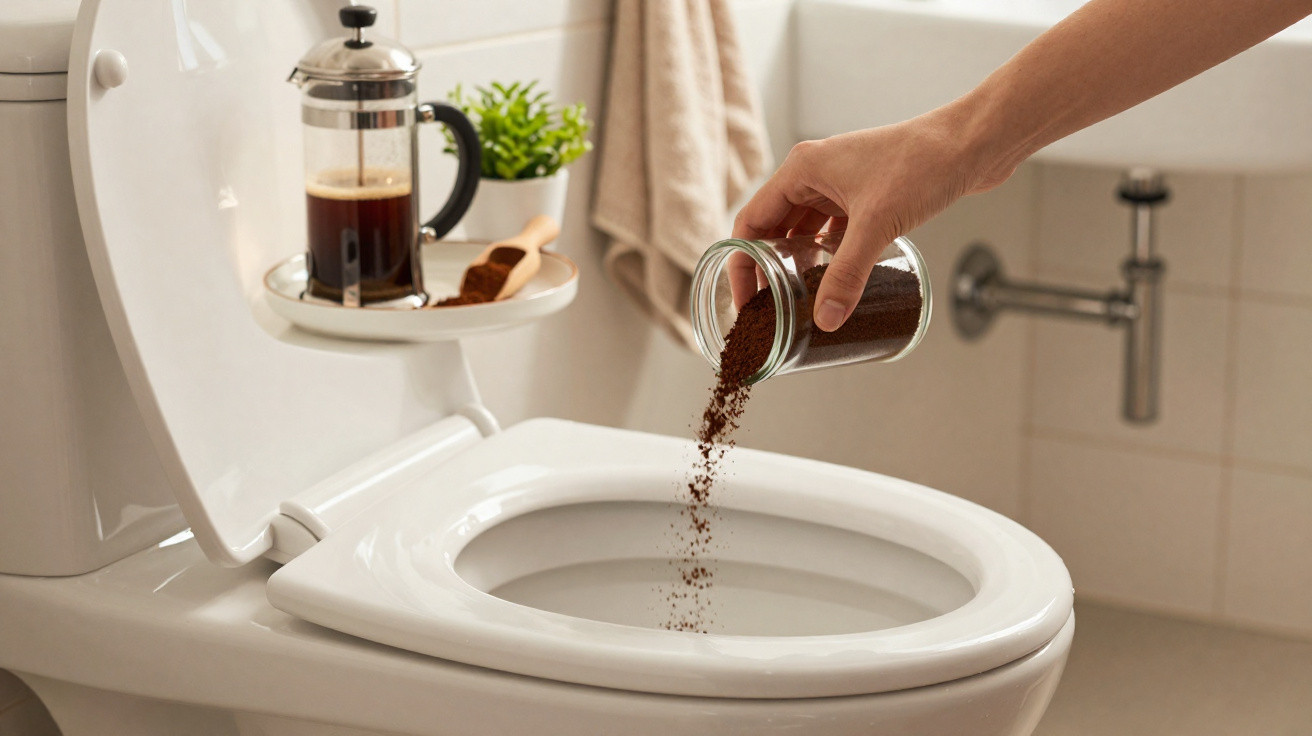
A sewage smell rising from the toilet when the bathroom has been closed for several hours is a common complaint, particularly in homes where the room has little natural ventilation. The best-known solution is industrial toilet tablets, but there is a zero-cost alternative that uses no chemicals and relies on something most households produce and throw away every day without a second thought: coffee grounds.
How coffee grounds tackle odours from bathroom pipes
The unpleasant smell coming up through the toilet originates from gases created by the decomposition of organic matter in the sewer pipes. These gases, including hydrogen sulphide and ammonia, travel upwards through the system when there is no flow of water to block them - something that naturally happens if the toilet is not flushed for many hours. Coffee grounds act directly on these compounds: their porous structure absorbs and holds the gases, rather than simply masking them with an artificial fragrance, as industrial products do.
The process is both physical and chemical. The particles in the grounds have a porous internal surface that traps the volatile compounds behind bad smells. Meanwhile, their slightly acidic pH creates conditions that are unfavourable to the anaerobic bacteria that generate these gases. The result is a bathroom that stays odour-free for hours after use, without an artificial scent merely replacing the problem.
- Before trips and weekends away: adding the grounds before closing up the house helps prevent the built-up smell that can develop when the bathroom is unused for days.
- Before bed once a week: applying them at night provides the ideal contact period - six to eight hours - for maximum absorption of odour-producing compounds from the pipes.
- Preventing light deposits: the granular texture of coffee grounds helps dislodge small amounts of residue collected on the inside walls of the toilet while they remain in contact with the surface.
- Safe for every age group: there are no chemical compounds, artificial fragrances or risks for children, older people and pets who use the bathroom.
- Completely free: it makes use of waste already produced at home and can replace toilet tablets and air fresheners bought each month.
The right amount of coffee grounds and the mistake that spoils the result
The ideal amount is one to two tablespoons of coffee grounds per application. This is enough to coat the inside of the toilet and achieve the intended effect without creating a risk of build-up in the pipes. Using more will not improve the outcome and, in homes with older plumbing or weak flushing pressure, may contribute to residue accumulating in the pipes over time.
The most frequent mistake is failing to allow the necessary contact time. Pouring in the grounds and flushing straight away means none of the benefits can take effect - the grounds need to remain in contact with the toilet walls and the air in the pipes for at least two hours in order to absorb odour-producing compounds. The best time to apply them is before going to bed, when the bathroom will remain unused for the longest period of the day.
Are wet or dry coffee grounds better for the toilet?
For use in the toilet, fresh, still-moist grounds straight from the coffee filter are the better choice. Their moisture helps them cling lightly to the inner sides of the bowl rather than running immediately to the bottom, increasing the contact area with both the surface and the air above the water level. Dry grounds work as well, but they tend to sink to the bottom of the bowl more quickly, slightly reducing the effectiveness of contact with the sides.
Step-by-step: from application to flushing
Four straightforward stages ensure the correct result.
After making coffee, keep the damp grounds from the filter instead of throwing them away. If they are very hot, leave them to cool for a few minutes. Put one to two tablespoons directly into the toilet bowl, carefully spreading them around the sides. Do not flush immediately - wait for at least two hours, preferably overnight. In the morning, flush as usual and the grounds will pass through the plumbing without any issue.
In bathrooms with stronger odours or very frequent use, the treatment can be carried out twice a week without any inconvenience. In homes with a septic tank, coffee grounds are fully compatible with the system - they are biodegradable and do not interfere with the bacteria responsible for treating waste, unlike many chemical cleaning products that impair the tank's operation.
For bathrooms in homes served by a septic tank, coffee grounds offer an additional advantage over industrial products: they are fully biodegradable and contain no compounds that harm the bacteria responsible for waste treatment. Many standard toilet tablets contain biocides that kill those very bacteria, gradually undermining how the septic tank works.
When coffee grounds work and when they are not enough
Coffee grounds are effective as a preventative maintenance measure against odours and for keeping the toilet free from excessive light residue. They will not, however, remove old deposits already established on the sides of the bowl, limescale hardened by months of build-up or dark stains that require specific acidic products for removal. In these situations, a thorough clean with an appropriate product is needed before coffee grounds can be introduced as part of a maintenance routine.
Coffee grounds are not a replacement for standard cleaning with a toilet brush and disinfectant either. Instead, they complement that cleaning by reducing how often chemicals need to be used and keeping the bathroom fresher between cleans. People who make the habit part of their routine find that the bathroom remains odour-free for much longer than it does without it. Share this with anyone who drinks coffee every day and has not yet discovered what to do with the grounds before throwing them away.

Comments
No comments yet. Be the first to comment!
Leave a Comment