
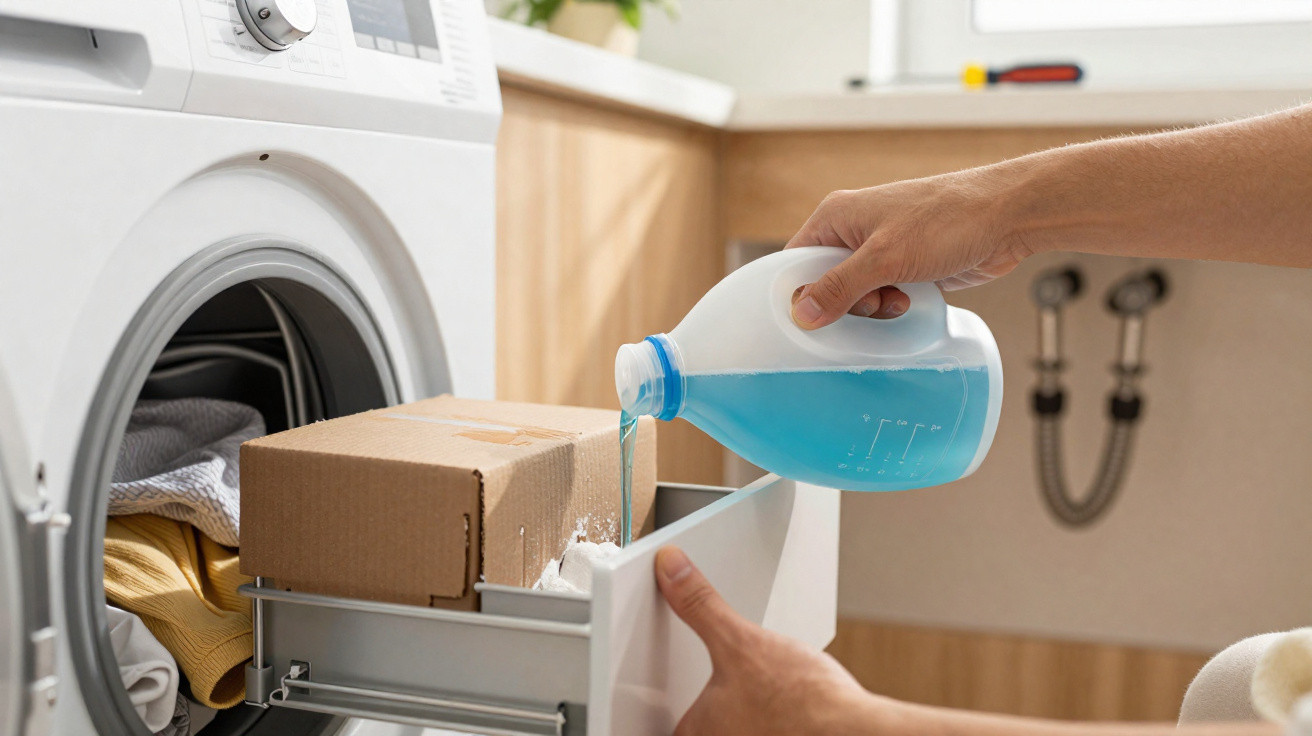
Choosing the right washing products has a direct effect on the lifespan of household appliances. Keeping them operating at their best requires ongoing attention, as dirt build-up can lead to financial losses. Understanding this relationship helps shield your washing machine from serious future faults.
How does washing powder affect the dispenser?
Regular use of powdered detergent often leaves thick deposits in the dispenser drawers. Once water enters the system, not all of the powder dissolves completely, allowing crusts to form. This blockage disrupts the flow and calls for maintenance to prevent serious clogs.
Its solubility falls considerably during quick programmes or cold-water washes. Undissolved product travels through the washing machine's internal pipes and sticks to plastic surfaces. Over time, this lowers the appliance's efficiency, making careful dosing essential to avoid premature wear.
Does washing powder or liquid detergent damage the appliance?
Choosing the wrong product can cause irreversible damage to internal components and drastically reduce the lifespan of...
Read more
Why does liquid detergent protect the components?
The key benefit of the liquid format is that it mixes quickly. Since it is already water-based, it spreads evenly from the beginning of the wash cycle. This quality prevents the accumulation of harmful residue and keeps the pump clear.
As a result, the hydraulic system is placed under less strain during drainage. Connections stay clean and free from deposits that can gradually block internal pipes. Choosing this option is a sensible way to extend the reliable operation of your appliance.
Below is a video from Talita Cavalcante's YouTube channel that explores the points discussed in this topic in more detail:
What are the risks to internal hoses?
The flexible pipes that carry water are greatly affected by built-up sediment. Hardened residue acts as a barrier, narrowing the passage and putting extra strain on the motors. Regular internal cleaning helps reduce the risk of leaks and maintain structural durability.
When these channels become obstructed, drainage can fail and leave pools of water in the laundry room. Limescale build-up wears away the protective rubber, causing cracks that may not be visible. Selecting fully soluble options protects these important connections from breaks and prevents costly specialist repairs.
Care Guide
Washing Machine Care
Take these practical steps to extend the lifespan of your household appliance:
- Choose liquid detergent for cold-water washes;
- Clean residue from the dispenser regularly;
- Always follow the manufacturer's recommended dosage.
How can problems with the drainage pump be avoided?
The pump that empties the drum is severely affected when cleaning products do not dissolve properly. Small hardened lumps can jam the internal impellers, placing pressure on the electric motor until it burns out. Active prevention avoids the cost of replacing vital components in the washing machine.
Using the recommended amount prevents heavy substances from accumulating in the main tank. Liquid detergent blends immediately and flows away with the discharged water. This sensible choice maintains the performance of the drainage system and extends the usefulness of your equipment.
Consider the following essential habits to keep the system free from obstructive mineral deposits:
- Run chemical cleaning cycles with the drum empty at regular intervals;
- Remove and rinse the dispenser drawer under running water every week;
- Measure liquid products strictly according to the volume of clothing.
How should proper preventive maintenance be carried out?
Following a regular cleaning routine removes encrusted chemical traces that can harm the appliance. Hot-water cycles help dissolve remnants of older products. This straightforward measure safeguards the condition of the components and ensures efficient washes in your daily routine.
Watching for signs of poor drainage indicates when a deep clean is needed. Following the manufacturer's instructions prevents the system's parts from deteriorating too early. Spending a few minutes on these small preventive measures protects your investment and preserves the full efficiency of your washing machine.



Comments
No comments yet. Be the first to comment!
Leave a Comment