
Making your household routine more sustainable and economical becomes far easier when you learn to reuse materials that would otherwise be thrown away. Turning old fabrics into useful items cuts everyday waste and brings real practicality to household organisation and cleaning.
Why should you reuse old fabrics at home?
Keeping fabric offcuts and worn cloths is an excellent way to make household savings. Rather than buying new products to clean surfaces, you can make use of materials already in your home, preventing unnecessary spending that can affect your monthly budget.
Textile reuse also directly supports conscious consumption by reducing the amount of waste sent into the environment. This straightforward habit turns discarded material into sustainable crafting, proving that cleaning cloths and old towels have genuine potential for renewal.
Why are homemakers retiring rubber mats?
Many households are replacing traditional models with colourful handmade alternatives, which are more practical to wash every day and… Read more
How do you make a handmade mat using used towels?
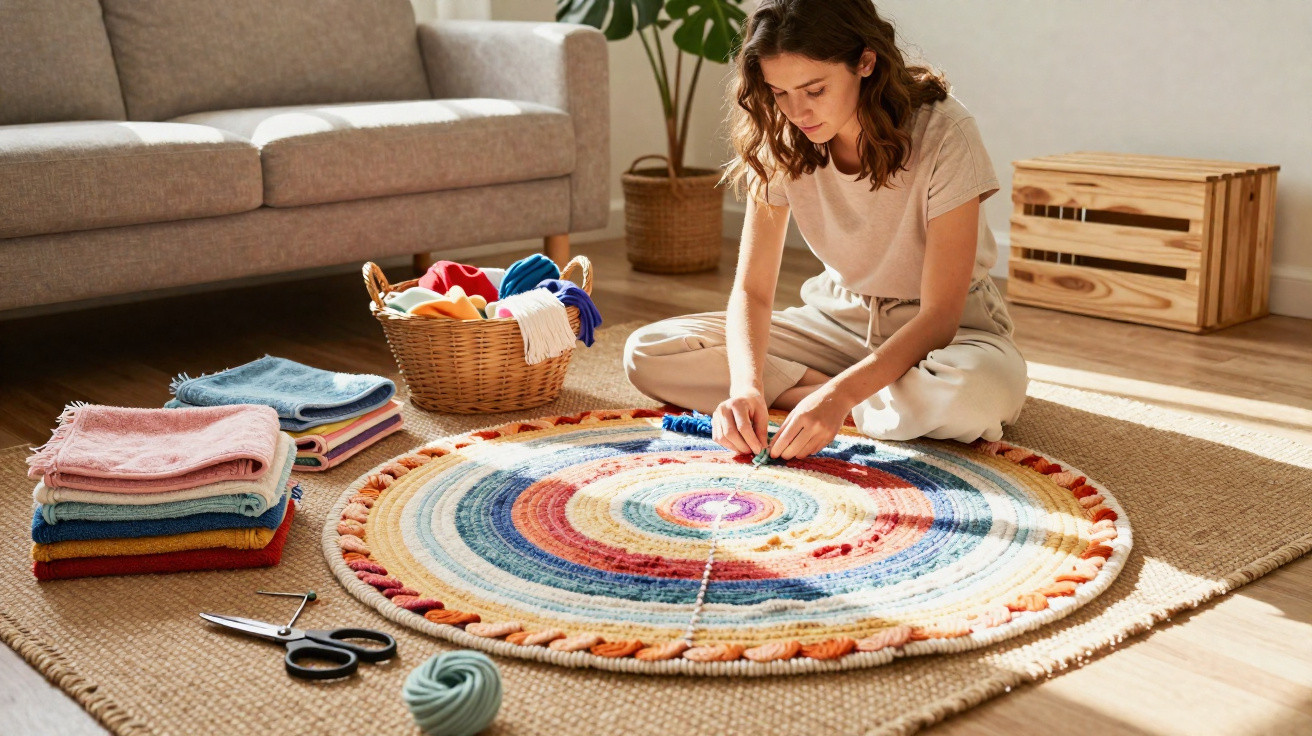
Creating a patchwork mat requires only creativity and basic materials already stored in your cupboards. Start by trimming the edges from three old towels, then cut them into long strips, keeping the width consistent to make sewing easier.
Next, join the ends of the strips and braid them tightly until you reach the desired size. Then coil the braid into a spiral, stitching the sides together and adding a protective backing to ensure excellent durability during machine washing.
Below is a video from the Mostrando Como Se Faz channel on YouTube, which explores the points discussed in this topic in greater depth:
What other organising solutions can be made from fabric offcuts?
In addition to mats, leftover fabric can be made into small organisers that are useful in everyday life. With just a few cuts and some hot glue, you can create a practical toothbrush holder, ideal for making the most of space in your bathroom with plenty of creativity.
Another excellent option is to make a versatile toiletries bag from pieces of towel and a zip. This handmade item helps to store make-up or assorted belongings, showing how textile reuse creates intelligent solutions for your personal organisation.
Projects with Used Towels
Practical Creations
See the main sustainable craft options you can make at home:
- A soft braided mat made from colourful strips;
- A hygienic toothbrush holder with glued dividers;
- A multi-purpose toiletries bag with a zip fastening.
What are the real benefits of this sustainable practice?
Choosing to reuse old fabrics offers benefits that go beyond the simple financial savings gained in day-to-day life. This conscious decision encourages therapeutic manual skills, reduces household waste and promotes a more active approach to sustainability and preservation.
When you turn worn fabrics into valuable resources, you begin to see a purpose in objects once regarded as disposable. This creative process greatly improves household organisation and creates a strong feeling of satisfaction when you see useful pieces made by your own hands.
Here are the key benefits that encourage people to adopt this eco-friendly routine:
- An immediate reduction in textile waste accumulating in landfill sites;
- Lower unnecessary spending on disposable cleaning cloths;
- Direct encouragement of creativity through sustainable crafting at home.
How can you start practising conscious consumption today?
Introducing textile reuse into family life requires only willingness and attention to the materials that have built up at home. Before disposing of any worn towel or old sheet, consider how that fabric could take on a completely new and effective function in household cleaning.
Small changes can have a major impact, helping to create a home that is economical, organised and aligned with modern values. Applying this idea every day encourages people around you to pursue conscious consumption, demonstrating that household wealth lies in the intelligent use of every resource.
Comments
No comments yet. Be the first to comment!
Leave a Comment