
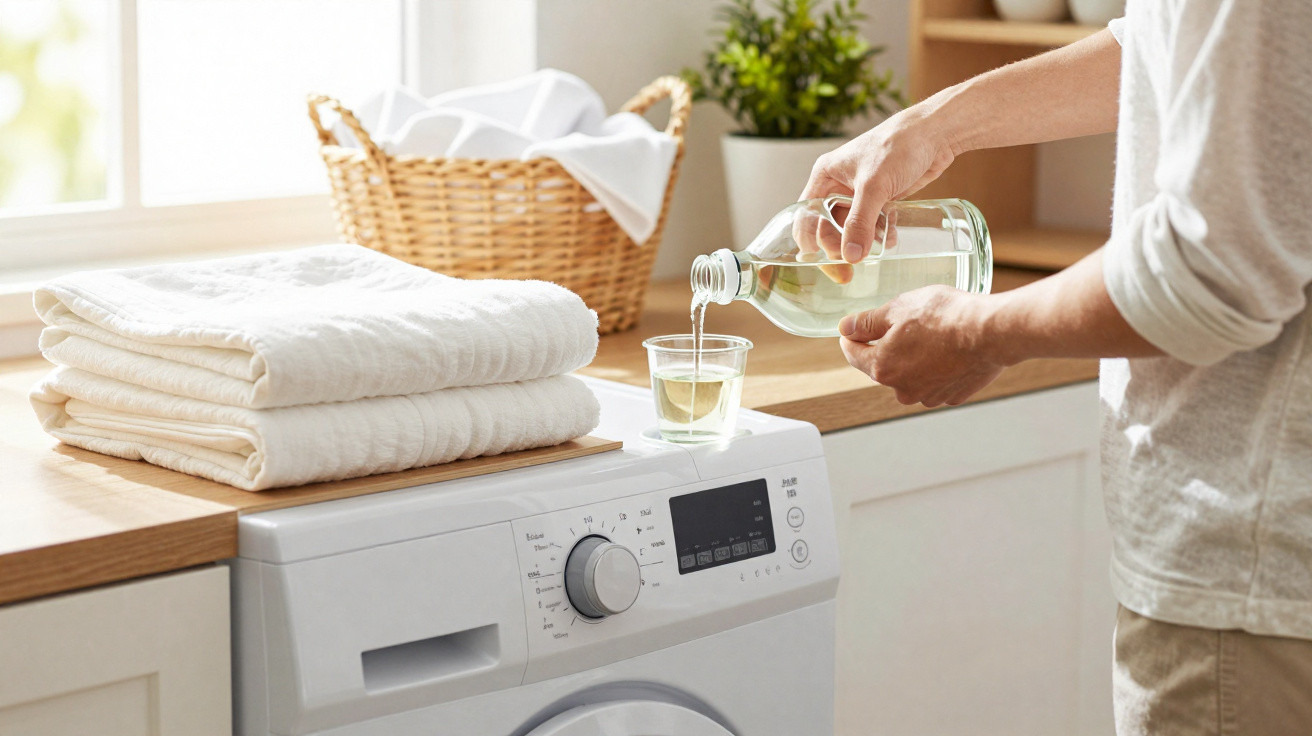
Using white vinegar on bed sheets has become a popular addition to household laundry routines. It is a straightforward way to cut through product build-up, lingering smells and fabric stiffness. Rather than replacing detergent altogether, it is generally used alongside it to enhance the clean feel and help bedding stay comfortable over time.
What are the benefits of white vinegar for bed sheets?
When considering white vinegar on bed sheets, its mild acidity is the key benefit. It can help release detergent and fabric-conditioner residue caught in the fibres, so the material feels less stiff and softer to the touch. This may restore some of its original softness while reducing the dull appearance that can develop through regular use.
It can also help tackle odours caused by perspiration, dampness and mild mildew, as acetic acid neutralises compounds responsible for unpleasant smells. On pale fabrics, white vinegar for bed sheets may also help limit yellowing over time, while on coloured items it is usually gentler than some bleaching products.
How can white vinegar be used safely on bed sheets?
To use distilled vinegar on bed sheets, add it during the rinse cycle instead of fabric conditioner. For a standard load in a machine with a dedicated dispenser, use around 60–120 ml; with machines that do not have a drawer, it can be poured straight into the drum during the final stage of the wash.
This is the most effective point in the cycle because most of the detergent will already have been rinsed away, allowing the vinegar to work on any remaining residue. Where the care label permits it, a warm-water cycle can increase the effect; however, always check the label first to prevent damage to delicate fibres.
Practical precautions when washing bed sheets with white vinegar
A few simple measures can improve the results of adding vinegar to a bed-sheet wash and help look after the washing machine itself. They can also prevent issues including residual odours, excessive damp and avoidable wear to the fabric over the months.
- Remove the items from the machine as soon as the cycle ends, so they are not left damp.
- Dry them in a well-ventilated area or in a tumble dryer, following the care-label instructions.
- Avoid using large amounts of fabric conditioner in the same wash routine as vinegar.
- Try the method on a small amount of bedding first, to see how the fabric responds.
How often should white vinegar be used, and what risks should be considered?
Using white vinegar on bed sheets is generally best kept to an occasional basis, as a deeper clean for the fibres, around once a month. During very hot weather, after extended use of the same bedding, or where odours are stronger, an additional treatment may help bring back a fresher feel.
Using it in every wash is not usually advisable, as the acidity may contribute to wear on the machine’s rubber seals and hoses over the years. It is also vital to keep it away from chlorine bleach, not combine it with ammonia-based products, and take extra care with very delicate fabrics, always following the care-label guidance.




Comments
No comments yet. Be the first to comment!
Leave a Comment