
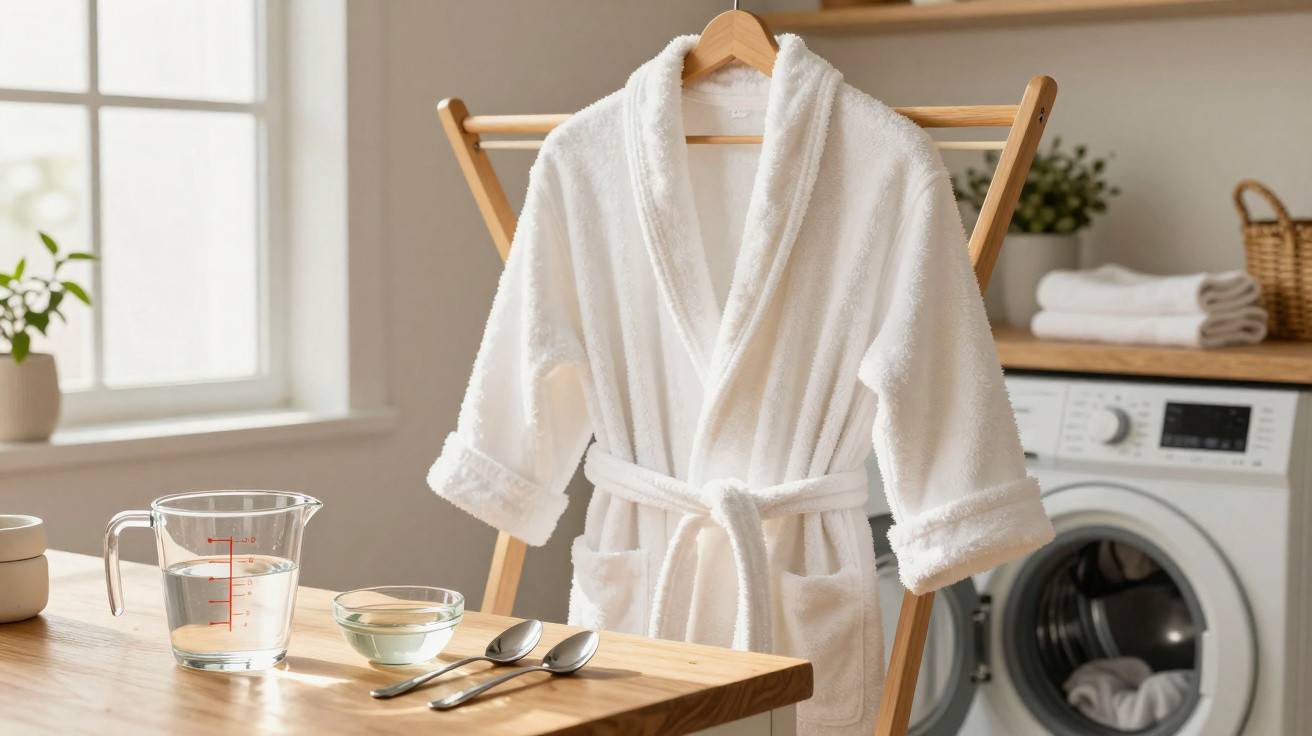
Bathrobes can become less soft through everyday use, particularly when they are regularly exposed to too much soap and concentrated fabric softener. Over time, the material may feel stiff and less cosy, while its ability to absorb water falls. In most cases, however, this is caused by residue building up between the fibres rather than permanent wear.
How does vinegar help make a bathrobe softer?
What may look like irreversible damage is often simply a build-up of soap, detergent and fabric-softener residue in the fabric weave. This coating prevents the bathrobe from absorbing moisture properly and makes it feel rougher.
White vinegar works as a deep cleaner for the fibres, helping to dissolve leftover product without harming the material. Rather than adding further products to the wash, the aim is to remove the excess, restoring some of the bathrobe's softness and drying performance.
How can three teaspoons of vinegar restore a bathrobe?
To use this method, place the bathrobe in a bucket or basin containing enough water to submerge it completely. Add three teaspoons of white vinegar to room-temperature or slightly warm water, avoiding very hot water as this can damage the fibres.
Leave the bathrobe to soak for 30 to 60 minutes, allowing the vinegar to work through the fabric and loosen the residue layer. Then rinse it thoroughly by hand, or put it in the washing machine with a small amount of mild detergent and no fabric softener. Finish with a clean-water rinse and dry it in a well-ventilated, shaded place.
What care should be maintained after the vinegar treatment?
Once it has been deep-cleaned, a few straightforward washing habits can help the result last longer. They prevent a fresh build-up of products and reduce the likelihood of the bathrobe becoming stiff and less absorbent again.
These habits are easy to include in everyday laundry and can be combined with periodic vinegar use, generally once a month or every two to three weeks for bathrobes used daily:
- Use less powder or liquid detergent in each wash.
- Replace fabric softener with a longer, more thorough rinse.
- Avoid washing the bathrobe with heavily soiled items or garments that shed a great deal of lint.
- Do not overload the washing machine, so that it can rinse properly and remove residue.
What other measures keep a bathrobe fluffy for longer?
As well as using vinegar, the drying method has a major effect on the bathrobe's final texture. High tumble-dryer temperatures can dry out the fibres, whereas air-drying in a ventilated area away from strong direct sunlight generally preserves softness more effectively.
It is also worth checking the spin speed and, where possible, selecting gentler cycles. By combining these small adjustments with regular vinegar treatment, the bathrobe is more likely to remain fluffy, comfortable and absorbent, postponing the need to replace it with a new one.




Comments
No comments yet. Be the first to comment!
Leave a Comment