
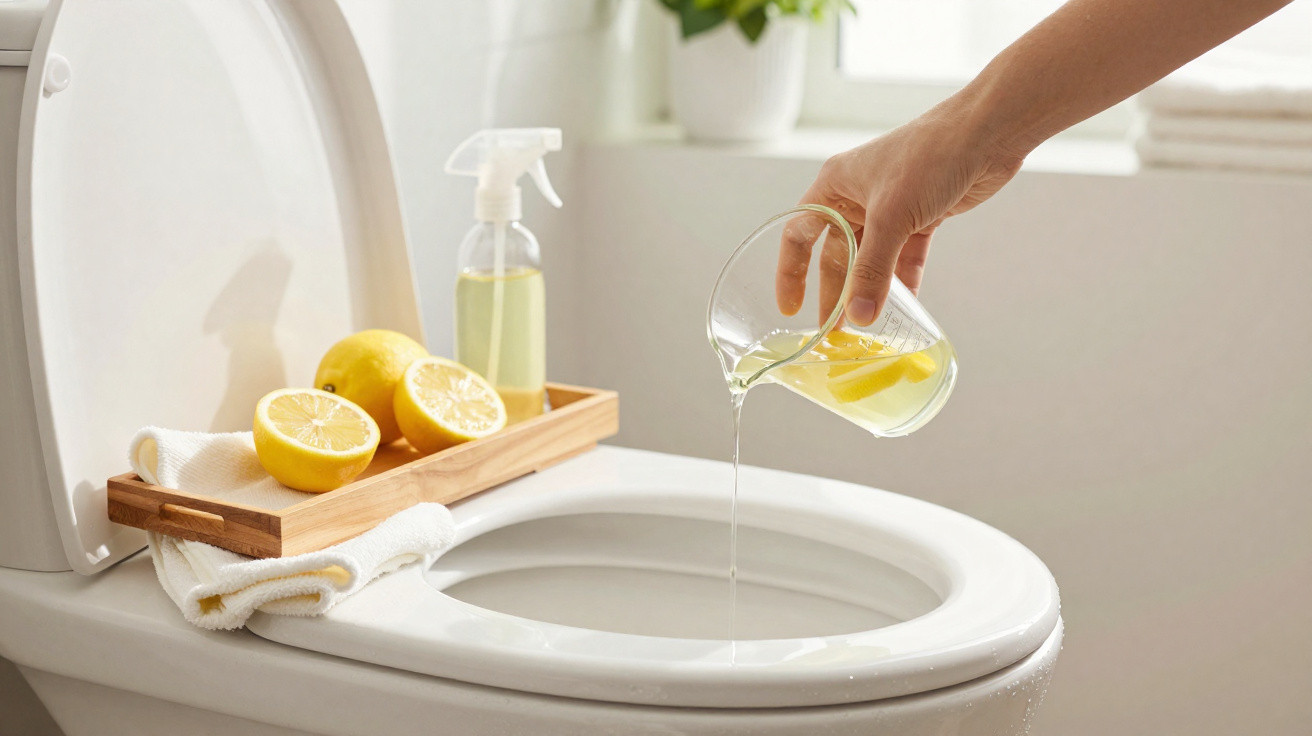
Pouring lemon juice into the toilet bowl can support weekly cleaning where there are light stains, unpleasant smells and mineral marks. Citric acid works gently on limescale, surface rust and built-up residue.
Why does lemon help to clean the toilet bowl?
Because lemon juice is naturally acidic, it can help loosen mineral staining stuck to the inside walls of the toilet bowl. In bathrooms supplied with harder water, these deposits can show up as yellowish, dull or whitish marks.
Citric acid is a weak organic acid present in citrus fruits such as lemons and oranges. This is why it is used for light household cleaning, particularly when the aim is to dissolve residue without using abrasives.
This method is commonly used for the following reasons:
- Acidity: helps to loosen light mineral deposits.
- Gentle cleaning: works best as part of weekly maintenance.
- Hard water: regular use can reduce limescale marks.
- Scent: leaves a temporary citrus smell in the bathroom.
- Caution: it must not be mixed with chlorine or bleach.
How should lemon juice be applied in the toilet bowl?
Squeeze enough lemons to distribute the juice over the stained areas, especially around the waterline and across the inner walls. Leave it to sit before scrubbing with a toilet brush, giving the acidity time to work on the dirt.
For light staining, leave it in place for between 15 and 30 minutes. For older marks, it is worth repeating the treatment on another day, as excessively vigorous scrubbing can wear the surface and spread splashes around the bathroom.
What is the safe step-by-step method for this toilet cleaning trick?
Before you begin, flush the toilet and leave the inner surface damp, but free from excess previous product. Lemon should be used on its own, without improvised mixtures, particularly if the bowl has already been treated with disinfectant, chlorine or a strong cleaner.
Weekly citrus cleaning
The contact time matters
Let the lemon sit for a few minutes before scrubbing the inner walls.
Use a toilet brush, then flush to clear away the loosened residue.
Once the waiting time is over, scrub the sides, base and the area near the water outlet. Finish by flushing and ventilating the bathroom, avoiding prolonged contact between acidic residue and metals or finishes.
Follow this order:
- Squeeze the lemon and apply its juice to the stained areas.
- Leave it for 15 to 30 minutes without mixing it with other products.
- Scrub with a toilet brush, concentrating on mineral marks.
- Flush, then repeat weekly if needed.
Why is lemon gentler than abrasive products?
Abrasive products remove dirt through friction, but over time they can scratch surfaces, dull their shine and make them more porous. Lemon works more gently, helping to dissolve light deposits without requiring such aggressive scrubbing.
That does not mean it replaces all deep cleaning or disinfection when these are required. This trick is most effective as weekly maintenance to reduce recent stains, manage odours and prevent build-up before the dirt becomes thick and stubborn.
Use this option mainly when there are:
- Light limescale marks along the toilet bowl’s inner waterline.
- An unpleasant smell without visible heavy dirt.
- Yellowish residue that is still superficial.
- A need for less aggressive weekly maintenance.
How often should lemon be used in the toilet bowl?
As with the trick of pouring white vinegar into the toilet bowl, lemon should be used sensibly. Applying it once a week is usually enough for maintenance, without overdoing the acidity or replacing proper hygiene.
Where there is deep rust, old crusting, a persistent bad smell or a leak, the issue may require a specific product or a plumbing assessment. Lemon is useful in a routine, but the best results come from regular cleaning, bathroom ventilation and the prevention of build-up.

Comments
No comments yet. Be the first to comment!
Leave a Comment