
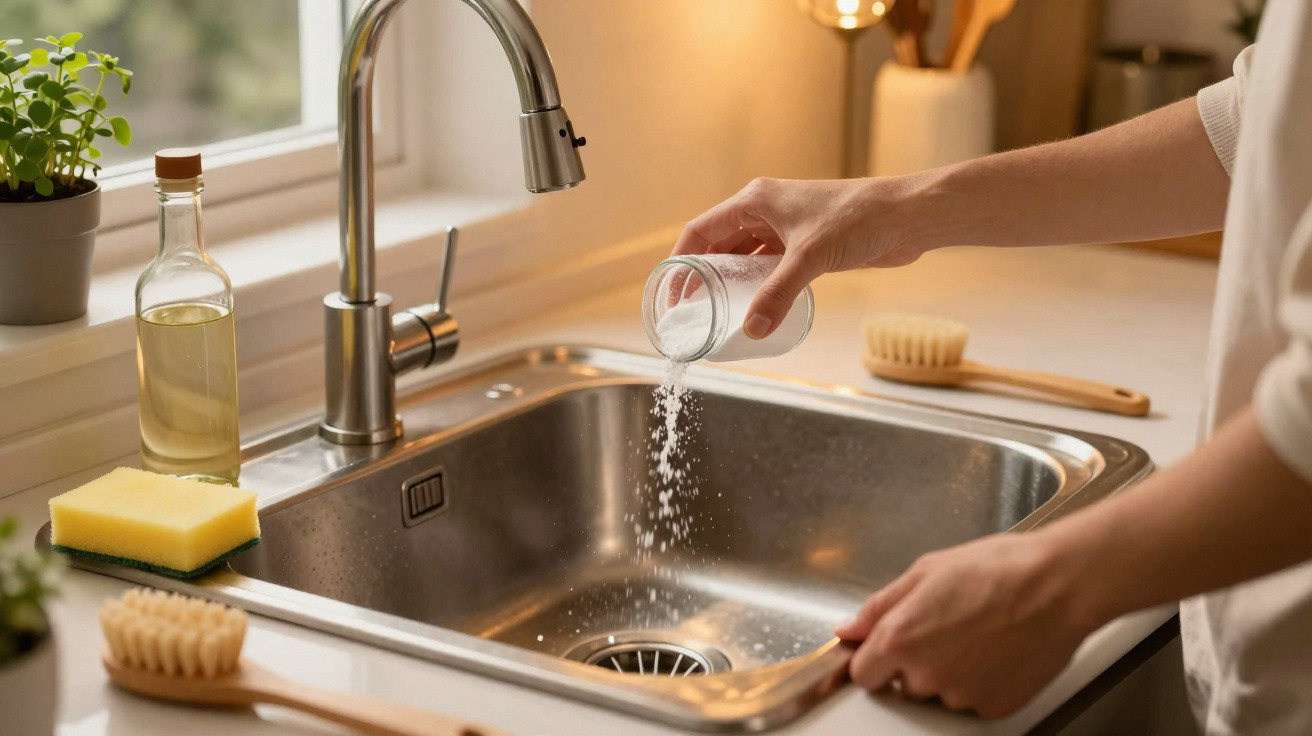
Using bicarbonate of soda in everyday household cleaning has attracted attention for a straightforward reason: it works directly in the sink, the drain and the debris that builds up overnight. Applied before bed, it acts gradually while the home is quiet, affecting odours and organic matter that passes into the sink pipework.
This household measure makes use of the period when the area is inactive, allowing it to work more effectively in the drain. Because the sink is not being used overnight, bicarbonate of soda can act without interruption, reducing build-up and neutralising lingering odours.
What does bicarbonate of soda do in the sink drain overnight?
Once bicarbonate of soda reaches the inside of the sink, it begins a mild reaction with organic residues trapped in the drain. This process continues undisturbed through the night, giving the product more time to act on the internal surfaces.
It can help lessen the amount of grease and particles that collect in the sink. As bicarbonate of soda keeps working throughout the night, the drain is less likely to have strong odours by morning.
Which odours can putting bicarbonate of soda in the sink drain at night tackle?
Using bicarbonate of soda in the sink overnight is a common way to neutralise smells coming from the drain. Such odours generally result from food remnants decomposing alongside grease that has accumulated during the day.
The most noticeable effects include:
- Less smell from old grease in the sink;
- Neutralised odours rising from the drain;
- A reduced sense of build-up after overnight use;
- A more neutral atmosphere around the sink area in the morning.
These effects occur because bicarbonate of soda interacts with particles lodged in the drain while the night provides continuous action without water flowing through the sink.
How does bicarbonate of soda work inside the sink overnight?
Inside the sink, bicarbonate of soda works as a gentle cleaning agent, reacting with organic dirt that has gathered in the drain. The effect becomes stronger at night, when reduced water use prevents the product from being diluted too quickly.
A common method involves a few simple steps:
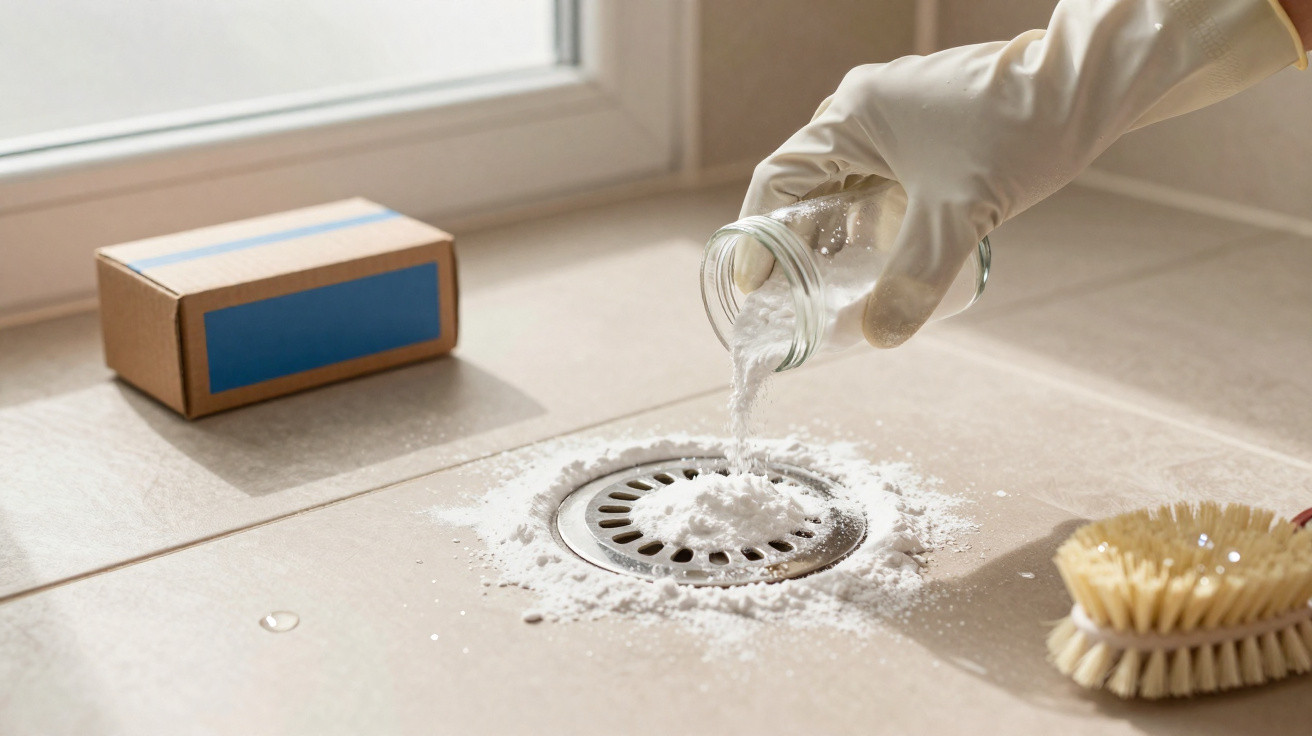
- Put bicarbonate of soda directly into the sink opening;
- Leave it in the drain overnight, with no water running;
- Allow dry residue to dry out and partly loosen;
- Rinse the sink in the morning to finish.
This approach helps keep the inside of the drain less heavily coated, since bicarbonate of soda works slowly while the night keeps the sink environment stable.
Are there risks in using bicarbonate of soda in the sink drain frequently?
Repeated use in the sink is generally safe when moderate amounts are used. Bicarbonate of soda does not directly damage the drain, although excessive use alongside other products may affect the balance within the pipework.
In household settings, regular overnight application should be balanced with regular rinsing of the sink. This prevents unnecessary build-up in the drain and helps maintain a steady water flow over time.
When sink care changes the household routine
Treating the drain and sink as key parts of night-time cleaning shows how small routines can affect the way pipework performs. Applied before the night begins, bicarbonate of soda is a simple resource for reducing accumulated residue and odours.
Over time, this habit provides light, ongoing maintenance for the sink. The drain remains less blocked, and the night becomes a useful period for household care, particularly when bicarbonate of soda is used consistently.




Comments
No comments yet. Be the first to comment!
Leave a Comment