
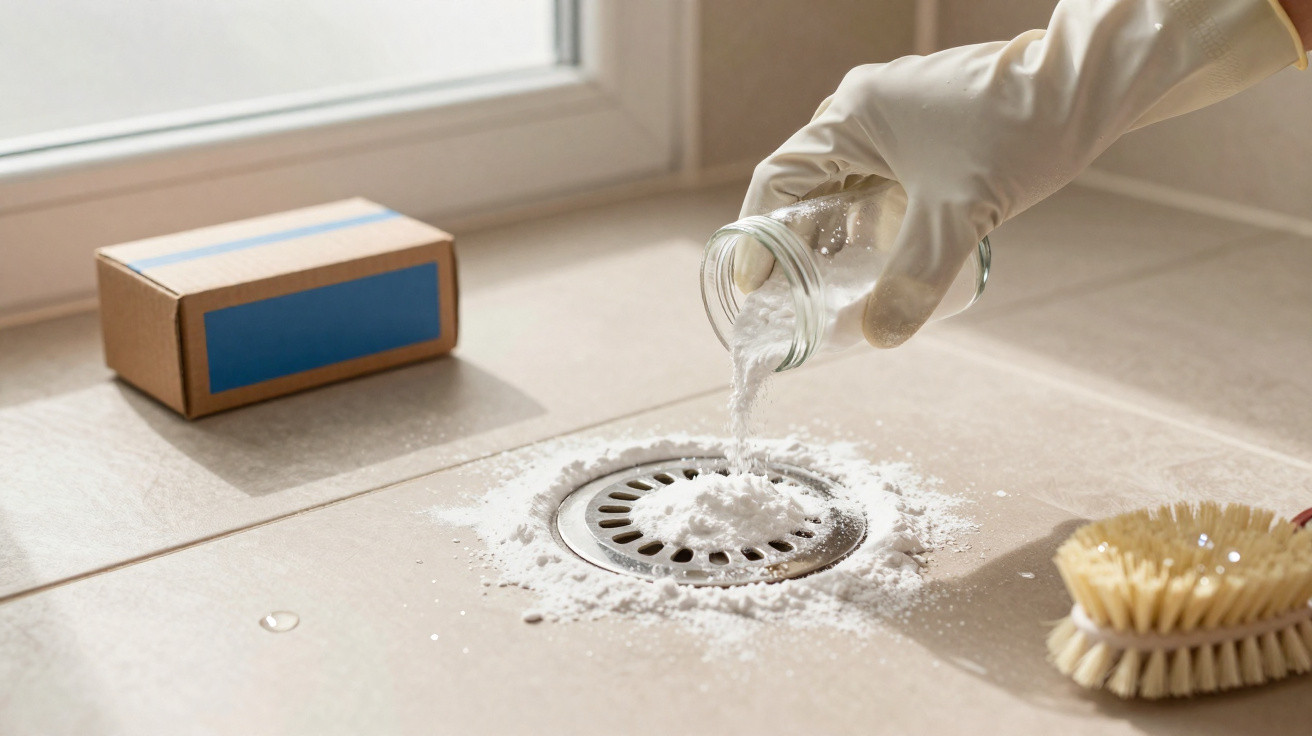
Using bicarbonate of soda around the bathroom drain has become a regular cleaning practice in many homes. It is a straightforward, inexpensive habit that fits easily into a quick routine, helping to keep smells under control and limit the build-up of grease, cosmetic residue and early mildew in small, frequently used areas.
How does dissolved bicarbonate of soda clean around the bathroom drain?
Once combined with warm water, bicarbonate of soda spreads more evenly across the floor and into gaps, reaching soap residue, body oils, toothpaste and fine dirt that gather around the drain. Over time, this build-up can lead to staining, a slippery surface and unpleasant bathroom odours.
As it is mildly abrasive and alkaline, bicarbonate of soda can help loosen the film left by cosmetic oils, shampoo and conditioner, making it easier to remove when rinsing. Used alongside vinegar, it produces an effervescence that shifts light residue from the surface section of the drain, helping to reduce smells without replacing more thorough cleaning when that is required.
How to make and apply a bicarbonate of soda solution to the bathroom drain
Making a bicarbonate of soda solution for the drain is uncomplicated and requires items that are usually already available at home. It can be applied during or after a shower, using the damp floor and warm water to enhance its cleaning and odour-neutralising effect.
After combining the ingredients, apply the mixture directly around the drain and allow it to work before rinsing. The following steps help keep the process organised:
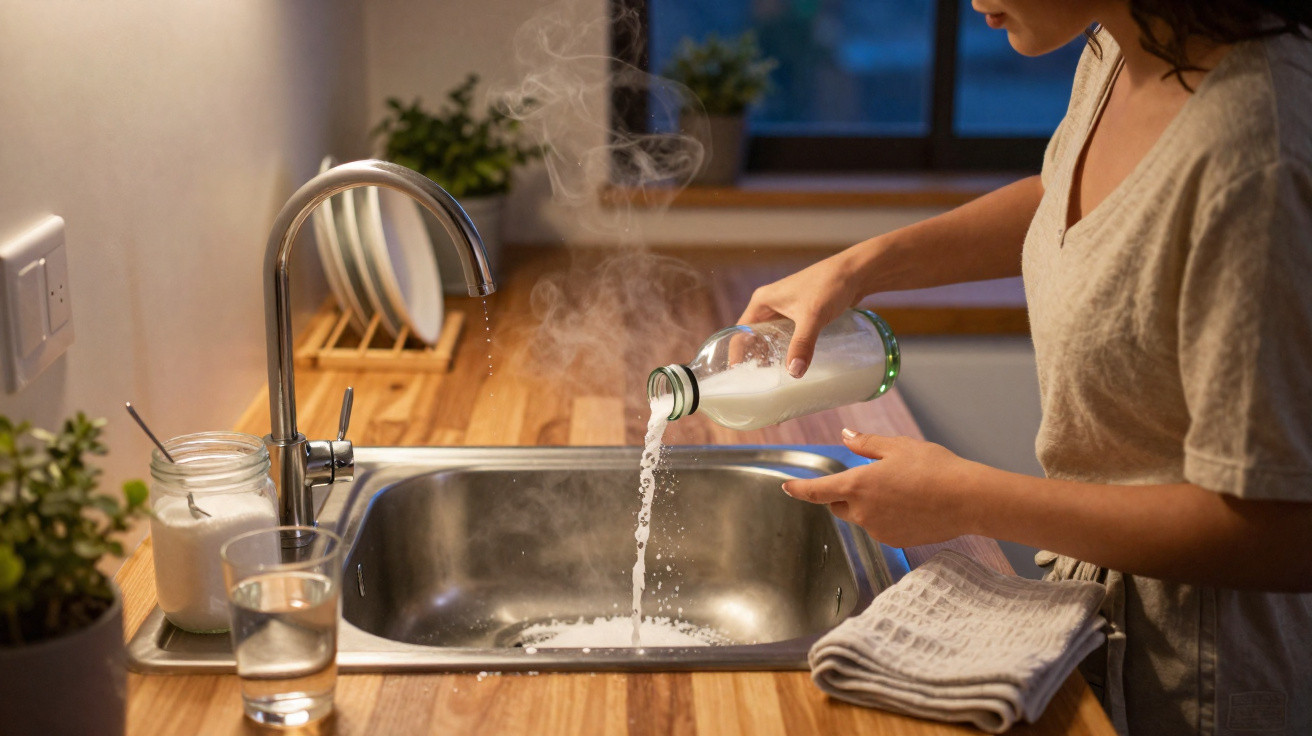
- Mix approximately 1 tablespoon of bicarbonate of soda into 200 ml of warm water, stirring until it has fully dissolved;
- Pour the solution around the drain, particularly over the edges and grout gaps;
- Leave it in place for 10 to 15 minutes, taking care not to step on the area in that time;
- Gently scrub with a soft-bristled brush if visible stains or early mildew are present;
- Rinse with running water, ideally warm water;
- For extra treatment, pour a little vinegar directly into the drain, allow it to fizz, then rinse once more.
Where to use bicarbonate of soda in the bathroom and how often to apply it
Dissolved bicarbonate of soda can be used on strategic bathroom areas where dirt and odours tend to collect. Around the drain, attention should focus on the point where water flows away, including the grout, finish gaps and drain cover, all of which can often discolour and develop mildew.
To make the routine easier, it is useful to identify the areas that benefit most from this care and choose an application interval that matches how heavily the bathroom is used:
- Between the floor and the base of the drain, where dirt collects readily;
- On grout close to the drain, which darkens through constant contact with water and products;
- On the removable drain cover, if it can be taken out for detailed cleaning;
- In areas of the floor where water frequently remains pooled.
Which bathroom problems bicarbonate of soda can help prevent and ease
Bicarbonate of soda has become popular for tackling everyday bathroom issues, including stronger drain smells, a greasy film on the floor and early mould around the cover. It is not a replacement for specialist drain-unblocking products, but it works well as light maintenance between more complete cleans.
Its most useful effects include neutralising smells coming from the surface part of the pipework, making soap and cosmetic residues easier to remove, and leaving the floor feeling less slippery. Combined with good habits, such as regular ventilation, rinsing after showering and periodically cleaning inside the drain, it helps maintain the appearance of a well-kept bathroom with relatively little daily effort.

Comments
No comments yet. Be the first to comment!
Leave a Comment