
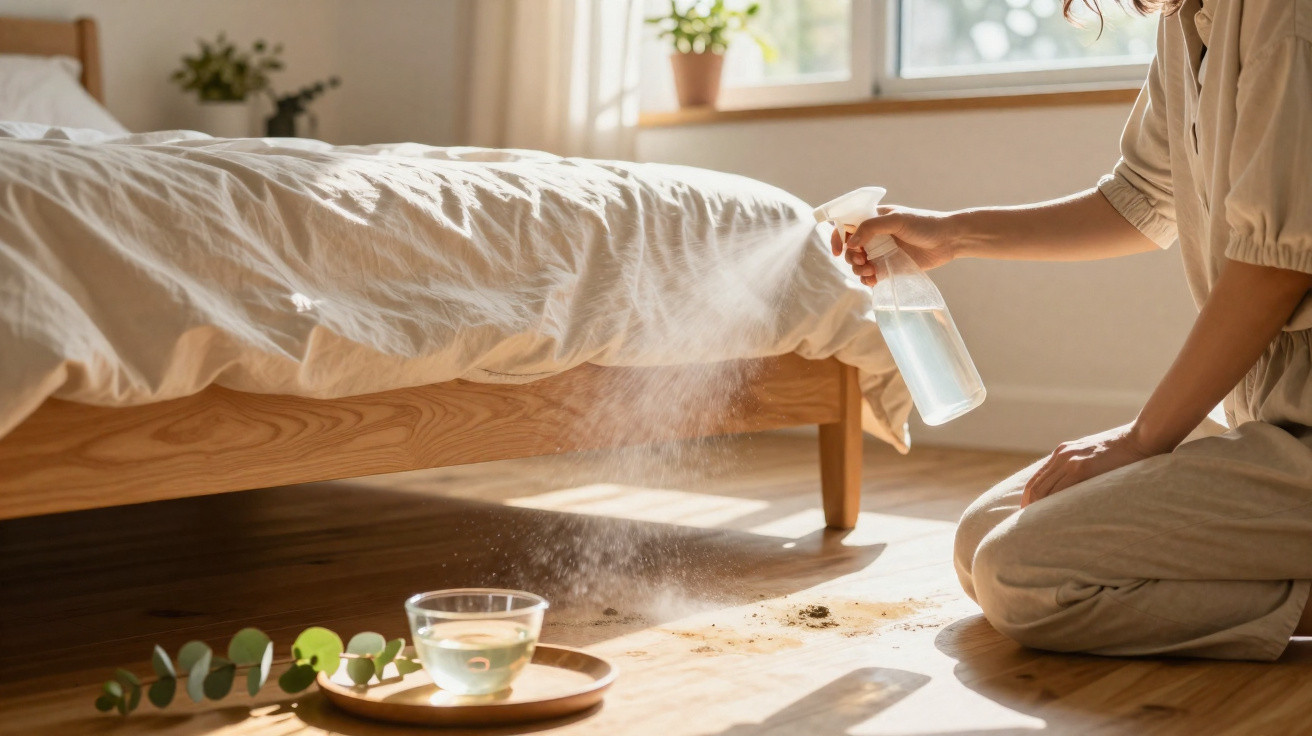
The space beneath the bed is one of the most neglected areas during household cleaning. Hidden from view, awkward to reach and lacking both airflow and sunlight, this dark corner gathers dust, dust mites, dead skin cells, hair and moisture week after week. The practice of spraying diluted white vinegar beneath the bed is becoming increasingly popular among people seeking a natural, affordable and effective way to keep the bedroom cleaner and odour-free without relying on manufactured chemical products.
Why is the space beneath the bed such a troublesome source of dirt?
Three elements make this spot especially favourable for microorganisms to multiply: poor ventilation, no light and the ongoing build-up of organic debris. While we sleep, our bodies release perspiration, dead skin cells and hairs, which gradually settle on the floor beneath the mattress over several weeks. The issue can be even more pronounced in homes with pets or in humid climates.
Dust mites find precisely the conditions they need to reproduce in large numbers in this environment: moisture, darkness and an abundant supply of organic matter to feed on. These microscopic arthropods are among the main triggers of allergic rhinitis and night-time coughing in both adults and children. Standard cleaning with a brush or vacuum cleaner does not always reach every corner, which is where vinegar can support a regular household cleaning routine.
- Neutralises odours at their source: vinegar’s acidic pH acts on the molecular chemistry of unpleasant smells, breaking down the responsible compounds rather than merely covering them with artificial fragrance.
- A natural disinfectant against bacteria and fungi: the acidic environment created by vinegar is unfavourable to most microorganisms that thrive in dark, damp places.
- Repels dust mites, ants and mosquitoes: vinegar’s sharp scent acts as a natural barrier, discouraging insects that seek shelter in dark, protected areas.
- Suitable for children, older people and pets: it avoids the need for industrial insecticides and disinfectants containing chemical compounds that may be harmful in enclosed spaces.
- Very low cost: white vinegar is among the cheapest cleaning products available in any supermarket, making this approach accessible for every budget.
How to prepare and apply the white vinegar solution correctly
Getting the dilution right is essential for effective results without damaging the floor or leaving the bedroom smelling strongly of vinegar. Combine equal parts white vinegar and filtered water in a clean spray bottle, then shake it gently before each use. This ratio provides enough acidity for cleaning while remaining suitable for wood, laminate, ceramic and porcelain-tiled surfaces. For more delicate floors, such as solid wood or unsealed porous stone, use two-thirds water and one-third vinegar instead.
Spray the mixture directly onto the floor beneath the bed, paying particular attention to corners where debris collects most easily and to the area around the bed legs. Allow it to dry naturally with the windows open for at least 30 minutes, helping the liquid evaporate more quickly. The initial vinegar smell fades rapidly as it dries, taking musty odours with it. Where dirt is heavier, first wipe the area with a damp cloth using the same mixture before spraying.
How often to use it and what to combine with vinegar for better results
For most households, using the solution once a week is enough to keep the area clean and free from odours. In homes with pets, in very humid regions such as coastal areas, or in bedrooms with little natural ventilation, it can be applied twice weekly for more consistent results. The easiest sign that it is time to use it again is your sense of smell: even a slight musty or stale-room odour is enough to indicate that another application is needed.
A complete routine for keeping beneath the bed clean
Four habits that enhance vinegar’s effect in the bedroom
Vacuum beneath the bed at least once a week before spraying the solution, removing the built-up solid debris first. The sequence matters: vacuuming beforehand ensures that the vinegar reaches the floor directly rather than only the surface layer of dust. Keep the bedroom well ventilated by opening the windows daily, especially in the morning, to refresh the air and reduce the moisture that supports microorganisms.
Wash bed linen weekly in hot water to remove dust mites and residues that move from the mattress to the floor. Avoid storing boxes, bags and other items beneath the bed, as they restrict airflow, provide extra hiding places for insects and make cleaning far more difficult. A bed with clear space underneath responds much better to vinegar treatment than one with the area blocked by belongings.
For anyone with rhinitis or respiratory allergies, the vinegar’s effect can be enhanced further by adding a few drops of eucalyptus or lavender essential oil to the mixture. Eucalyptus has recognised antimicrobial properties, while its fragrance helps disguise vinegar’s acidic smell during the first few minutes after application. Do not overdo it: 5 to 10 drops per litre of solution are enough to notice a difference without leaving the bedroom overly scented.
The symbolic meaning behind a habit many people do not know about
Alongside its practical and proven cleaning benefits, many people give the habit of spraying vinegar beneath the bed a symbolic meaning linked to renewal and energetic cleansing in the sleeping environment. In traditions such as Feng Shui and popular space-harmonising practices, vinegar is associated with the ability to disperse stagnant energy in places where people struggle to sleep or experience a persistent sense of discomfort with no apparent physical cause.
Whatever one’s personal interpretation, consciously caring for the place where we sleep has a genuinely positive effect on the quality of the environment. The bedroom is where we spend one-third of our lives, and keeping this area clean through regular, attentive care makes sleep a period of rest in a truly healthy setting. Spraying vinegar beneath the bed is a small action that represents a bigger choice: caring for the most intimate space in the home using something already available in the kitchen.
What vinegar cannot solve and when further action is needed
Vinegar is effective for preventative maintenance and odour control, but it has limitations. Established dust-mite infestations in a mattress require specific acaricidal products and, in more serious cases, replacement of the mattress. Visible mould on walls or skirting boards also requires treatment with a suitable antifungal product before any vinegar is used, as vinegar alone will not remove fungus that has already become established in a porous surface.
If the smell remains after regular vinegar use for several weeks, it may indicate water ingress, a contaminated mattress or a plumbing issue within the bedroom wall. These situations require a more thorough investigation. Vinegar can deal with problems caused by an inconsistent cleaning routine; it does not replace structural maintenance of the property.
If you are going to start using this tip this week, share it with the people you live with or with anyone who has complained about a musty-smelling bedroom without knowing why.


Comments
No comments yet. Be the first to comment!
Leave a Comment