
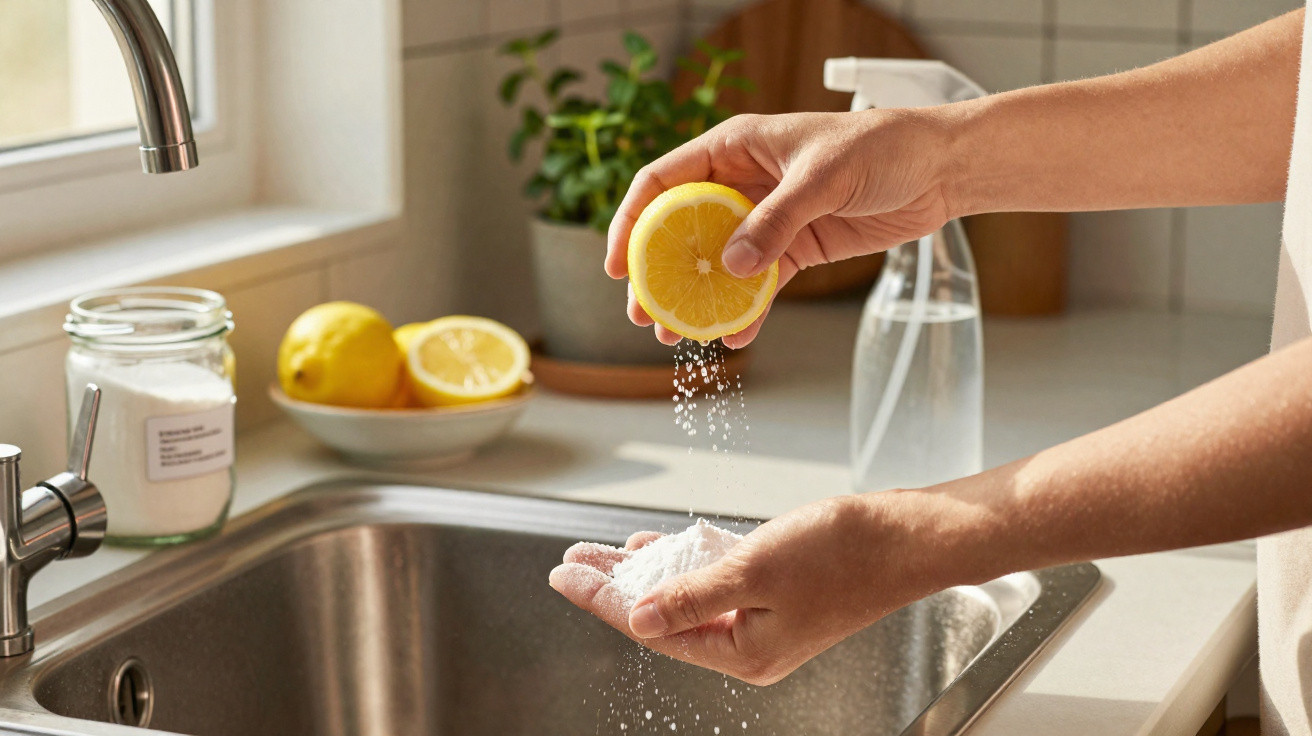
Mixing baking soda with lemon juice is a household tip for tackling light dirt, reducing odours and adding shine to certain washable surfaces around the home. It combines baking soda’s mild abrasive action with lemon’s acidity, producing a fizzing reaction that can be useful for straightforward everyday cleaning jobs.
What is mixing baking soda with lemon juice used for?
This mixture is mainly used to help clean lightly greasy areas, fresh stains, sink residue, odours in washable bins and minor marks on utensils. It is not a replacement for disinfectant where thorough sanitising is required, but it can make everyday grime easier to lift.
When lemon comes into contact with baking soda, it creates foam. The fizz can help loosen surface deposits, while the slightly granular texture of the baking soda supports scrubbing without relying on very harsh products.
What is the ideal ratio for making the mixture?
The most convenient method is to start with a small amount of baking soda and gradually add lemon juice until it becomes a paste. Make only the amount needed for immediate use, as the reaction quickly loses its effectiveness.
- Use 1 tablespoon of baking soda.
- Add lemon juice gradually, without soaking the mixture.
- Stir until a smooth, creamy paste forms.
- Apply it using a cloth, soft brush or non-abrasive sponge.
- Wipe away all residue with a damp cloth, then dry the surface.
Which surfaces does this combination work best on?
The combination generally performs best on durable, washable materials that are not vulnerable to acidity. Stainless-steel sinks, tiles, pale grout, well-protected worktops and the outside of bins can be cleaned with this homemade product when used carefully.
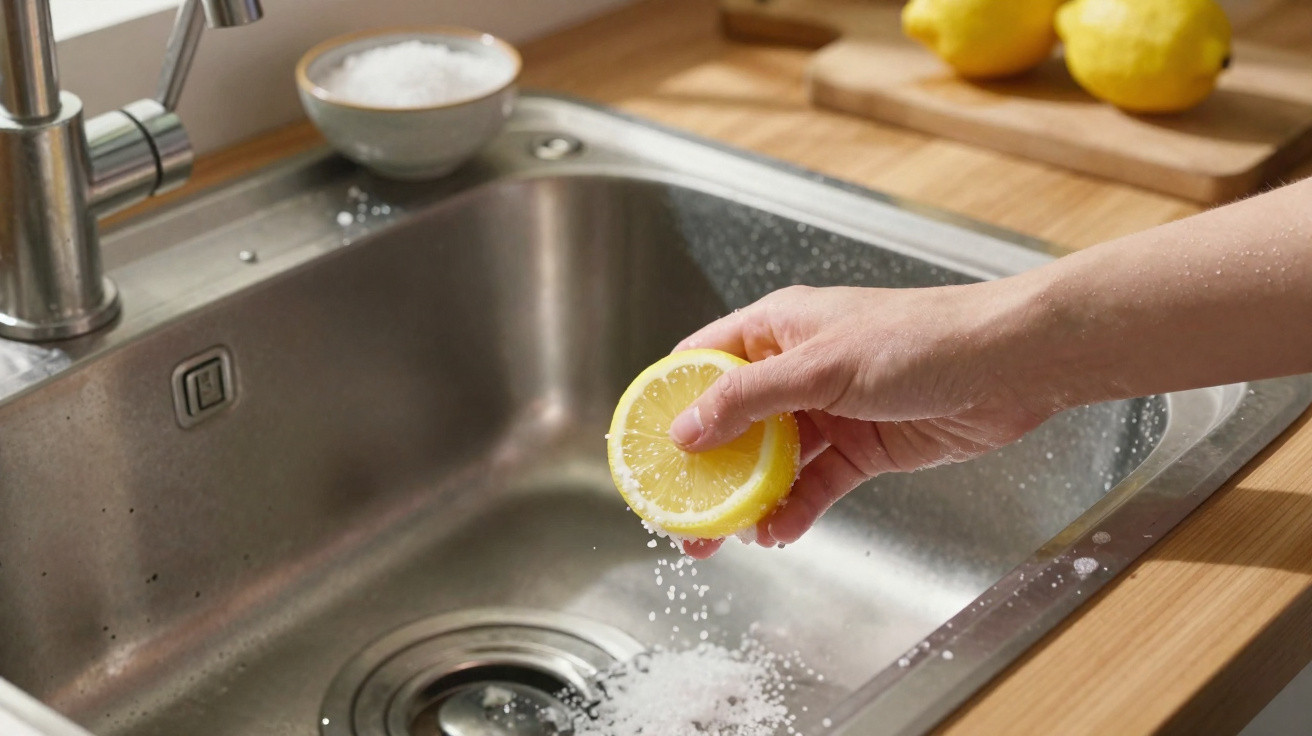
- Kitchen sinks with light grease.
- Tiles with recent marks.
- Pale grout with surface-level dirt.
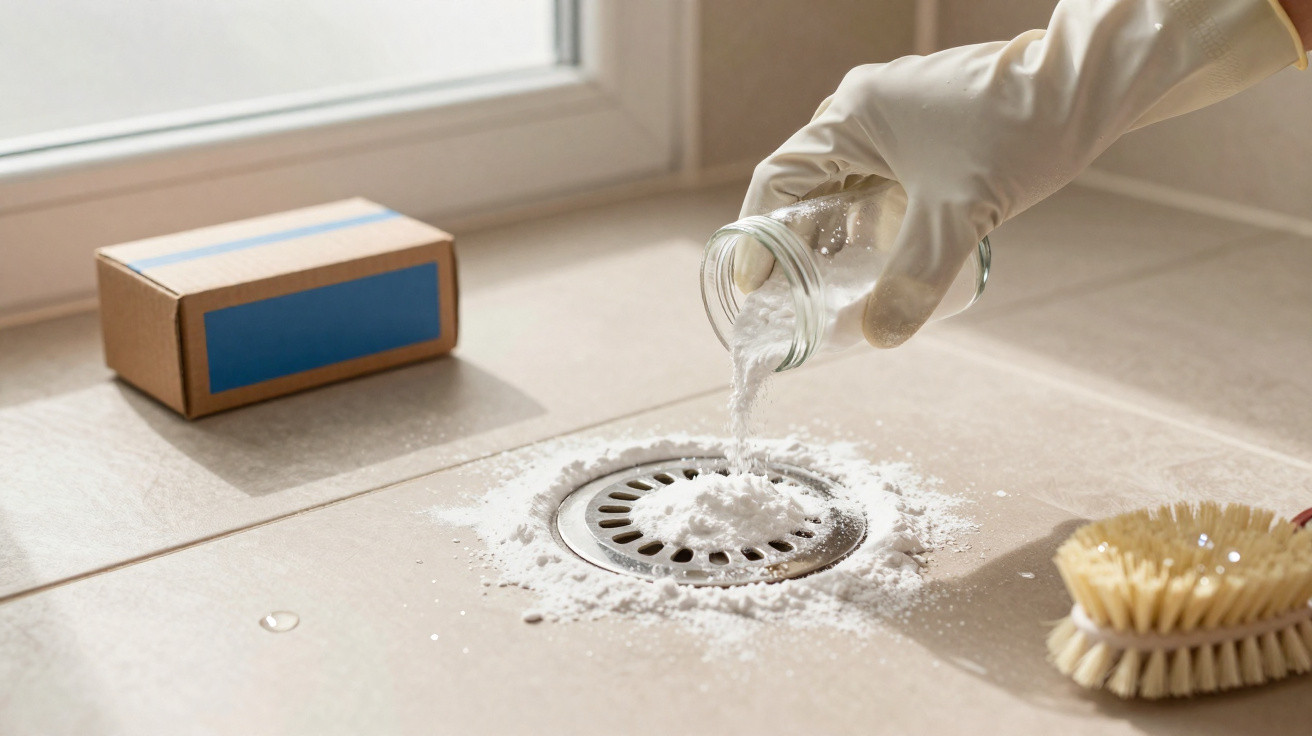
- Washable bins with built-up odours.
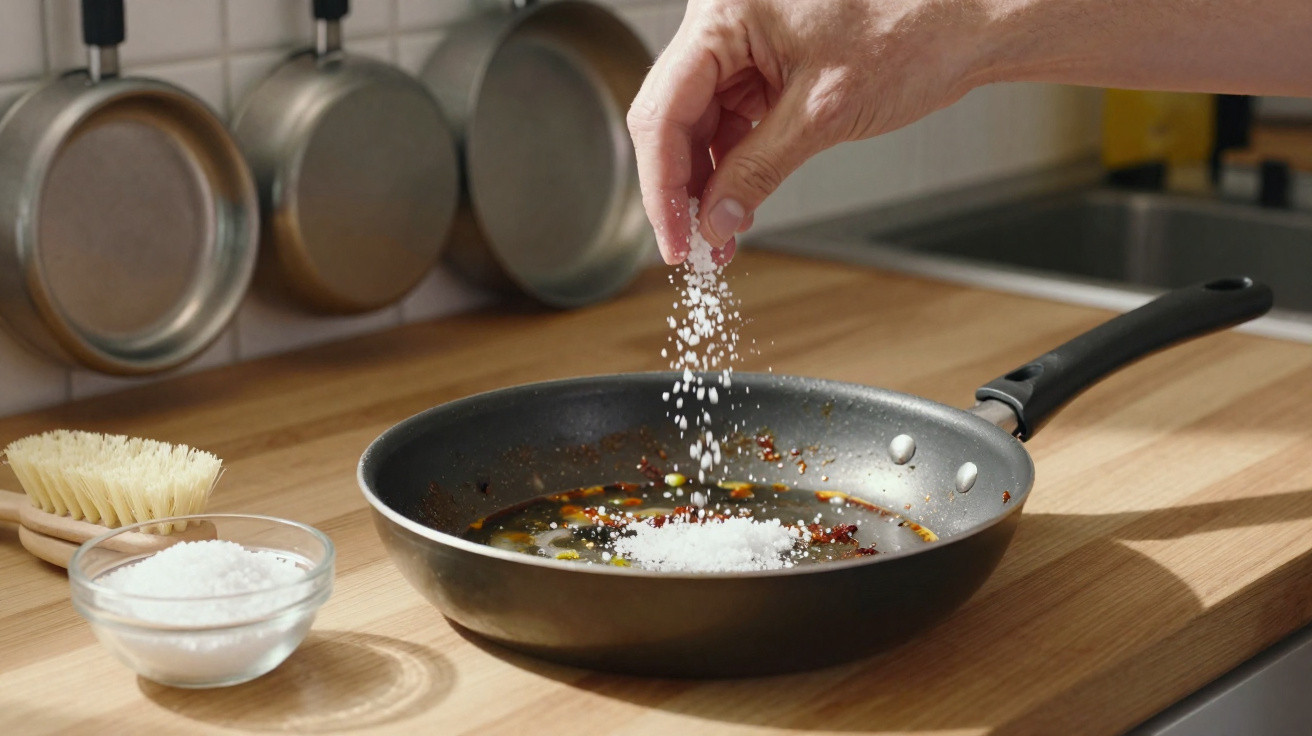
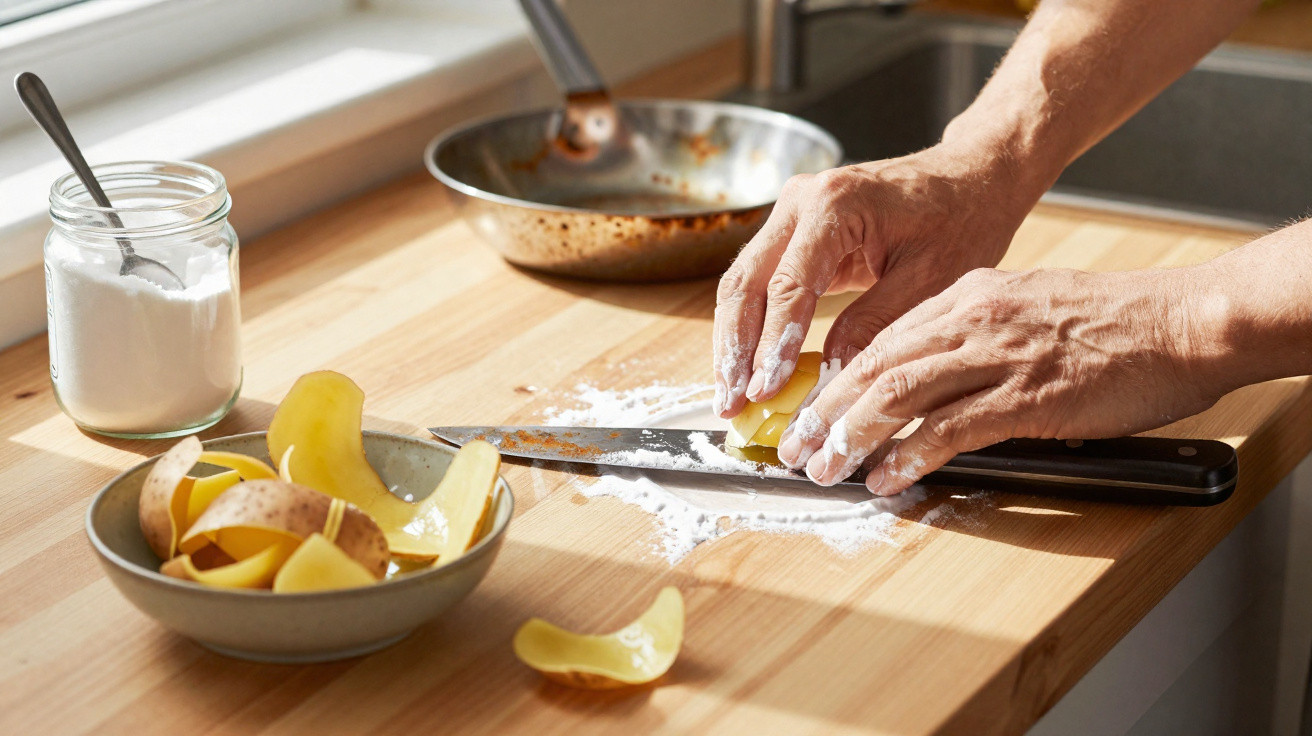
- Durable pans and utensils, provided they do not have a delicate coating.
What precautions should you take to avoid damage at home?
Lemon is acidic, while baking soda may scratch surfaces if rubbed too firmly. For that reason, the mixture should not be applied to marble, unprotected granite, wood, screens, electronics, sensitive aluminium, porous flooring or waxed surfaces.
It is also essential not to combine this recipe with bleach, ammonia, strong disinfectants or chlorine-based products. Although it is a homemade mixture, it is intended only for external cleaning, never as a drink, medicine, skin treatment or tooth whitener.
How can you get the best everyday results?
For the best results from baking soda with lemon juice, apply the paste to targeted areas, allow it to sit for a few minutes, then remove it completely. Testing it first on a small, inconspicuous spot can help prevent staining, dullness or wear on sensitive materials.
Used in moderation, this combination can be a simple aid for household cleaning, neutralising mild odours and leaving a pleasant citrus scent. The key is to make a small amount, use it only on suitable surfaces and avoid treating it as an answer to every type of dirt.
Comments
No comments yet. Be the first to comment!
Leave a Comment