
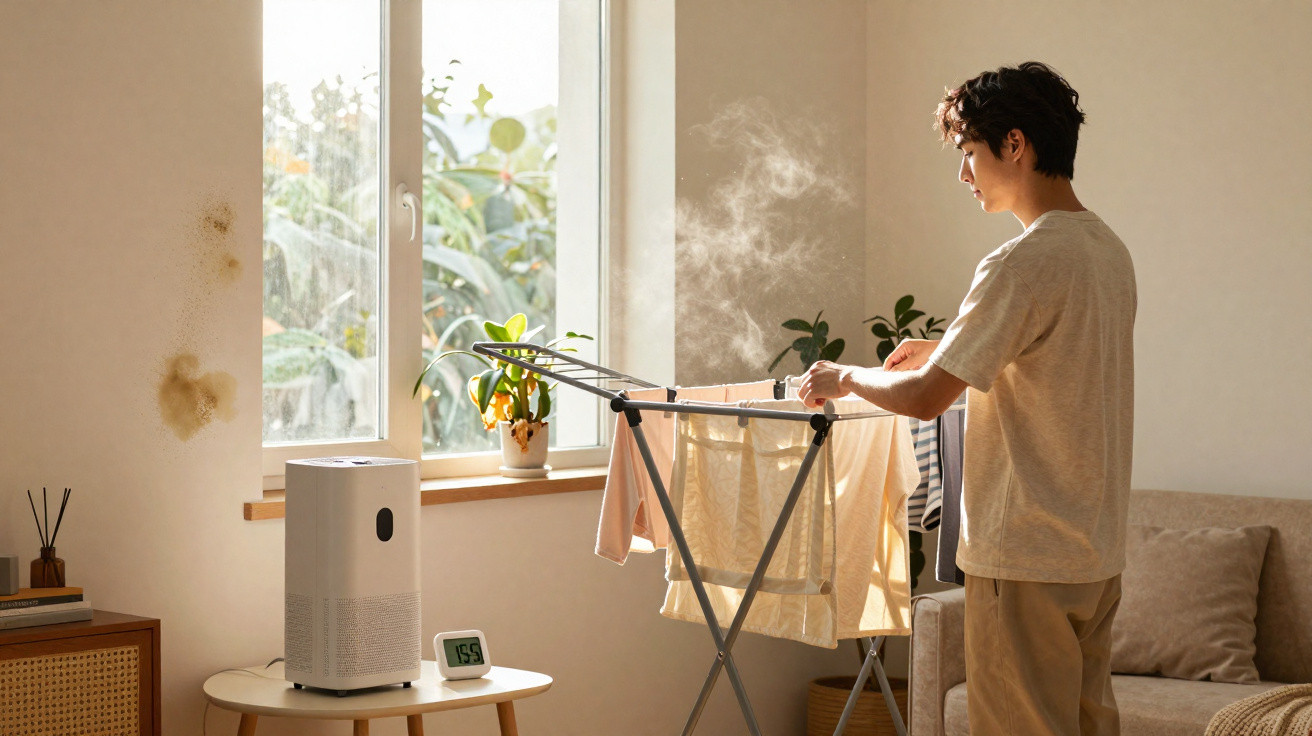
Putting washing out to dry in the garden has been an unusual sight over the past few months, as winter storms have brought freezing conditions and wind gusts of up to 161 km/h. But does it really matter how we dry clothes inside the house?
Leaving damp clothes on airers in rooms with inadequate ventilation may raise the level of mould in your home. Mould is linked with ill health and, in certain cases, can even be fatal.
As mould develops indoors, it may appear as black or green patches on walls and often gives off an unpleasant, musty odour. It should not be overlooked: prolonged mould exposure can have serious consequences for health.
Mould is an umbrella term for fungi that release minute particles known as spores. Fungi produce spores when growing conditions are favourable, including cool temperatures and high humidity.
That is why mould is particularly common on bathroom ceilings and damp walls, where fungal spores have more moisture in which to settle and grow.
Numerous mould species exist, but penicillium and aspergillus are among those most often responsible for problems in damp homes. We are thought to inhale small amounts of spores from these fungi every day.
Fortunately, the immune system is highly effective at recognising and destroying fungal spores. This keeps fungal lung infections relatively uncommon in people, despite our continual exposure. Immune cells known as macrophages occupy the lungs' air spaces, called alveoli. They consume inhaled material that may be harmful, including fungal spores.
Mould risks for weakened immune systems
For many people, however, the immune system cannot clear fungal spores successfully. In such cases, fungi may cause dangerous infections or substantially worsen pre-existing conditions, including asthma.
Those with damaged or weakened immune systems face a greater risk of becoming seriously ill with fungal infections. Moulds such as aspergillus can infect patients with reduced immune function, or people whose lungs have been damaged by illnesses including asthma, cystic fibrosis and chronic obstructive pulmonary disease (COPD) linked to heavy smoking.
In people with asthma, the immune system reacts excessively to triggers, including fungal spores, producing inflammation in the lungs. By narrowing the airways, this inflammation makes breathing more difficult.
Asthma symptoms and allergic reactions arise from this same kind of immune response, and fungal spores can provoke it too. As a result, spores can be an especially potent trigger for some people.
In the most severe circumstances, fungal spores may do more than cause inflammation: they can enter and obstruct the airways, resulting in bleeding in the lungs. This occurs when spores germinate and produce long, spiderweb-like structures called mycelium. These form sticky clumps that block airways and harm delicate lung tissue.
Increasing antifungal resistance
Aspergillus infections are treated using antifungal medicines known as azoles, which stop fungal cells from developing correctly. Although azoles are highly effective, aspergillus is increasingly being reported as resistant to them, which is a major concern.
Only a limited selection of antifungal medicines is available for treating mould infections. Once resistance emerges, the treatment options open to a patient can be drastically reduced.
Resistance to medicines such as azoles may arise in patients who use them for extended periods. But recent research suggests that it more often develops in the environment, where most fungi live. This means antifungal medicines may already be ineffective before a patient has even received an aspergillus diagnosis.
The emergence of drug resistance in environmental fungi has been associated with the use of azoles and other antifungal medicines in agriculture. Fungal infections pose a major threat to crops, so plants require protection from them just as people do. Unfortunately, the medicines used clinically are the same types as those used in farming.
Climate change could also be contributing to drug resistance among environmental fungi. Recent findings showed that exposure to high temperatures can help moulds become resistant to frequently prescribed antifungal medicines.
There have also been reports of patients falling ill from mould species not previously believed to cause disease in humans, partly because they were unable to grow at human body temperature.
More mould species may therefore acquire both the ability to cause infections and drug resistance. Research programmes and healthcare measures that monitor these developments are essential if we are to prepare for possible rises in mould infections.
Damp and mould in the home
A healthy immune system means ordinary exposure to fungal spores is unlikely to cause health problems. Yet exposure to very large quantities of spores can be fatal, even for people without underlying health conditions.
In 2020, toddler Awaab Ishak died directly because of extensive exposure to fungal spores resulting from severe damp and mould in his home.
His death resulted in a change to UK law, Awaab's Law, requiring landlords to act promptly on damp in the homes they manage. The aim is to prevent tenants being exposed to excessive fungal spores, which can affect both physical and mental health.
It is therefore important to keep your home as free from mould as possible. The most effective approach is to ensure good ventilation and take further steps to reduce damp, such as using a dehumidifier or buying a heated clothes airer for drying clothes indoors during winter.
Rebecca A. Drummond, Associate Professor, Immunology and Immunotherapy, University of Birmingham
This article is republished from The Conversation under a Creative Commons licence. Read the original article.





Comments
No comments yet. Be the first to comment!
Leave a Comment