
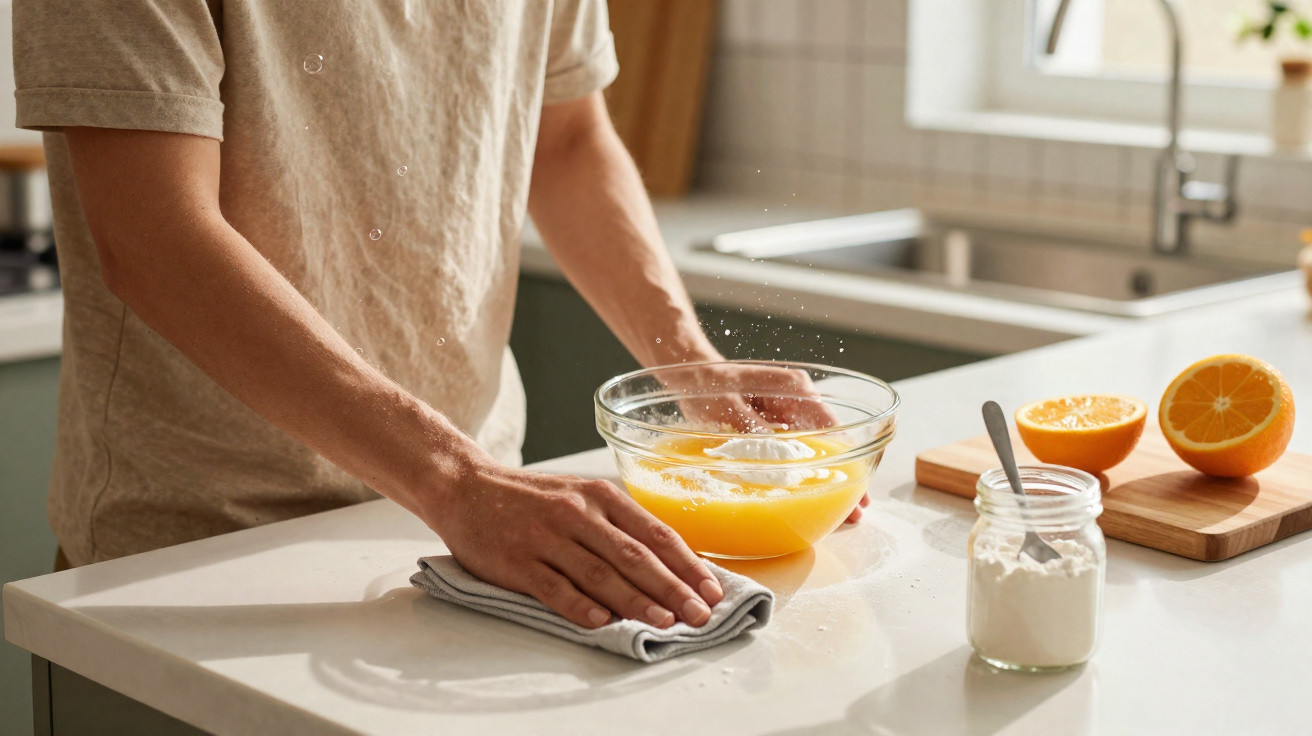
In many homes, the combination of baking powder and orange juice is used as a straightforward option for minor cleaning jobs. It can reduce reliance on harsh products while still supporting basic hygiene. When an alkaline powder is combined with a mildly acidic drink, it creates a foam that may help lift surface dirt and neutralise certain odours, particularly in kitchens and bathrooms, provided the area is thoroughly rinsed and dried afterwards.
How do baking powder and orange juice work for cleaning?
This mixture works through the contact between a basic substance and an acidic solution, which releases carbon dioxide and produces bubbles that can help dislodge dirt particles. The bicarbonate in baking powder has a pH above 7 and can help soften light grease and odours, while orange juice provides mild organic acids that can assist with superficial marks.
Once the reaction has finished, the main remaining substances are water and small amounts of salts, which will usually have no noticeable smell. However, orange juice also contains sugars and other compounds that may leave behind a sticky film. For that reason, the treated surface must be rinsed thoroughly with clean water and dried using a soft cloth, preventing residue, water marks and conditions that encourage fungal growth in damp places.
When is a baking powder and orange juice mixture genuinely useful?
Using baking powder with orange juice is best suited to light dirt on relatively durable surfaces, as well as quick cleaning between more thorough household cleans. In the kitchen, it may be used on stainless-steel sinks, around tap edges and in areas close to the drain to help with everyday grease and faint odours.
In bathrooms, it can help tackle simple marks around the washbasin drain or in specific areas of sanitary ware where there are no heavy deposits. It should be regarded as an additional aid rather than the sole cleaning method. Where limescale is substantial or strict disinfection is required, dedicated products are still needed to provide more intensive hygiene.
How should you prepare and apply a baking powder and orange juice cleaner?
Prepare only a small amount for immediate use, as the reaction happens quickly and the juice deteriorates over time. The aim is to make a thick paste that will not run, making it easier to use on targeted areas, including around taps, sections of the sink or uncoated metal utensils without delicate finishes.
Follow these simple steps to use the mixture safely and effectively in everyday household cleaning:
- Measure the powder: Put around two teaspoons of baking powder (or culinary bicarbonate of soda) into a small, clean container.
- Add the juice: Gradually drip in freshly squeezed orange juice, stirring until it reaches the consistency of a thick paste.
- Combine thoroughly: Wait for the fizzing to begin, then mix until all the powder has been fully moistened.
- Apply the paste: Spread it over the chosen area using a soft cloth or a non-abrasive sponge, with gentle movements.
- Leave briefly: Allow it to sit for a short time, just long enough for the foam to act on surface dirt.
- Rinse: Wash away the mixture completely with plenty of water, then dry with a clean cloth to avoid marks and residue.
Which surfaces can be cleaned with it, and how can it fit into your routine?
Some household surfaces cope well with this mixture when the dirt is moderate and rinsing and drying are always carried out afterwards. Stainless-steel sinks, ceramic washbasins and uncoated metal cutlery are common examples where its mildly abrasive and deodorising action may be useful. Marble, limestone and sensitive finishes, however, should be avoided.
As part of a routine, this preparation is most useful for targeted tasks: a quick boost for the sink at the end of the day, support when a conventional cleaner is unavailable, or an occasional option for those who prefer to avoid strong fragrances. Used thoughtfully, it can be a complementary way to keep the home tidy, but it does not replace specialist products for highly stubborn stains, disinfection or intensive limescale removal.

Comments
No comments yet. Be the first to comment!
Leave a Comment