
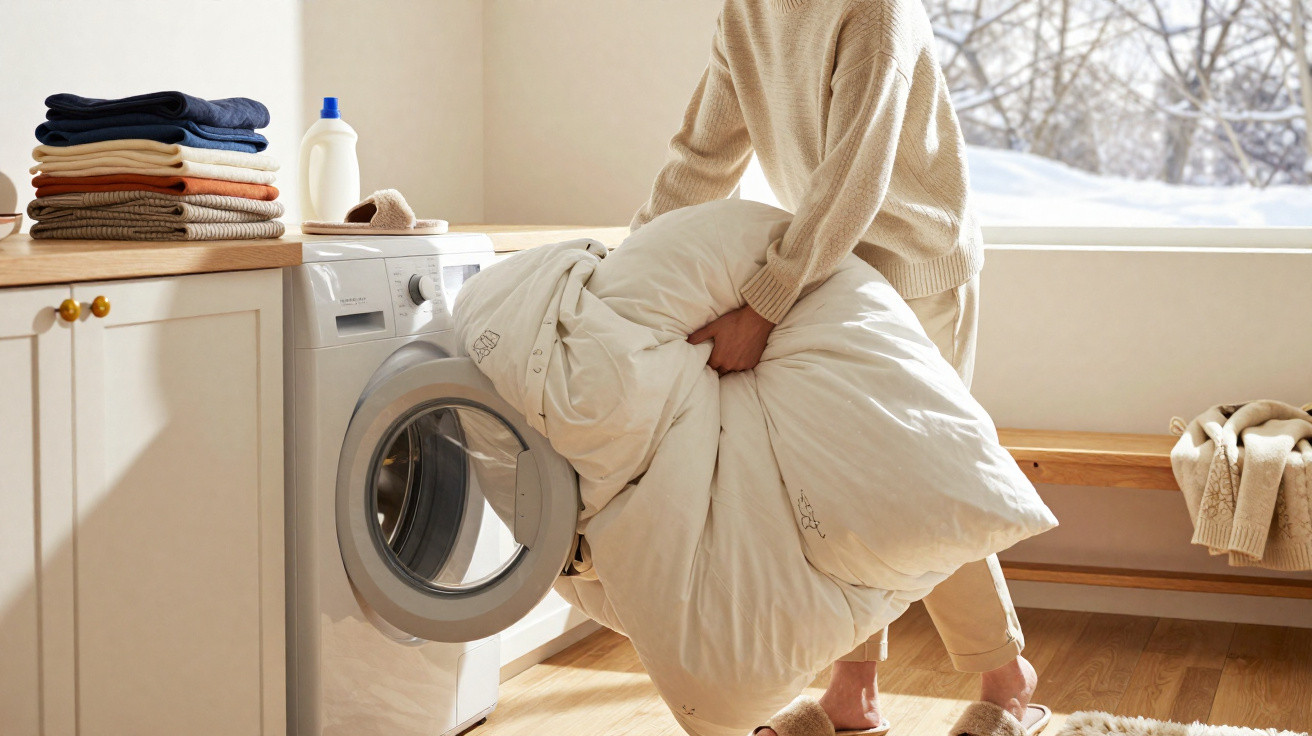
We turn up the heating, settle in for film evenings and Sunday snoozes, and keep this snug essential within reach for months at a time. But while the washing machine constantly deals with jumpers, pyjamas and bedding, this dependable item can quietly accumulate sweat, crumbs and microscopic inhabitants.
The winter comfort that seldom reaches the washing machine
When household washing is discussed, clothing, towels and bed linen usually come to mind. These items are included in the laundry routine regularly, almost without thinking. However, one important household textile is commonly overlooked, particularly between October and March: throws, blankets and sofa plaids.
These comfortable coverings travel around the home with us. They may rest on the sofa arm, provide added warmth on the bed, or be draped over a chair for “decorative” purposes. They come into close contact with our skin and clothes, as well as pets and any food eaten while watching television.
Specialists in hygiene say unwashed blankets can harbour the same level of microbes as neglected bedsheets.
During colder months, we use them repeatedly. We sleep beneath them, sneeze into them, wrap children in them and, on occasion, walk across them. Despite this, plenty of households do not wash them until winter is over, if they wash them at all.
What actually accumulates in blankets and throws
All household fabrics can absorb biological material and particles from the environment. Throws are no different. The warmth and softness that make them appealing can also provide a suitable microclimate for unwelcome organisms.
Sweat, skin and microscopic organisms combined
Throughout the day and night, our bodies release tiny particles. Dermatologists calculate that an average person sheds millions of skin cells every day and produces around 26 litres of sweat annually. A considerable amount settles on the fabrics we regularly sit or lie on.
- Dead skin cells, which are an important food source for dust mites
- Sweat, increasing moisture within the fibres
- Natural body oils and cosmetic traces, including creams and make-up
- Bacteria and fungi that naturally occur on the skin
- Saliva and respiratory droplets produced by coughing and sneezing
When this is combined with household dust, pet fur, outdoor pollutants carried in on clothing and the occasional tea spill, the result is a favourable setting for mites, mould spores and bacteria to multiply.
Warm, slightly damp fabric left unwashed for weeks creates near-perfect growing conditions for mites, mould and odour-causing bacteria.
Why the issue is greater in winter
Winter routines can intensify this accumulation. Windows tend to remain shut, ventilation declines and indoor humidity can increase because of cooking, showering and drying laundry indoors. Meanwhile, blankets may be used every day, sometimes for several hours.
Central heating keeps rooms warm but can also dry the air, causing skin to shed more flakes. This additional dry skin falls directly onto blankets. Pets also spend longer inside and may sleep on the very throw used for your Netflix marathon.
Health risks linked to infrequently washed throws
For some, an unwashed blanket only causes a stale smell and a mildly unpleasant impression. For other people, however, it may contribute to genuine health concerns.
Allergies and breathing problems
Dust mites, their droppings and mould spores rank among the most frequent indoor allergens. Shaking, folding or pulling blankets and throws close to the face sends these particles into the air, where they can be easily breathed in.
Those with asthma, allergic rhinitis or eczema can be especially susceptible. Typical responses include:
- A blocked or streaming nose after waking
- Itchy, watering eyes while on the sofa or in bed
- Frequent bouts of sneezing during television viewing
- More severe coughing or wheezing at night
- Irritated skin or red patches where the fabric makes contact
These effects are often put down to “winter viruses” or dry central heating, while the contaminated throw on the sofa is never considered.
Skin flare-ups and infections
Dermatologists note that blankets held against uncovered legs, arms or faces may worsen conditions including acne, eczema and urticaria. Bacteria and yeasts transferred from the skin can remain within the fibres before being passed back to the body day after day.
Using the same unwashed throw night after night can reintroduce bacteria and irritants to the skin, slowing healing and fuelling flare-ups.
For people with compromised immune systems, prolonged exposure to mould spores and certain bacteria in damp fabrics may also raise infection risks, particularly alongside poor ventilation in the room.
How often should blankets and throws be washed?
Hygiene specialists generally advise a straightforward winter baseline: sofa throws and bed blankets should be washed roughly every two weeks. This places them closer to clothing in the wash cycle than household items cleaned less often, such as curtains.
| Textile | Suggested winter washing frequency |
|---|---|
| Bedsheets and pillowcases | Once a week |
| Throws and blankets in regular use | Every 2 weeks |
| Throws used by pets or for eating on the sofa | Every 1 week |
| Decorative throws rarely used | Every 4–6 weeks |
If you often eat on the sofa, have small children or allow pets to sleep on blankets, washing them weekly is much more appropriate. A dog returning from a muddy walk and immediately jumping on a throw brings soil microbes, parasites and outdoor allergens into the equation.
How to wash and dry throws correctly
Read the care label first
Care labels provide essential details about the highest permitted temperature, suitable wash programme and whether tumble drying is safe. Wool, cashmere and certain synthetic blends require gentler care than cotton or polyester fleece.
General guidance includes:
- Cotton and polyester: A 40°C wash will normally be sufficient with a quality detergent. Higher temperatures may be suitable where the label permits them and allergies are a concern.
- Wool and delicate fibres: Choose a wool programme or cold wash and use detergent made for delicate fabrics.
- Chunky knits: Put these inside a large laundry bag or pillowcase to help prevent stretching.
Drying throws to prevent microbes returning
Drying is just as important as washing. A blanket left damp for several hours can become another breeding environment for mould and bacteria that cause unpleasant odours.
Whenever conditions permit, dry throws outdoors in direct sunshine. UV light can help lower the microbial load, while fresh air helps disperse odours. During winter, use a well-ventilated room, ideally with a dehumidifier, or tumble dry on a low heat if the care label allows it.
Never fold and store a blanket that still feels even slightly damp - that’s when that unmistakable musty smell appears a few days later.
Everyday habits for fresher winter textiles
Alongside washing, several easy everyday measures can reduce the accumulation of bacteria and allergens.
- Give your throw a shake and air it beside an open window for a few minutes each morning.
- Try not to sit on it in outdoor clothing that has picked up pollen and pollution.
- Keep a separate washable blanket for pets, and wash it more regularly.
- Vacuum the sofas and beds where throws are used to lower overall dust and mite levels.
If blankets provide extra warmth at night, pairing them with a breathable mattress and frequently washed bedding reduces the overall microbial load around the sleeping area. This may mean fewer mornings with a blocked nose and less itching overnight.
Why “textiles hygiene” matters more than expected
Public hygiene discussions normally centre on washing hands, food safety and cleaning bathrooms. Soft furnishings occupy a grey area: they appear clean, may retain a faint fabric-softener scent from months earlier and therefore seem safe.
However, for anyone with asthma, allergies, sensitive skin or respiratory weakness linked to long Covid, textile cleanliness can meaningfully affect everyday comfort and health. Bedrooms and living rooms are the places where we spend most of our time at home, breathing close to fabric surfaces.
Consider textile hygiene as a scale: freshly laundered sheets sit at one end, while a travel blanket rarely cleaned and kept in a car boot sits at the other. Most home throws fall somewhere in the middle. Moving them nearer the “clean” end by washing them more frequently in winter can lessen background inflammation and fatigue without requiring a drastic change in lifestyle.
As energy costs lead many households to reduce their heating, blankets and throws are likely to see even heavier use during future winters. Treating them as clothing rather than decoration - through regular washing, thorough drying and seasonal airing - makes a cosy routine one that can also promote long-term respiratory and skin health.




Comments
No comments yet. Be the first to comment!
Leave a Comment