
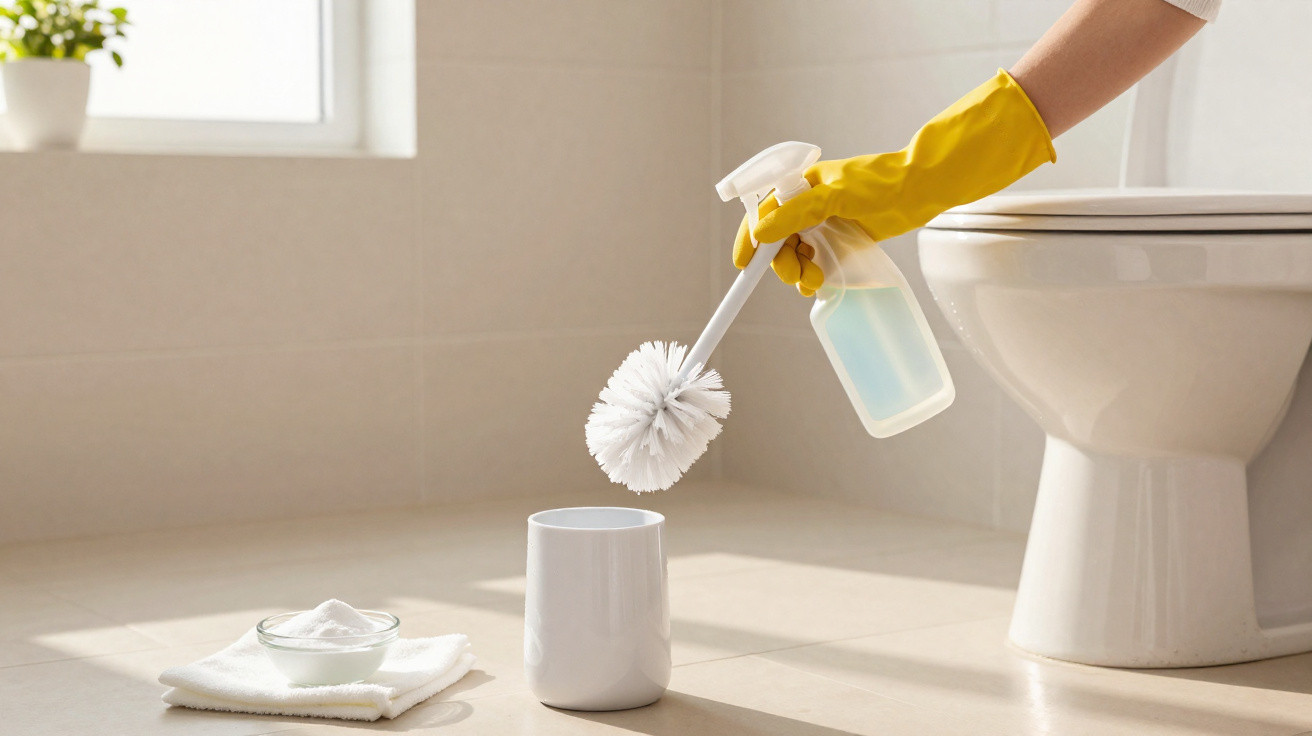
A toilet brush removes significant residue from the toilet bowl, yet it can become a source of unpleasant smells when it is returned to its holder while wet. Proper care combines rinsing, thorough drying, cleaning the container and regular replacement of the bristles.
Why can a toilet brush become a source of bacteria?
After it has been used, water and organic matter can remain trapped between the bristles. If the brush is enclosed while still damp in a holder with no ventilation, the conditions encourage micro-organisms, lingering odours and biofilm to form at the bottom of the container.
The issue is not limited to the brush itself: the holder also collects contaminated drips and rarely dries on its own. Without routine cleaning, this pooled liquid may spread odour, dirty the handle and increase contamination when the brush is handled.
The most common mistakes involving this item are:
- Moisture: storing the brush wet promotes odours and micro-organisms.
- Holder: any water gathered at the bottom must be removed.
- Rinsing: residue should be washed away after every use.
- Disinfection: the container needs to be cleaned every week.
- Replacement: splayed bristles show that cleaning effectiveness has been lost.
Why do the toilet brush and holder need separate cleaning?
The toilet is sanitary equipment used to collect human waste, so the tools used to clean it should be kept apart from other household items. The brush requires its own cleaning routine and storage with good ventilation.
Disinfectant products reduce micro-organisms when used at the concentration and contact time specified by the manufacturer. Bleach may also be used when diluted as directed on the label, but it must never be mixed with acids, ammonia or other cleaning products.
How should you rinse and dry the toilet brush after every use?
Once you have scrubbed the toilet bowl, keep the bristles inside the bowl and flush with clean water to remove visible residue, taking care to prevent splashes. Then carefully shake off excess water and allow the brush to dry before putting it back in the holder.
The brush needs to dry before it is stored.
Avoid returning the item to its holder while wet.
Rest the handle between the seat and the rim, keeping the brush head suspended over the bowl.
Put it away only once there are no visible drops left between the bristles.
A practical method is to wedge the handle between the seat and the rim, leaving the head hanging over the inside of the toilet bowl. Keep the bathroom ventilated and store the item only when the bristles are dry, with no visible drops or apparent moisture.
Follow this sequence:
- keep the bristles inside the toilet bowl during a clean flush;
- avoid sudden movements that could scatter splashes;
- secure the handle between the seat and the toilet rim;
- leave the brush head suspended above the bowl;
- store it only after the bristles have dried.
How can you clean the toilet brush holder safely?
Once a week, empty the holder, wash it with water and washing-up liquid, then rinse it thoroughly. Next, apply disinfectant or diluted bleach in line with the label instructions, observing the required contact time and ensuring it is fully dry before reassembling it.
Wear gloves while cleaning and avoid touching your face or bathroom surfaces while handling the brush. If splashes occur, clean the area straight away and wash your hands, keeping children and pets away from the products.
The following measures make disinfection safer:
- remove and dispose of all water collected in the holder;
- wash the container before applying disinfectant;
- dilute bleach according to the label directions;
- never combine bleach with other cleaning products;
- rinse and dry it fully before putting the brush back.
When should a toilet brush be replaced?
Anyone following a step-by-step guide to cleaning the bathroom will see that cleaning tools need a routine of their own as well. As a practical guideline, the brush can be replaced every three months, or sooner if it loses its firmness and shape.
Splayed, broken or stained bristles, or a persistent smell, indicate that the item no longer cleans properly and should be thrown away. With rinsing after each use, suspended drying and a holder disinfected weekly, the toilet brush remains more hygienic.



Comments
No comments yet. Be the first to comment!
Leave a Comment