
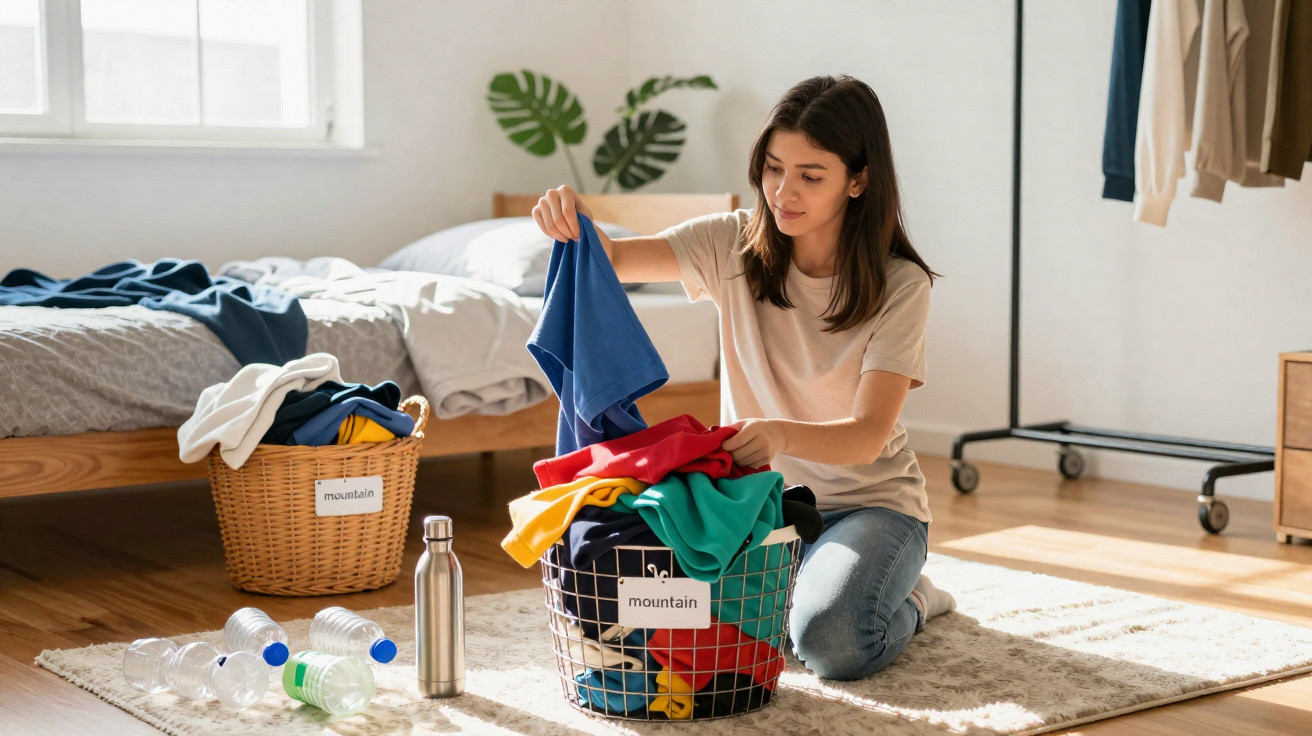
She created an uncomplicated routine around second-hand baskets, and plastic bottles began to vanish from her home. It has an unassuming, nearly everyday appearance - and that is precisely its strength.
In Maya’s shared house, Sunday’s gentle bustle begins in the kitchen rather than the laundry room. The kettle switches off, windows are opened a crack, and a row of charity-shop baskets by the door offers a quiet prompt. Whites, darks, towels and delicates all have their own basket, marked with worn but welcoming cloth labels. Nobody squabbles about whose socks belong to whom. Nobody has to message the house chat to find out whether the washing machine is available. Maya decants detergent from a rattling glass jar, measures it with a spoon formerly used by a student soup collective, and adds a mesh bag for loose socks and an occasional silk blouse. The space smells fresh, without the haze of supermarket fragrance. Somehow, it is peaceful. And it all begins with baskets.
When baskets defeated the “laundry monster”
Maya’s basket station resembles a market display for denim and cotton. Rather than hiding it away, she set it up in the hall, so clothes naturally make their way there. When the darks basket is full, the washing machine is effectively calling. The delicates basket is deliberately smaller, acting as a visual brake. She says the open weave prevents damp odours, while the handles make it easy to carry a load even when she is speaking to her mum on the phone. This is not about getting everything perfect. It is about cutting down the tiny choices between finding a sock on the floor and putting it away clean in a drawer.
The arrangement faced its real test one evening during exam season. Five housemates had twelve deadlines and no capacity for extra stress. A cream jumper was splashed with coffee, panic set in, and the “rescue basket” - a little crate containing stain soap and a brush - proved its value. The jumper went into a mesh bag, was washed on a cool cycle, and survived. Over one term, the household reckons it avoided at least four large plastic containers by topping up washing powder at the nearby zero-waste shop. To put that in perspective, an average household does roughly 300 washes annually. Even removing a few bottles can make a quiet difference over time.
Choosing thrifted baskets is important too. They cost only a few coins, remove the need to buy new plastic, and, oddly enough, carry their own histories. One wicker basket once held oranges on a market stall. The wire basket came from a florist’s shop. That subtle evidence of earlier lives encourages people to look after them. It also counters the “out of sight, out of mind” problem. Visible clothes move through the cycle sooner, are less likely to remain damp at the bottom of a basket, and fewer pieces turn musty and need another wash - a discreet saving in water, energy and patience. Its simplicity is exactly the appeal.
Reducing plastic without stretching a student budget
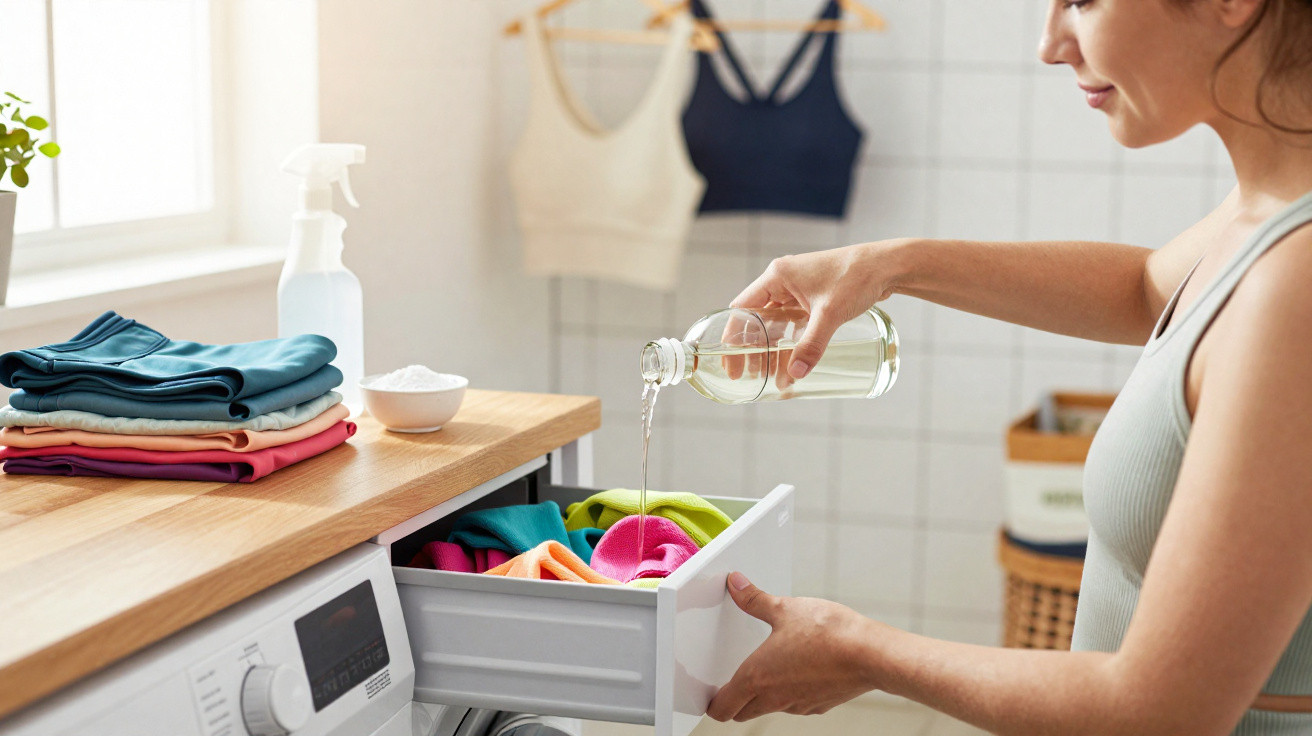
Maya follows a distinctly practical principle: pick the container that can be reused ten times. She purchases cardboard-box washing powder from a refill shop and transfers it to a jar; a stain-removing soap bar sits on a saucer beside the sink; and a small bottle of distilled vinegar deals with softening and odours. She uses one scoop for each wash, two for towels, cool programmes for most clothes, and a microfibre-catching wash bag for synthetic fabrics. Clothes are dried on a rack, with a pair of wool dryer balls added on the uncommon occasion she uses a tumble dryer. The complete set-up fits into a crate beside the machine, like a miniature laboratory.
Typical pitfalls include using too much detergent, selecting the most elaborate “eco” product without inspecting its packaging, and making pods a regular purchase “because they’re cute.” Begin with what is already in the cupboard, then replace one item each month. Glass jars are preferable to new plastic storage boxes, and metal measures are better than plastic spoons. Keep refills in old pasta jars, labelled with masking tape. Realistically, no one manages this without fail every day. The key is building a system that runs on autopilot when you are exhausted, rather than only when you are at your best.
This method is not about imposing rules. It makes the low-waste option the one your hands choose automatically.
“I didn’t set out to be greener,” Maya laughs. “I just wanted less mess. The plastic-free part was the bonus that stuck.”
- Label by task: wash-cold, towels-hot, delicates-handwash. This is easier for shared homes than sorting by colour.
- Keep a “rescue kit” basket containing a stain bar, an old toothbrush and a small spray bottle.
- Replace one plastic item: cardboard powder, a solid stain bar or vinegar softener - choose one this month.
- Put synthetics in a laundry net to limit fibre shedding and stop socks disappearing.
What a basket system reveals about habits and waste
Everyone knows the feeling of a full laundry hamper making the entire week seem overwhelming before it has even started. A handful of inexpensive baskets can change that story. They make washing clothes a cycle rather than a crisis. Garments follow a single route: worn, sorted, washed, aired and folded. No fuss. No late-night trip to buy detergent. As the routine becomes second nature, plastic bottles no longer quietly find their way into the shopping trolley. Visitors see the arrangement and replicate it in their own homes. Someone introduces a “repair” basket, and suddenly a loose button gets another chance.
Waste tends to gather in small points of friction. Remove that resistance and the habit is more likely to last. Maya did not create a sustainability manifesto. Instead, she positioned everyday objects to provide the prompt. It is a nearly mundane form of brilliance. It catches on more easily than lectures and holds up during the blur of exam season. You could begin with laundry, then spot the same principle at your desk, in the kitchen or on your phone. Where might a thrifted container, refill jar or small label make an awkward task feel slightly easier? Which plastic item could quietly disappear from your life next?
| Key point | Detail | Why it matters to the reader |
|---|---|---|
| Thrifted basket station | Visible, labelled baskets that “signal” when it is time to wash | Less decision fatigue and fewer overlooked loads |
| Low-plastic kit | Cardboard powder, stain bar and vinegar stored in glass | Reduces packaging waste without specialist equipment |
| Design for autopilot | One-scoop rules, cool cycles and a microfibre wash bag | Makes consistency easier on busy days |
FAQ
- How many baskets do I actually need? Begin with two: “wash-cold” and “towels/bed-linen.” Add a small delicates basket if you wear knitwear or silk.
- Is powder really better than liquid? Washing powder is often sold in cardboard and performs well in cool water. It is also simpler to purchase in bulk or refill without plastic.
- What about laundry pods and “dissolvable” films? They are convenient, certainly, but they use plastic packaging and films that still enter wastewater. One scoop of powder avoids both.
- How do I handle smells without softener? Add a splash of white vinegar to the rinse drawer and ensure clothes dry completely. Sunshine and airflow work better than heavily perfumed softeners.
- Can this work in a dorm with shared machines? Yes. Store essentials in a compact crate, put your name on a small delicates bag and take along a foldable basket.


Comments
No comments yet. Be the first to comment!
Leave a Comment