
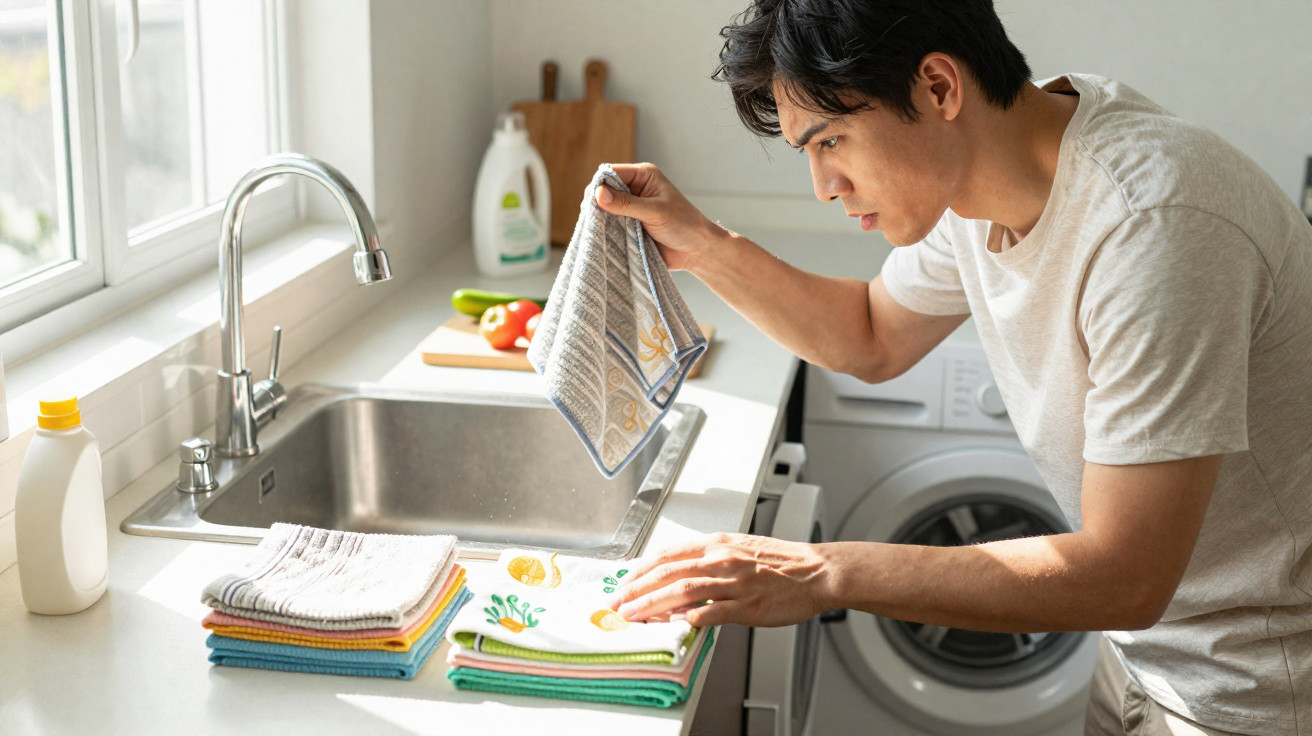
Between the sink, hob and worktop, it is usually hanging up or lying within easy reach, used dozens of times a day – and rarely replaced soon enough: the all-purpose kitchen towel. Although it seems convenient, within only a few days it can turn into a genuine bacterial reservoir, significantly increasing the risk of gastrointestinal infections.
The overlooked risk right beside the sink
Many homes appear clean at first glance. The dishes have been put away, the sink is empty and cooking splashes have been wiped up. Yet attention rarely turns to the fabric responsible for all of those jobs: the kitchen towel.
It dries hands, polishes glasses, wipes away sauce stains, absorbs puddles of water and is used across the table in between. Hardly any other kitchen item touches so many different surfaces and foods – which is precisely why it can be problematic.
“A kitchen towel is warm, damp and full of food residue – perfect living conditions for bacteria.”
A study by the University of Mauritius examined kitchen towels from private households. Around half were contaminated with germs. Among the findings were faecal bacteria, enterococci and staphylococci – common causes of food poisoning and gastrointestinal illness. This can become particularly troublesome in households with young children, pregnant women or older people.
Why kitchen towels quickly become a breeding ground for germs
The fabric is not the issue in itself; the problem is the combination of moisture, temperature and how the towel is used. Kitchen towels often remain slightly damp after drying. They also collect crumbs, traces of grease and food remnants. Microorganisms can multiply rapidly in these conditions.
It becomes critical when one and the same towel is used for every task:
- drying hands
- polishing clean dishes
- wiping the worktop after cutting meat
- cleaning up pools of raw meat juices
- wiping the table after eating
Germs are then effectively carried in a circle. In the worst case, what was just on raw chicken packaging ends up on a plate or a child’s drinking cup. Professionals call this “cross-contamination” – the indirect transfer of pathogens between food, hands and surfaces.
How often kitchen towels should really be washed
Many people replace kitchen towels only once they look visibly dirty or smell unpleasant. By then, it is far too late. Virologists and hygiene experts recommend much shorter intervals.
“A heavily used kitchen towel should remain in use for no more than three days, then it needs to go into the washing machine.”
Anyone who washes up by hand every day and uses their kitchen towel for several jobs is safer changing it every two to three days. In homes with a dishwasher, where the towel is used almost exclusively for drying hands, the interval can be slightly longer, up to around one week. However, some situations call for immediate action:
- contact with raw meat or poultry
- contact with raw eggs or batter containing raw egg
- wiping up liquids that may contain meat juices
- contact with food that has fallen on the floor
- when someone in the household currently has gastrointestinal symptoms
In these cases, the affected kitchen towel should go straight into the wash rather than being used “just once more”.
How to get kitchen towels genuinely clean
Giving a towel a quick rinse and placing it on a radiator may feel fast and practical, but it removes only some of the germs. Proper hygienic cleaning requires considerably more.
Choose the right washing temperature
Hygiene specialists recommend a standard wash at a minimum of 60°C. Germ levels fall substantially only from this temperature onwards. Those using heavily soiled towels – for example, while cooking a lot of meat – can occasionally wash them at 90°C to reduce the germ load significantly.
A regular cotton programme is sufficient. Standard biological detergent or a conventional colour detergent will clean the towels effectively. Some people also add a little white vinegar to the fabric-softener compartment to neutralise odours; this can help, but it is no substitute for a high washing temperature.
Drying properly matters almost as much as washing properly
After washing, the towel should be spun thoroughly and then allowed to dry completely. Whether it is dried outdoors, on a clothes airer or in a tumble dryer, the crucial point is that no residual moisture remains.
“A crumpled, still-damp towel in a cupboard is the perfect incubator for new germs.”
It is therefore better to hang it out flat or drape it over a rail so that air can circulate. Keeping enough towels in reserve prevents stress and avoids the temptation to use a clammy towel “just briefly”.
Better organisation: one kitchen towel, one task
A simple measure can greatly reduce the risk of spreading germs: assign kitchen towels clear purposes. Rather than relying on one multi-purpose towel for everything, it is worth using several towels at the same time.
A practical everyday system:
- Towel 1: hands only
- Towel 2: clean dishes and glasses only
- Towel 3: worktops and tables only
- Specialist towel or kitchen roll: anything involving raw meat or eggs
Anyone who wishes can use different colours or patterns so that no one gets them mixed up. For instance, blue for hands, white for dishes and grey for surfaces. A quick glance is then enough to pick up the right towel.
Common mistakes that germs love
Many kitchen habits seem harmless but create ideal conditions for bacteria and viruses. These pitfalls occur in many households:
- The kitchen towel is left permanently on the sink and never dries fully.
- The towel travels from the hob to the bathroom and back again.
- Odours are masked with fragranced or hygiene spray instead of changing the towel.
- Family members use the same towel for hands after using the toilet and for dishes in the kitchen.
- One towel is treated as a “favourite towel” and used far longer than the others.
Smell in particular is a warning sign: if a towel smells musty or “sour”, a considerable amount of microflora has already developed. At the latest, it should be put into the wash immediately.
Reducing the risk of gastrointestinal illnesses
Along with washing-up sponges, kitchen towels are among the main carriers of germs in the kitchen. Addressing them directly can substantially lower the risk of gastrointestinal infections without much effort. The key is to combine three measures:
- short periods of use, with replacement every two to three days
- a clear separation between uses
- wash programmes at 60°C or above, followed by complete drying
In addition, wash hands regularly with soap, especially after touching raw meat, after using the toilet or after cutting raw vegetables that have come from the soil. Clean hands and clean towels work together to provide protection.
When disposable products are worthwhile – and when they are not
Some people turn to disposable kitchen roll because they are worried about germs. It has one advantage: anything that is dirty once can go directly into the bin. This is a sensible option for heavily contaminated situations, such as meat juices, raw egg or animal faeces.
For everyday use, however, a well-maintained system of washable kitchen towels is entirely sufficient. Organising kitchen towels sensibly and washing them regularly protects the environment while still keeping the kitchen at a hygienically good standard.
Ultimately, this is less about panicking over germs and more about establishing a few firm routines. Anyone who gets used to short washing intervals, clearly allocates tasks and does not leave damp towels lying around takes a major step towards a safer kitchen – without any high-tech equipment, simply with fabric, water and an alert eye.


Comments
No comments yet. Be the first to comment!
Leave a Comment