
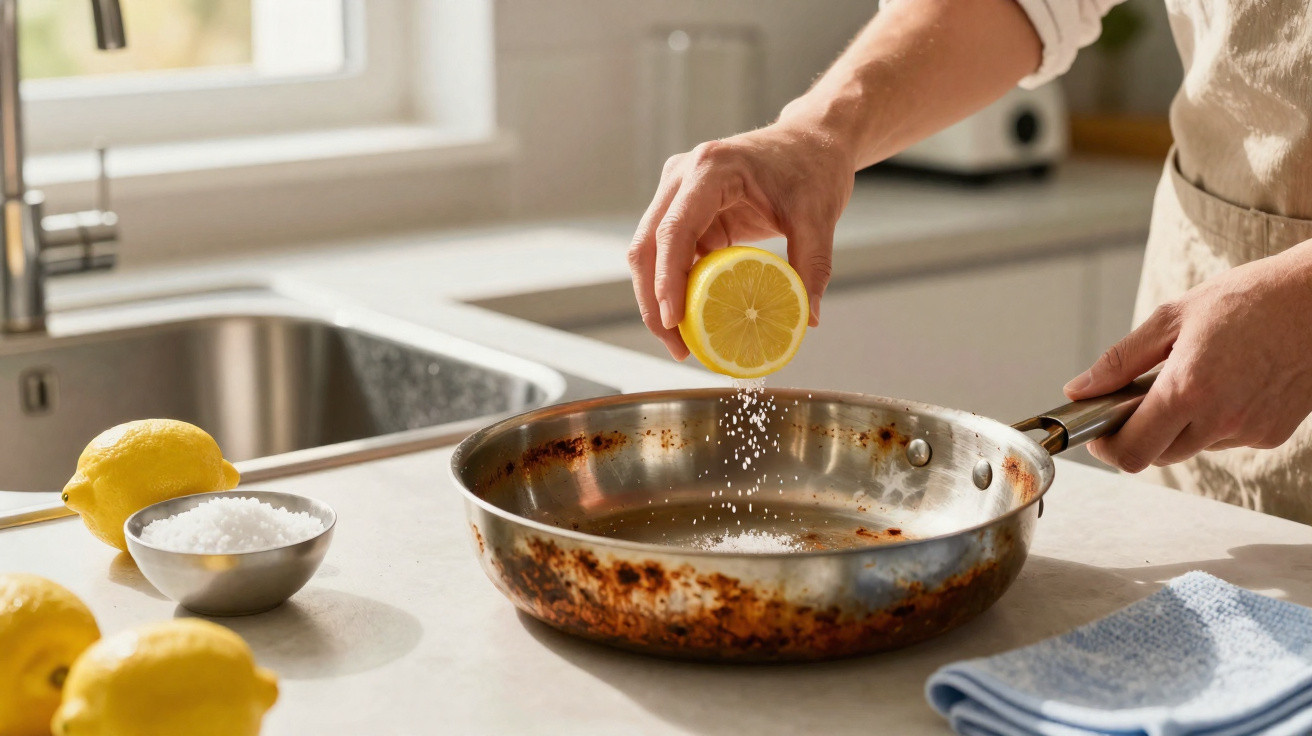
A gleaming fridge door suddenly speckled with orange marks. A sink rim that has begun to look worn. Rust on stainless steel can feel like a personal affront, appearing wherever water is left to sit. A cleaning professional showed us a remedy made from two everyday kitchen staples: lemon and coarse salt. Small circular movements, impressive results.
The espresso machine is hissing, somebody is calling out for a clean pan, and a faint rust streak has appeared at the edge of a stainless-steel prep table. The professional puts down half a lemon as though it were a proper tool, scatters over a pinch of coarse salt and begins treating the surface as if buffing an old coin.
We have all faced that moment when visitors are fifteen minutes away and the sink seems desperate for attention. The fresh, sunny scent of lemon fills the room while the salt softly scrapes over the steel. In front of you, the mark starts to release, shifting from brick orange to pale and then disappearing.
He rinses the area, then dries it rapidly with a soft cloth, making the cloth seem as if it is dancing. The steel catches the light. He smiles and shrugs. The trick predates the internet by a long way, and it is almost frustratingly straightforward.
Why stainless steel still rusts - and why lemon and salt work
Stainless steel is not a guarantee; it is a protective system. A fine chromium-oxide layer shields the metal, yet everyday use can damage that barrier: hard water, splashes of bleach, pooled moisture or even a forgotten steel-wool pad. Once that happens, oxygen and iron behave as they always have. Rust emerges and spreads whenever each new drop dries.
In a small rented kitchen we visited, a landlord was getting quotes to replace a hob after a winter of careless boiling had created orange curves around its burners. The estimate made the bidder wince. Instead, the cleaning professional tried half a lemon and a handful of kosher salt on one corner. Ten minutes later, the supposedly ruined stainless steel was ready for the camera. The bill dropped from four figures to a tip and a handshake.
Lemon supplies citric acid, which chelates iron - in other words, it captures and loosens rust. Coarse salt offers mild abrasion, helping to lift the released oxide without cutting into the metal. Combined, they create a gentle scrub that can remove rust while remaining kind to the chromium-oxide passivation layer that stainless steel relies on. What matters is allowing brief contact time, using movement, and then rinsing thoroughly so no residue remains.
The professional’s step-by-step stainless-steel method
Begin with a dry surface so that the lemon juice is not immediately watered down. Halve a lemon. Place a small pile of coarse salt straight onto the rust - use sea salt or kosher salt rather than fine table salt. Use the cut face of the lemon as the scrubber, applying light pressure in small, slow circles. Follow the grain instead of working across it.
For stubborn areas, leave the juice in place for 2–3 minutes before continuing the gentle scrubbing. Check your progress by wiping the surface with a damp microfibre cloth. Repeat where necessary. Once the rust has lifted, rinse with warm water until the surface no longer feels “squeaky.” Immediately dry it with a clean towel to prevent fresh water marks. To finish, polish a drop of neutral oil along the grain for a soft, consistent shine.
This is the stage people tend to rush, and that is where trouble begins. Honestly, nobody does all of this every day. Do not grind the salt into the surface as if you are sanding a boat; treat it as polishing instead. Avoid steel wool and knives, as both can scratch the protective layer. Where an appliance has a fingerprint-resistant coating, first try the method on a small concealed patch. Also, keep lemon contact brief on brushed finishes. Salt and acid work well together in small amounts, but they should not be left sitting around.
“Lemon + salt is my go-to when clients think it’s time to replace a panel,” the pro told us. “It’s cheap, it smells good, and it leaves the steel calm.”
- Patch test first in an inconspicuous area.
- Follow the grain to maintain a smooth finish.
- Keep dwell time to a few minutes on delicate coatings.
- Rinse thoroughly and dry the surface to avoid new marks.
- Buff with a drop of mineral or cooking oil for an even appearance.
What the chemistry means in real kitchens
Rust does more than leave a stain: it indicates that the protective layer needs restoring. Citric acid assists by dissolving rust and supporting fresh passivation as the metal dries. The grit from the salt provides the lifting action, so your arm does not have to do all the work. It is the difference between scrubbing without direction and allowing chemistry to loosen the bond first.
Timing matters, too. Leaving lemon juice on the surface for hours can cause etching or pitting, particularly at edges where moisture collects. Be too gentle, however, and you may simply polish the rust rather than remove it. The professional’s sequence - a short dwell, soft circular movements, then a prompt rinse and dry - keeps the reaction focused. Think of steeping tea rather than boiling it.
Prevention becomes far more appealing when it saves you money. Remove standing water from sink edges, dish-drying areas and beneath soap dispensers. Keep bleach away from stainless steel, or at minimum rinse and dry any splashes, because chlorides do not agree with the metal. Replace scouring pads that shed steel particles; those fragments may rust themselves and create stains. A minute of care after a messy day helps keep that delicate protective film intact.
Beyond the lemon and salt trick: habits that help stainless steel last
Build a simple weekly routine around your day-to-day life. Quick daily wipes using warm water and a microfibre cloth stop dust and minerals from settling in. If you need extra cleaning power, a small drop of mild washing-up liquid is sufficient. On the occasional day that rust returns, bring out the lemon and salt, let them do their work, then put them back in the pantry.
Not every mark is rust. Heat discolouration around hobs may appear brown but reacts differently. Fingerprint-resistant coatings can become cloudy if rubbed with an unsuitable product. When a stain does not respond to a lemon test in a hidden spot, do not move on to stronger acids. Use a stainless-steel cleaner or a bicarbonate of soda paste instead, or contact the manufacturer’s care line for advice specific to your model.
One further practical tip: dry thoroughly. Water is the quiet cause behind most stainless-steel problems. A clean tea towel or sheet of kitchen roll makes a significant difference, particularly around handles, dispenser trays and trim seams. If you live in a hard-water area, consider a final wipe using distilled water to prevent mineral rings that resemble rust and catch your eye every time you pass.
There is something gratifying about a solution that is both traditional and supported by science. Lemon loosens rust’s hold, salt lifts it away, and the stainless steel you spent good money on looks like itself again. It is a small ritual that brings a sense of control to a room that is always busy. Tell a neighbour who is convinced their fridge has lost the plot, or keep it as your understated party trick and enjoy that bright silver flash when the light lands just right.
| Key point | Detail | Benefit for the reader |
|---|---|---|
| Why it works | Citric acid chelates rust; coarse salt provides gentle abrasion | Confidence that the method is safe and effective |
| How to do it | Dry surface, sprinkle salt, scrub with lemon along the grain, short dwell, rinse and dry | Quick, repeatable steps with clear safeguards |
| What to avoid | Long acid contact, steel wool, bleach residue, ignoring water spots | Fewer scratches and a longer life for appliances and sinks |
FAQ:
- Can lemon and salt damage stainless steel? Used briefly and gently, no. Keep contact time short, follow the grain, then rinse and dry so the surface can rebuild its protective layer.
- Does the type of salt matter? Yes. Coarse salt, whether sea salt or kosher salt, provides controlled abrasion. Fine table salt is too powdery and may be harsher without offering enough lifting action.
- What if I have a fingerprint-resistant coating? Test an unseen corner first. Certain coatings do not tolerate acids well. If the finish becomes dull, use a manufacturer-recommended cleaner or a mild soap solution instead.
- Will this remove deep pitting? No. It works very well on surface rust and stains. Genuine pitting requires professional refinishing or replacement of the panel.
- Is there a lemon-free option? A bicarbonate of soda paste made with water can work on light stains. For mineral marks, white vinegar may help, followed by rinsing and thorough drying.


Comments
No comments yet. Be the first to comment!
Leave a Comment