
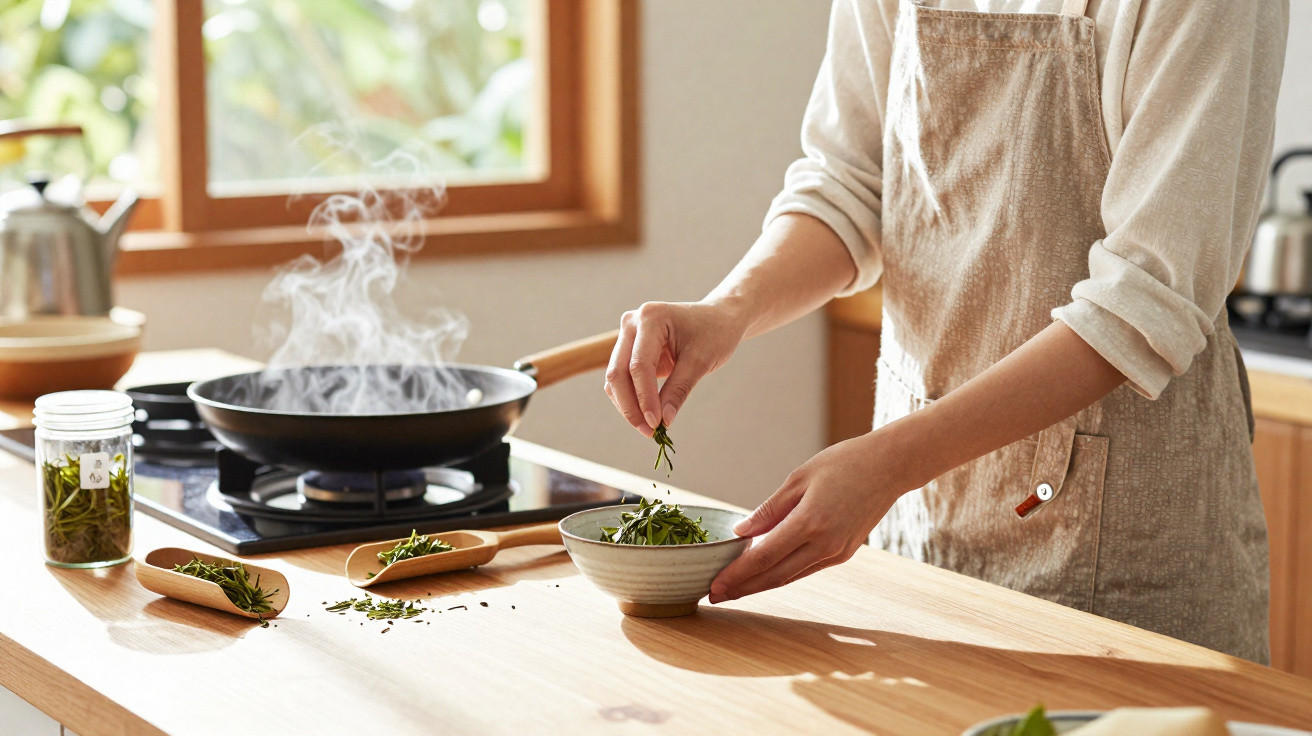
Keeping a kitchen free from heavy odours after frying is a challenge for many people living in small flats. Using simple, sustainable solutions can therefore make a significant difference to the everyday environment, providing genuinely clean and natural odour neutralisation.
How does green tea help remove the smell of grease from the kitchen?
In tidy Asian homes, dried green tea leaves have become an important tool for tackling strong cooking-oil smells. This straightforward ingredient works directly on dispersed grease particles, leaving the air remarkably purified and much fresher.
Many people struggle with the lingering scent of fried food, which can cling to cupboards and walls for long periods. By using this natural disinfectant, there is no need for chemical commercial sprays, helping to create a pleasant atmosphere in homes in Japan.
Here are the main benefits of adopting this traditional method in your routine:
- Natural action: Removes odours without relying on harsh chemical products.
- Grease control: Neutralises the smell of frying very effectively.
- For small spaces: Ideal for flats with limited ventilation.
- Great savings: Reuses leaves that would otherwise be thrown away with ordinary rubbish.
- Complete sustainability: Prevents waste and supports a healthier environment.
What is the Japanese secret for neutralising odours after frying?
Frequent frying calls for particular attention to air circulation in compact spaces. The strategic use of brewed and dried botanical material provides excellent sensory cleaning, preventing stale oil smells from lingering persistently in the kitchen.
This age-old knowledge is based on the strong absorption capacity naturally found in plants' leafy structures. As a result, the home gains a powerful ally that purifies rooms without needing to disguise odours with artificial perfumes.
To find out more about reusing leftovers and keeping the home smelling fresh, watch the explanatory content published on Dominion Tea's YouTube channel:
Why do dried leaves work better than artificial perfumes?
Many commercial air fresheners merely conceal unpleasant smells beneath intense, sickly fragrances. Dried plant material, by contrast, genuinely cleans the air, providing an affordable and healthier option for anyone wishing to keep the kitchen completely fragrant.
Smart Cleaning
Effective Purifying Action
Using dehydrated leaves acts as a natural odour neutraliser by absorbing airborne grease molecules.
Unlike artificial sprays, this approach does not conceal airborne dirt, ensuring long-lasting, healthy freshness.
The plant's natural properties can also help avoid the allergic reactions often caused by harsh chemical products. This sensible choice improves the atmosphere in smaller rooms, offering ongoing protection and encouraging a more sustainable everyday lifestyle for the whole family.
These are the reasons this ingredient stands out from conventional products:
- It truly absorbs grease molecules rather than simply covering up aromas.
- It contains no toxins or synthetic perfumes that can harm wellbeing.
- It offers excellent value by making full use of organic leftovers.
How should tea leaves be prepared and used in the home?
Preparation begins as soon as you have enjoyed your favourite hot drink of the day. Rather than putting the leftover material straight into the bin, gather all the damp plant matter to begin this excellent, efficient home cleaning technique.
Simply spread the leaves across a dry surface and allow them to dehydrate fully in a well-ventilated place. Once the material is ready, place the dish in strategic spots where oil smoke usually gathers while preparing heavier meals.
Follow these simple steps to use the trick correctly:
- Collect the damp leftovers after drinking green tea.
- Dry the contents completely on a baking tray with suitable ventilation.
- Place the dehydrated portions around the kitchen in small open containers.
What other benefits does this natural cleaning method offer your home?
Making full use of plant resources significantly reduces the amount of organic waste produced at home. Afterwards, the dried leaves can also be added to plant pots or flower beds, where they act as an excellent fertiliser that nourishes the soil sustainably.
This Eastern tradition also extends to cleaning floors. Discover why people in Japan clean the floor with a damp cloth and green tea before welcoming visitors, and keep your surroundings refreshed with this remarkable resource.

Comments
No comments yet. Be the first to comment!
Leave a Comment